What is a Torso?
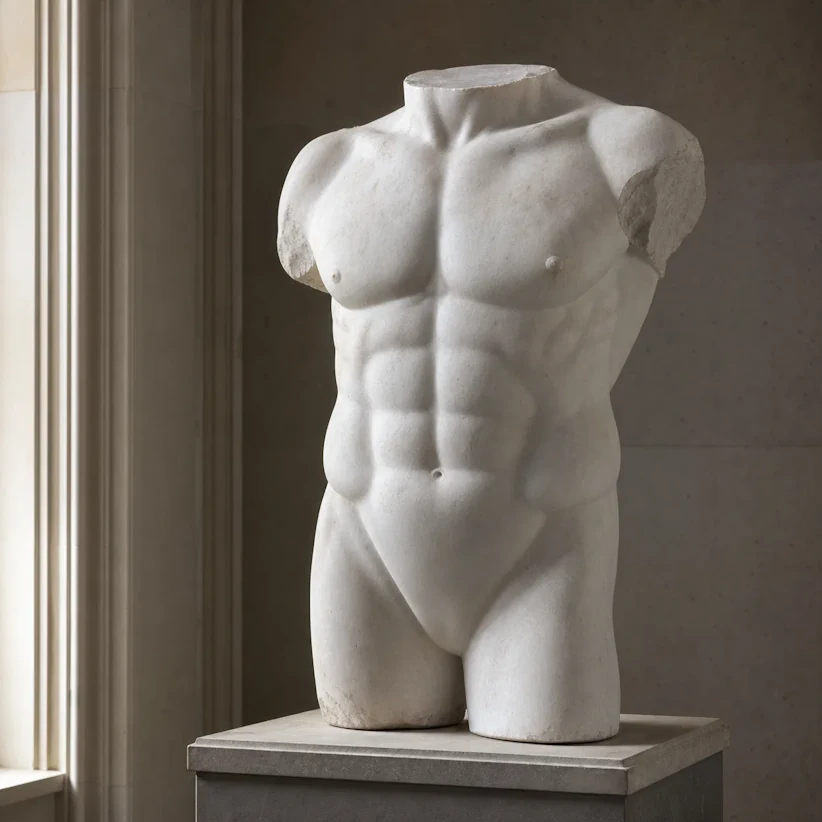
Torso is a type of sculpture that covers only the trunk of the human body, namely the chest, abdomen and waist region, without the head, arms and legs. The concept of torso, derived from the Italian word "tronco" meaning trunk, is used both to describe sculptures from ancient times that have fragmented and lost their limbs over time, and to name works in which the torso is treated as an independent work of art.
The Artistic Significance of the Torso
The torso holds a very special place in the history of sculpture art. The marble work known as the Belvedere Torso, displayed in the Vatican Museum, is one of the most important torso examples to have survived from antiquity to the present day. This work profoundly influenced Michelangelo and its traces can be seen in numerous figures in the ceiling paintings of the Sistine Chapel. The incomplete yet powerful presence of the torso form evokes in the viewer the aesthetic tension and curiosity created by incompleteness.
The Torso and the Aesthetics of Incompleteness
Torso works are historically composed largely of sculptures that have been fragmented as a result of accidents, wars or natural destruction. However, over time a distinctive aesthetic was discovered in these incomplete forms. Torso sculpture evokes a longing for the whole while at the same time revealing the expressive power that the torso carries on its own. Auguste Rodin consciously adopted this aesthetic and produced independent torso sculptures. Rodin's torsos have become one of the fundamental references of modernist sculpture.
The Technical Dimension of Torso Production
Torso sculpture requires the creation of an anatomically correct and aesthetically balanced body form. The width of the ribcage, the expression of the abdominal muscles, the curves of the waist and the posture of the spine are details that directly reflect the sculptor's mastery. The contrapposto principle is also applied to torso sculptures; the distribution of weight and the tilt of the axis add dynamism to the torso. Torso production is particularly regarded as one of the most productive applications of anatomy study in sculpture education.
Torso Sculpture Today
Today, torso sculpture is produced both for educational purposes and as an independent work of art. In fine arts academies, torso modelling studies are one of the fundamental elements of anatomical training. Torso sculptures produced for commercial purposes are preferred for fashion boutiques, art galleries and private collections. Bronze and marble torso sculptures are always among the most sought-after works in the art market.
Material and Surface Treatment in Torso Sculpture
The material used in torso sculptures directly determines both the aesthetic identity and the durability of the work. Marble torso sculptures have been the most preferred form since antiquity; the soft light-refracting quality of the marble surface creates the visual effect closest to skin texture. Bronze torso sculptures are particularly preferred for outdoor installations, and the patina layer that forms over time gives the work a natural and deep-rooted appearance. Modern torso sculptures produced from fiberglass and polyester materials are widely used in commercial spaces and exhibition areas due to their lightness and ease of shaping.
Date Added: