What is Anatomical?

In the context of sculpture and fine arts, the concept of anatomical refers to the practice of accurately reflecting the structure, proportions, and functional relationships of the human or animal body. Derived from the Greek word "anatomia," meaning to cut open and examine the internal structure, this term serves as common ground for the fields of art, medicine, and biology. For a sculptor, anatomical accuracy is not merely a technical requirement; it is an expression of deep respect for the human form and the power of observation.
Anatomical Accuracy in Sculpture
Throughout the history of sculpture, the importance given to anatomical accuracy has varied significantly across different periods and movements. In the Classical period of Ancient Greece, ideal proportions and anatomical perfection became the fundamental criteria for sculpture. During the Renaissance, masters such as Leonardo da Vinci and Michelangelo conducted dissections of cadavers to study human anatomy in depth, reflecting this knowledge in their masterpieces. In this era, anatomical sculpture transcended being a technical display and evolved into an investigation into the essence of human existence.
Artistic Anatomy
Artistic anatomy is considered one of the fundamental courses in sculpture education. This field systematically examines the bone structure, muscle groups, fatty tissue, and their appearance beneath the skin. Aspiring sculptors must learn the proportions of the human skeleton, the limits of joint movements, and the formal changes in muscles during states of tension and relaxation. This knowledge determines both the technical accuracy and the vitality of the work in figurative sculpture production.
Anatomical Error and Artistic Freedom
The balance between anatomical accuracy and artistic freedom is one of the most debated topics in the art of sculpture. In certain periods, anatomical correctness was accepted as an absolute criterion. On the other hand, Modern movements such as Expressionism and Cubism deliberately bypassed anatomical realism to prioritize emotional intensity and expressive power. Today, the prevailing understanding is that anatomical knowledge serves as a solid foundation; however, the artist is free to build their own unique interpretation upon this base.
Anatomical Models and Sculpture Training
Anatomical models hold an extremely important place in sculpture training. In addition to anatomical mannequins that show bone and muscle structure together through semi-transparent skin, separable organ models, and skeletal replicas, historical anatomical sculpture series are also utilized. Anatomical figures produced especially during the Renaissance and Baroque periods served as critical reference sources for both art and medical education. Today, digital anatomy software is carrying this tradition into a new dimension.
Anatomical Precision in Heykel.org Sculptures
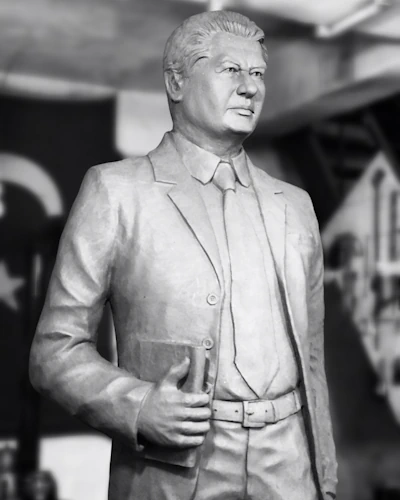
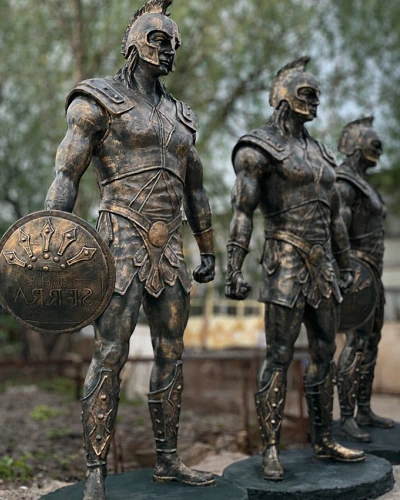
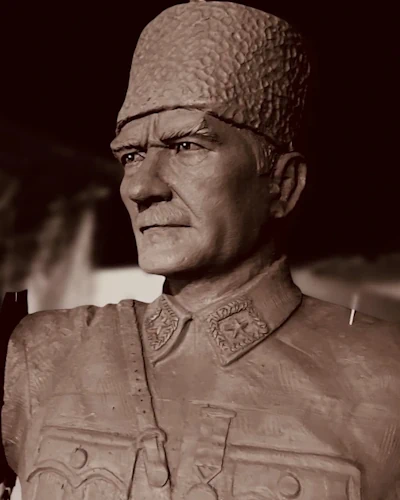
Almost all human figures produced in our studio are crafted with anatomical realism in mind. Our State Artist titled sculptors internalize all the contours of the figure into their visual memory before transitioning to the clay modeling phase, where they begin to showcase their mastery. In particular, the message conveyed through facial features and body language becomes clear and is applied to the work on clay. When you examine our categories, especially the monumental sculptures section, you will realize that our works possess the quality of true masterpieces.
Date Added: