What is Contrapposto?
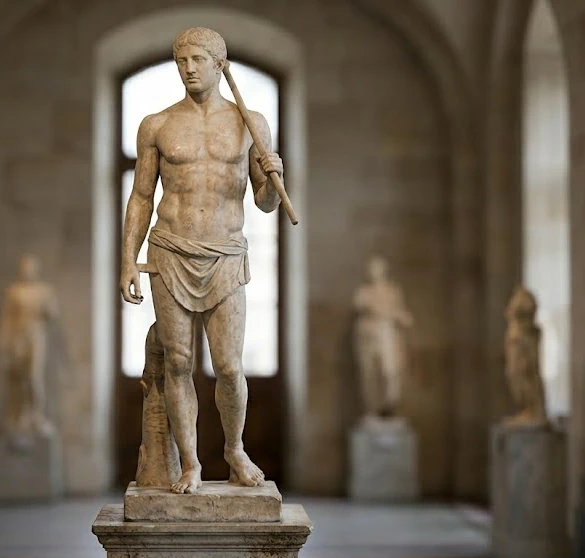
Contrapposto is a natural and balanced stance in sculptural art achieved by shifting the figure's weight onto a single leg, causing the hips and shoulders to be positioned at opposing angles. Derived from the Italian "contrapposto," meaning counter-pose, this term describes the transition from a static and symmetrical understanding of the figure to a dynamic form that reflects natural human movement. Considered one of the greatest discoveries of ancient Greek sculpture, contrapposto marks a turning point in the development of figurative sculpture.
The Anatomical Basis of Contrapposto
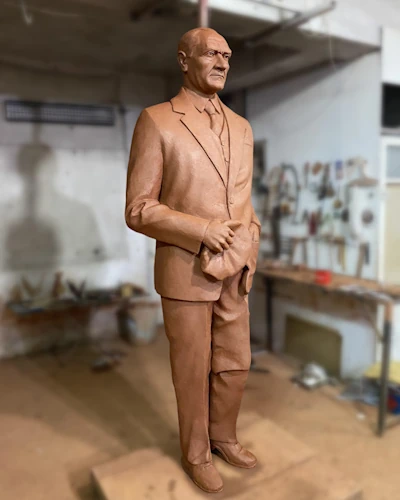
In contrapposto, the leg that supports the figure's weight is referred to as the "weight-bearing leg." The hip on this side rises upward while the shoulder drops downward. The other leg, freed from bearing weight, extends slightly forward or to the side in what is called the "free leg" position. This asymmetrical distribution causes the spine to bend and rotate slightly. As a result, the figure acquires both a balanced and a lifelike appearance. The contrapposto stance gives the viewer the impression that the figure could move at any moment, lending the sculpture a dynamic energy despite its static material.
The Historical Development of Contrapposto
Contrapposto developed in ancient Greece in the 5th century BCE. Prior to this development, sculptural figures were depicted under the influence of Egyptian art with both feet flat on the ground and shoulders straight and symmetrical. The Kouros figures from the "archaic smile" period represent the finest examples of this approach. Polykleitos's Doryphoros, or Spear-Bearer, is considered one of the earliest and most accomplished examples of contrapposto. During the Renaissance, Michelangelo and Donatello rediscovered contrapposto and enriched it with the sensibilities of their own era.
Contrapposto and Ideal Beauty
In ancient Greece, contrapposto was not merely a pose but also an expression of ideal human beauty and perfect proportion. Polykleitos elaborated on this ideal theoretically in his work known as the "Canon." While the asymmetry provided by contrapposto creates a natural and human appearance, the mathematical harmony of the proportions conveys an impression of divine perfection. The balance of these two opposing forces forms the essence of the ancient sculptural vision.
Contrapposto Today
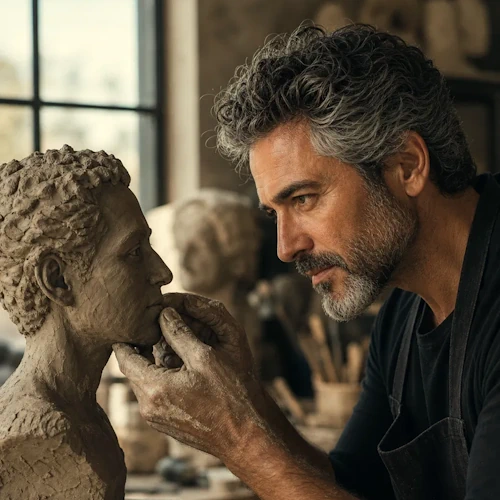
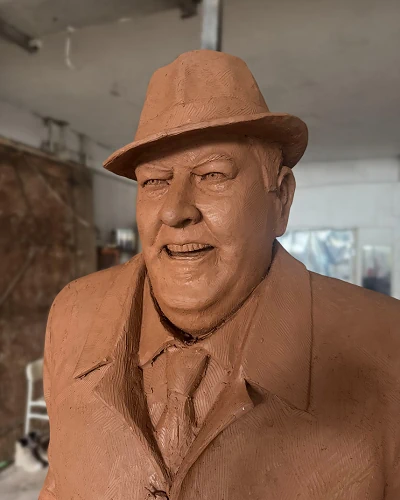
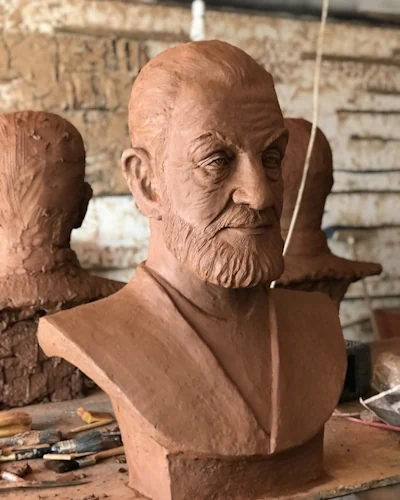
Contrapposto continues to be one of the most fundamental compositional tools in contemporary figurative sculpture. Knowledge of contrapposto is an essential component of sculptor training in the production of realistic human figures. In portrait sculpture and full-figure works, when contrapposto is applied correctly, it strengthens the dialogue the work establishes with the viewer and lends the figure an irresistible vitality. In modern abstract sculpture, the principle of contrapposto is interpreted in different forms by being transformed into an understanding of form and balance.
The Influence of Contrapposto on Art and Notable Examples
Contrapposto's contribution to sculptural art was not limited to a mere technical innovation; this stance gradually evolved into a philosophical attitude that fundamentally transformed the visual language of Western art. This revolution, which began in ancient Greece, arose from the desire to treat the human body not as a mere symbol or divine icon, but as a living and breathing entity. One of the most striking examples of contrapposto, the Kritios Boy, dates to approximately 480 BCE and is considered a harbinger of the transition from the rigid symmetry of the archaic period to realistic human anatomy. The works of Praxiteles, particularly his Hermes and the Aphrodite of Knidos, refined contrapposto even further, lending figures an almost undulating softness; with their S-curved torsos, these sculptures represent the most lyrical expressions of this stance. In the Renaissance, Michelangelo's colossal marble David stands out as perhaps the most monumental application of contrapposto in history; though the figure has not yet moved, every muscle and posture conveys the sense of awaiting the next moment. This tension and anticipation is the most powerful testament to the unparalleled dramatic effect contrapposto creates in the viewer.
Date Added: