Sculpture Torso: What Is a Torso in Sculpture?
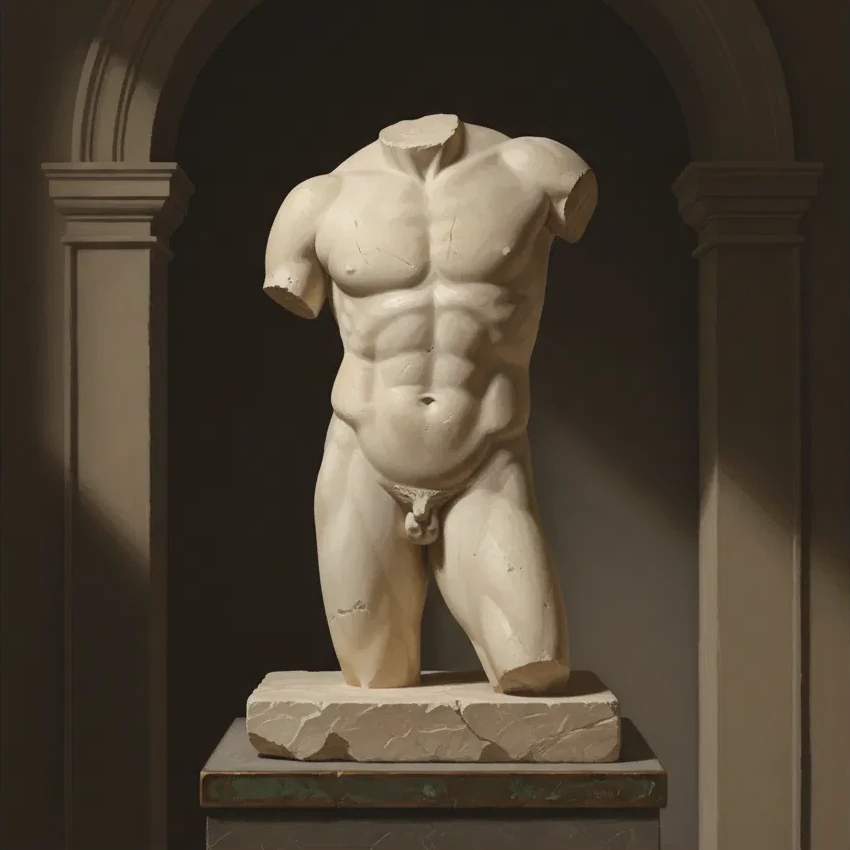
You have probably stood in front of a marble figure in a museum, missing its head, arms, and sometimes its legs, and looked at it for a long time. In the art world, this fragment is called a sculpture torso. Stripped of head and limbs, this form is considered the simplest and most powerful expression of the human body. In the image above, you can see a muscular male torso resting on a stone base inside an arched niche. The broken shoulders, missing arms, and unfinished legs do not reduce the artistic value of the work. On the contrary, they focus the viewer on the body itself.
Why Does a Sculpture Torso Attract So Much Attention?
A sculpture torso has no facial expression or hand gesture, so the entire message is carried by the body itself. The curve of the rib cage, the line of the abdominal muscles, the posture of the shoulders, and the balance of the hips tell a story on their own. The viewer completes the missing parts with their own imagination. This turns a sculpture torso from a simple object to look at into a work that makes people think. Art historians note that the simplicity of a torso does not scatter the gaze and brings out the play of light and shadow. The work in the image shows this effect clearly. The side light coming from inside the niche sharpens the muscle lines and reveals the cracks on the surface of the marble.
Who Made the First Sculpture Torso?
There is no definite answer to this question. The sculpture torso is not a type invented by a single artist. At first, torsos were not made on purpose. Full-length figures made in ancient times were broken over the centuries, toppled by earthquakes, or smashed in wars. What usually remained was the heaviest and most durable part, the torso. In other words, the first torso sculptures are fragments revealed by time and destruction. The first major name to treat the torso as a finished work of art on purpose was the French sculptor Auguste Rodin, who worked in the late 19th and early 20th centuries. By exhibiting headless and armless figures as complete works, Rodin changed the way people understand sculpture.
The Sculpture Torso in Ancient Times
In ancient Greek art, kouros statues, which are young male figures, were very common. Many of them have survived to the present day only as torsos. The Miletus Torso, found in the city of Miletus in Anatolia and displayed in the Louvre Museum, is a good example of this. In the Roman period, Greek works were copied extensively and placed in the gardens and halls of wealthy homes. Broken torsos were sometimes completed with new heads and arms, and sometimes left as they were. This practice shows that the value of the sculpture torso has been recognized since very early times.
The Belvedere Torso and Michelangelo
The first work that comes to mind when people talk about a sculpture torso is the Belvedere Torso. Displayed in the Vatican Museums, this work was made by Apollonios of Athens in the 1st century BC. It carries the signature of the artist. The work appeared in Rome during the Renaissance and attracted great interest among artists. It is often said that Michelangelo admired this torso and was influenced by it in his understanding of muscle in the figures of the Sistine Chapel. It is also said that when people wanted the missing limbs of the work to be completed, Michelangelo refused. This story shows that the idea of accepting even an incomplete sculpture as whole began in the Renaissance.
The Sculpture Torso in Modern Art
In the modern period, the sculpture torso stopped being a relic and became a deliberate choice. Rodin's headless and armless "Walking Man" is one of the most famous examples of this approach. Constantin Brancusi simplified the torso even further and turned it into an almost abstract form. Artists such as Aristide Maillol shaped the female torso with balanced and soft lines. In this way, the torso came to be seen not as the missing part of a whole but as a complete art form in its own right.
What Are the Types of Sculpture Torsos?
Sculpture torsos can be grouped according to different criteria. This distinction matters for both collectors and art lovers.
By gender: The male torso usually expresses strength and athleticism through a muscular chest and defined abdominal lines. The female torso symbolizes grace and fertility through soft curves. The work in the image belongs to the male torso category.
By material: Marble torsos are the most famous and are known as the material that best captures the softness of skin. Bronze torsos are more durable and reflect light differently. Plaster, clay, terracotta, wood, and resin torsos are widely used both in artists' preliminary studies and in decorative products.
By how they came to be: Some torsos reached this state by breaking over time. Others were designed from the start as torsos by the artist. This difference is one of the most important factors that determine the place of a work in art history.
By size: Monumental torsos are of museum and public square scale. Tabletop torsos are preferred for home and office decoration.
The Difference Between a Sculpture Torso and a Bust
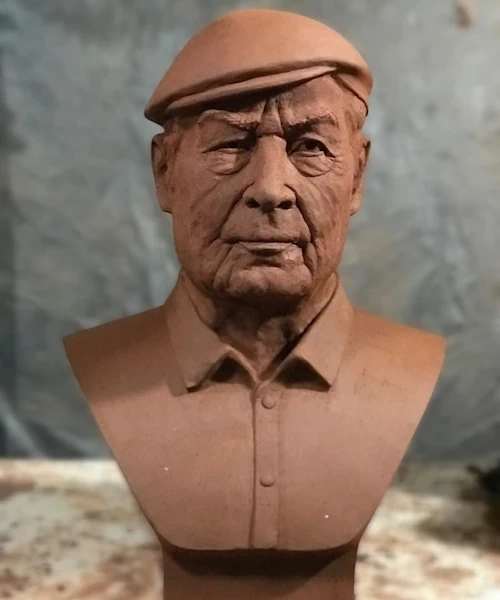
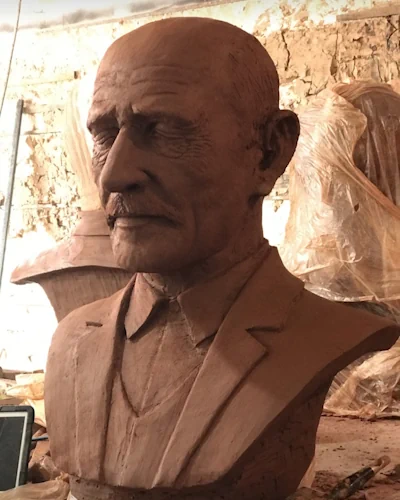
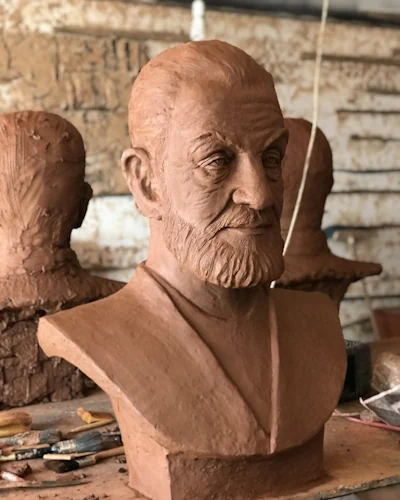
The two forms are often confused. A bust shows a person's head, neck, and shoulders. Its purpose is usually to preserve a person's face and identity. A sculpture torso has no head, or the head is deliberately left out. Here the focus is not the person but the anatomy of the body. For this reason, busts are closer to the art of portraiture, while torsos are closer to the art of anatomy and form.
The Role of the Sculpture Torso in Art Education
In art schools, torso sculptures have been used as a basic study model for centuries. Students examine muscle structure, weight balance, and the transitions of light and shadow on these models. The absence of the head and limbs makes it easier to focus on anatomy. For this reason, plaster torso copies are still commonly seen in painting and sculpture studio work.
Where Is the Sculpture Torso Used Today?
Today, sculpture torsos are found not only in museums but also in interior decoration, gardens, hotel entrances, and private collections. Thanks to their simple and powerful look, they easily fit both modern and classic spaces. A torso sculpture placed inside a niche creates a dramatic effect, just like the one in the image. For those who want to buy a sculpture torso, in other words a torso, material quality, size, and surface craftsmanship are the most important criteria.
Date Added: