Buddhist Sculpture Price and Sales
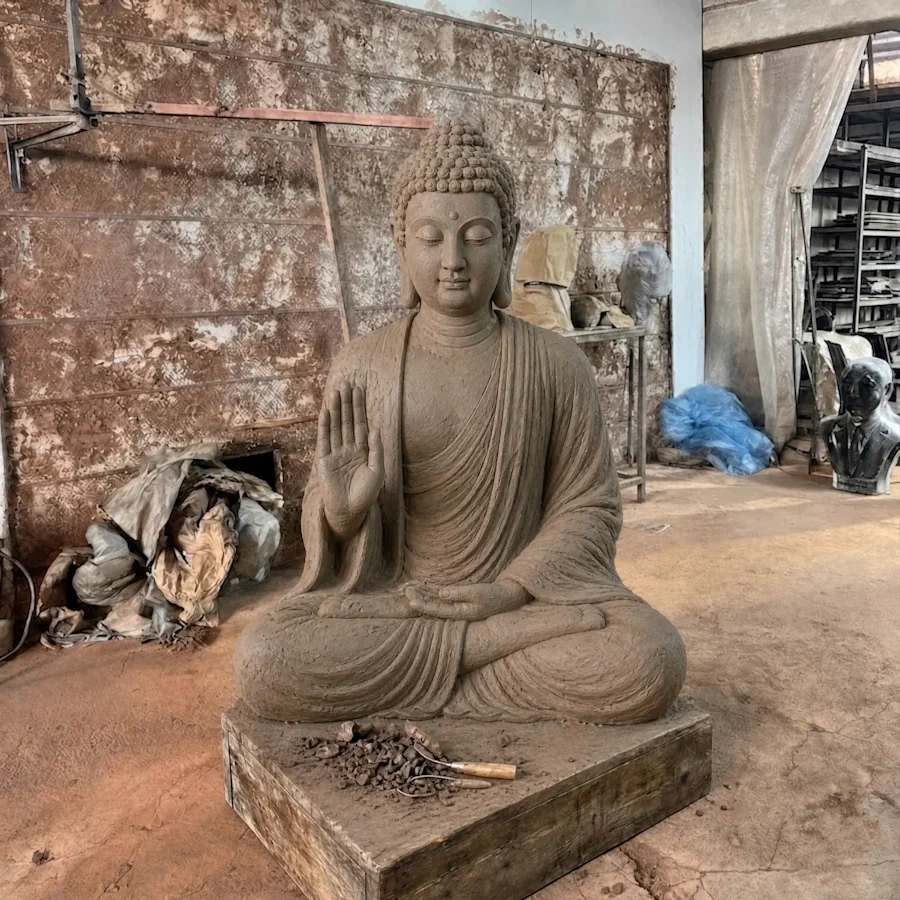
This Buddhist sculpture, completed in our studio, was hand shaped from clay for a custom order. Depicted seated in the lotus position with the right hand raised in the abhaya mudra, the sculpture was designed staying true to classical Buddhist iconography. This clay stage work reflects the long term dedication and attention to detail of our sculptors.
How Long Did the Sculpture Take to Make?
Completing the clay stage of a Buddhist sculpture at this scale and level of detail took approximately one month. Our sculptors first built the armature structure, then worked on the facial features, hair curls, drapery folds, and hand details one by one using clay adding and shaping techniques. The peaceful expression on the face and the fabric folds in the robe in particular are the result of long and patient work. Throughout this process, the sculpture was reviewed many times, with proportions and symmetry carefully checked.
A Rare Buddhist Sculpture Made in Turkey
This piece is one of the rare Buddhist sculptures produced in Turkey. There are very few studios in our country capable of producing sculptures that master Buddhist iconography and follow traditional proportions and religious symbols accurately. Our studio meticulously fulfills sculpture requests belonging to different faiths and cultures, creating works with correct proportions from both an artistic and religious standpoint. This sculpture is a concrete example of our expertise in this field.
What Material Will the Sculpture Be Cast In?
The sculpture with the clay stage completed will be produced in the next stage using the fiberglass casting technique. Thanks to the silicone mold taken from the clay model, all the details of the sculpture will be transferred to fiberglass without any loss. Fiberglass material is frequently preferred for large scale sculptures due to both its lightness and its durability against outdoor conditions. After casting, the sculpture can be painted as requested or given a patina finish resembling bronze or stone.
Size and Physical Features of the Sculpture
Once completed, this sculpture will stand approximately 1.7 meters tall, offering an impressive appearance with near life size measurements. This scale in a seated position is suitable for creating a striking focal point both indoors and in outdoor settings such as gardens or temple courtyards. The base of the sculpture will also be produced separately in keeping with the original design.
Why Do Buddhists Value These Sculptures?
In Buddhist belief, sculptures are considered not merely artistic works but also a spiritual guidance tool. The seated depiction of Buddha is a symbol of meditation and inner peace. The raised hand gesture, known as the abhaya mudra, represents fearlessness, reassurance, and peace. Buddhists aim to achieve mental calm, recall Buddha's teachings, and form a spiritual connection by meditating in front of these sculptures. The serene expression on the sculpture's face is interpreted as the visual counterpart of a consciousness that has attained enlightenment.
The Symbolic Meaning of Buddhist Sculptures
Every detail used in Buddhist sculptures carries a specific meaning. The raised shape on the head (ushnisha) symbolizes supreme wisdom, while the dot on the forehead (urna) represents spiritual vision. The position of the hand, known as the mudra, directly determines the message the sculpture conveys; the abhaya mudra in this sculpture expresses protection and reassurance. The simple yet flowing drapery in the clothing symbolizes detachment from worldly ties. These symbols transform the sculpture from a purely visual work into an object carrying deep spiritual meaning.
Where Are Buddhist Sculptures Used?
Buddhist sculptures are frequently used in temples, meditation centers, monasteries, and private home interiors. They are also preferred as a peaceful visual element in garden design, and in hotels and spas to create a calming atmosphere. Collectors and art lovers also embrace them as decorative works with high aesthetic value. Whether for religious or artistic purposes, these sculptures add a peaceful energy to any space.
Contact Us for a Custom Sculpture Order
For this sculpture or any other custom sculpture you would like to order, you can use the order form below or write to us using the information on our contact page.
Registration Date:
Rate:
5
2 Vote