
What is Synthetic?
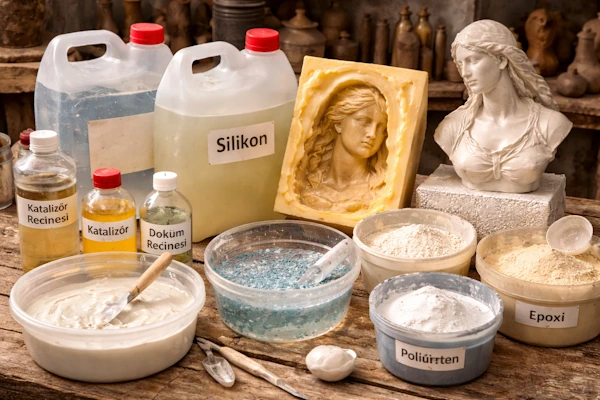
In the context of sculpture and art materials, the concept of synthetic encompasses all materials produced in a laboratory or factory environment through chemical processes, as opposed to traditional materials obtained from nature. Synthetic materials, which entered the art of sculpture from the second half of the 20th century onwards, have radically transformed this field both technically and aesthetically. Synthetic materials such as Polyester, fiberglass, polyurethane foam, acrylic, and epoxy have become indispensable tools in today's sculpture studios due to their ease of processing, low costs, and wide range of applications.
The Rise of Synthetic Materials in Sculpture
Traditional sculpture materials like bronze, marble, and wood kept sculpture as an art form accessible only to a certain segment for many centuries due to both their high costs and processing difficulties. With the development of the petrochemical industry in the middle of the 20th century, the synthetic polymers and resins produced fundamentally changed this situation. Now, both artists and monument sculpture manufacturers are able to achieve the quality and aesthetics provided by traditional materials with much more affordable budgets. This process of democratization has deeply affected both the production and consumption dimensions of the art of sculpture.
The most significant contribution of synthetic materials to the art of sculpture has occurred in the realm of formal freedom. While traditional stone and bronze imposed serious technical constraints on the production of complex and delicate forms, synthetic materials have largely eliminated these boundaries. Thin profiles, deep recesses, transparent forms, and giant-scale lightweight structures are no longer a technical problem thanks to synthetic materials. This liberation has paved the way for the development of new aesthetic languages, particularly in the field of contemporary and abstract sculpture.
Common Synthetic Sculpture Materials
Leading the synthetic materials used in sculpture production is polyester resin. When combined with glass fiber to create an extremely strong composite, polyester makes it possible to produce complex forms quickly and economically through mold casting methods. Polyurethane foam, on the other hand, is used as a filler and internal structure material, especially in large-scale sculptures; its extreme lightness brings large structures to manageable weights. Acrylic material is preferred in contemporary sculpture works where transparency and color vibrancy are prioritized. Epoxy resin, with its high bonding strength and durability, is a synthetic material frequently resorted to in both casting and bonding applications.
The Environmental Dimension of Synthetic Materials
Despite the wide range of uses for synthetic materials, an aspect that cannot be ignored is their environmental impact. The carbon footprint generated during the production process of petroleum-based polymers and the issue of these materials not being biodegradable have become significant topics of debate in the art world, especially in recent years. In this context, the concept of "sustainable sculpture," which uses bio-based resins and recycled materials, is receiving increasing interest. Mixed approaches, where traditional natural materials and synthetic materials are consciously blended, constitute one of the most current discussion topics in today's sculptural art in terms of both aesthetic and environmental responsibility.
Date Added: