What is Asymmetry?

Asymmetry is a concept that describes a state where two or more parts of a whole are not equal or symmetrical to each other. Derived from the Greek "a," meaning lacking, and "symmetria," meaning proportion or balance, this term is used in many fields such as art, architecture, natural sciences, and philosophy. Asymmetry is not merely a lack or irregularity; when used correctly, it is a powerful design tool that creates dynamism, movement, and vitality.
Use of Asymmetry in Sculpture
In the art of sculpture, asymmetry is an extremely important means of expression. Ancient Greek sculptors achieved the transition from rigid, symmetrical figures to asymmetrical and dynamic compositions through a posture called contrapposto. A figure that places its weight on one leg, shifts its hip, and holds its shoulders at different heights creates the impression of a living and breathing being through asymmetry. Asymmetrical sculpture compositions encourage the viewer to walk all the way around the work by creating a dynamic tension and curiosity.
The Balance Between Asymmetry and Symmetry
Throughout art history, symmetry and asymmetry have always been in a tense relationship. In the Ancient period and the Renaissance, symmetry was considered a reflection of perfection and divine order. In the Baroque period, asymmetry became a tool for dramatic narration and emotional intensity. Modern art, on the other hand, embraced asymmetry as an expression of freedom and individuality. Today, many sculptors use symmetry and asymmetry together to create aesthetic energy from the tension between these two opposing forces.
Asymmetry in Nature
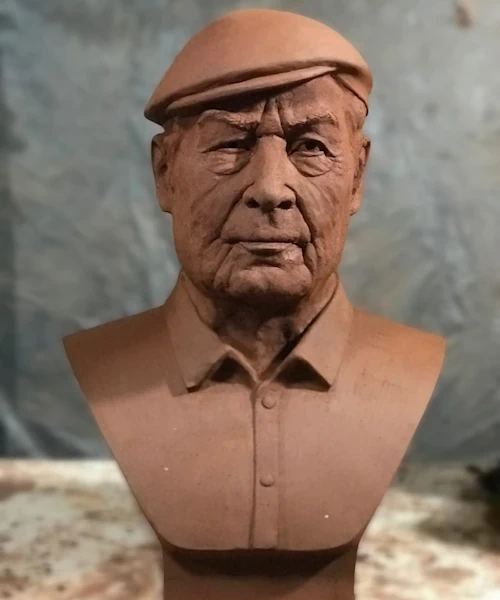
Asymmetry is an extremely common phenomenon in nature. Although the human face appears symmetrical, there are distinct differences between its two halves. Spiral-shaped seashells, the branch structures of trees, and the irregular petal distribution of flowers are the most striking examples of nature's asymmetrical beauty. Sculptors draw inspiration from this natural asymmetry to give their works an organic vitality. In portrait sculptures, the subtle asymmetry between the two halves of the face is a critical element that increases the character and depth of the figure.
Asymmetry in Contemporary Art
In the world of contemporary art and design, asymmetry has become a consciously and systematically used aesthetic principle. Asymmetrical compositions are preferred in a wide range of works, from abstract sculptures placed in public spaces to interior decoration objects. In these works, asymmetry is not just a formal feature; it is also read as a visual expression of contemporary values such as change, uncertainty, and pluralism. Asymmetrical design stands out today as a dominant aesthetic understanding in both art and industrial design fields.
Example of Asymmetry in the Visual
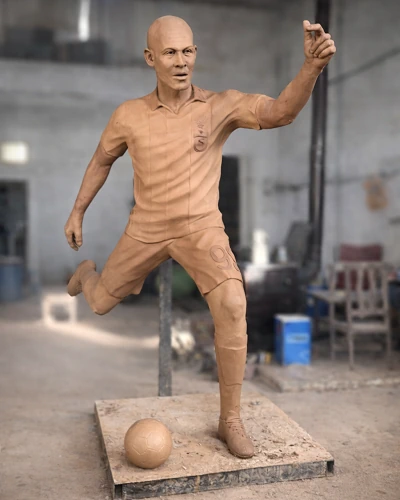
The football player statue in the featured image is a custom order product from our studio's production. Here, too, there is an asymmetrical situation as we mentioned above.
Date Added: