Aphrodite Statue
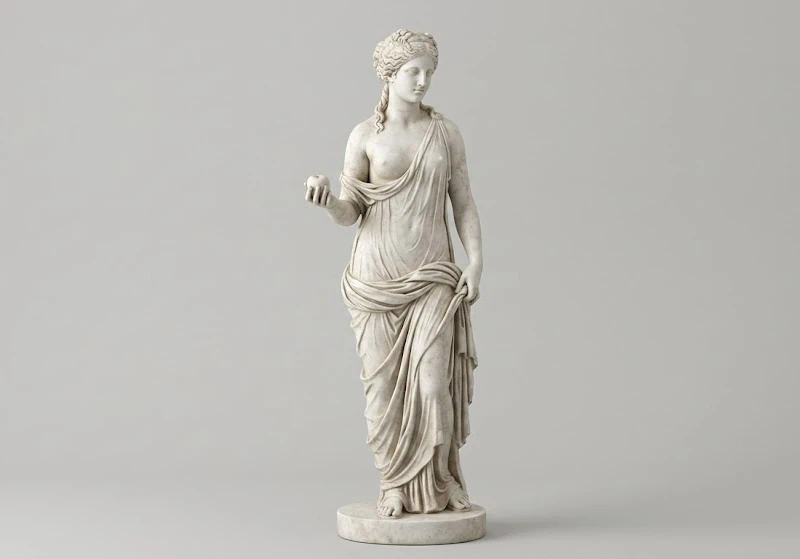
The Aphrodite statue is one of the most well known and most frequently reproduced figures from ancient Greek mythology. The piece shown here is one example of the classic Aphrodite depiction that can be produced in our sculpture workshop. Known as the goddess of love and beauty, Aphrodite has inspired countless sculptors throughout art history and remains one of the essential figures in classical statue collections today.
The Story of the Aphrodite Statue
Aphrodite is known in ancient Greek mythology as the goddess of love, beauty, pleasure, and fertility. In Roman mythology, the same goddess appears under the name Venus. According to Hesiod's Theogony, Aphrodite was born from the sea foam that formed after the castration of Uranus. According to Homer's account, however, Aphrodite is the daughter of Zeus and the sea nymph Dione. These two different origin legends reveal the goddess's importance and mythological richness in the ancient world.
The Symbols of Aphrodite
Aphrodite has been identified in mythology with symbols such as doves, swans, roses, seashells, and the myrtle tree. These symbols were frequently used in works of art to reinforce the identity of the goddess. In addition, the story of Aphrodite's birth also inspired Sandro Botticelli's famous painting "The Birth of Venus."
What Does the Apple in Her Hand Symbolize?
In classical depictions of Aphrodite, the goddess holding an apple in her hand is based on the mythological story known as the Judgment of Paris. According to the legend, Paris presented a golden apple to Aphrodite to be given to the most beautiful goddess, and this gesture led to the apple becoming associated with the goddess as a symbol of beauty. For this reason, many Aphrodite statues produced today include the apple detail.
Who Made the Aphrodite Statue?
In the earliest periods of ancient Greek art, Aphrodite was depicted fully dressed and in a way that could not be distinguished from other goddesses. In the 5th century BC, Greek sculptors began giving the goddess distinctive features of her own. One of the most important turning points in this area was the Aphrodite statue produced by sculptor Praxiteles for the city of Knidos in the 4th century BC. This work went down in art history as the first full scale nude statue of a female deity, and it pioneered a transformation in the depiction of the idealized nude body, which until then had been reserved only for male heroes.
Who Made the Venus de Milo?
The exact creator of the Venus de Milo, one of the most recognized Aphrodite statues in art history, is not fully known today. However, many researchers suggest that the piece may have been produced by the sculptor Alexandros of Antioch. The work is dated to the 2nd century BC.
Where Was the Aphrodite Statue Found?
The Venus de Milo was found in 1820 by a farmer on the volcanic Greek island of Milos in the Aegean Sea. The area where the piece was found is believed to have been a niche belonging to a gymnasion, a sports and education facility of the period. For this reason, it is considered that the statue was likely produced not as a cult object, but as part of the popular decorative statue tradition of the time.
Where Is the Aphrodite Statue Displayed?
Made from Parian marble and standing at approximately 2.04 meters tall, the Venus de Milo is now displayed at the Louvre Museum in France. The fact that the statue is missing its arms has made it an even more mysterious and intriguing work of art. Although Praxiteles' Knidos Aphrodite has not survived to the present day, traces of the work can still be seen in various museums, such as the Vatican Museums, thanks to Roman copies made during the period.
Material Options: Marble, Plaster, and Fiberglass
Aphrodite statues have historically been produced mostly from materials such as marble and plaster. In ancient times, marble was the material most preferred by sculptors due to its durability and workability. Plaster, on the other hand, was widely used especially in the production of replica statues and models. In our workshop, in addition to these traditional materials, we also produce with fiberglass, and this material is recommended to our customers.
Why Do We Recommend Fiberglass?
Fiberglass is a much lighter and more durable material compared to marble and plaster. Thanks to this feature, transporting the statue and placing it in the desired location becomes easier. In addition, fiberglass shows high resistance to outdoor weather conditions and can be used for many years without the risk of breaking or cracking. Thanks to the special painting techniques applied on top, fiberglass statues achieve a result quite close to the appearance of real marble.
Production with 90 Percent or Higher Resemblance
In our workshop, historical figures such as the Aphrodite statue are produced with 90 percent or higher resemblance to the original work. Our sculpting team conducts a meticulous review based on reference images and historical sources to reproduce the figure's posture, the folds of the drapery, and the facial features as realistically as possible. This approach ensures that the resulting statue stays faithful to the original work both artistically and historically.
Where Can an Aphrodite Statue Be Used?
Thanks to its classic and elegant appearance, an Aphrodite statue can be used in many different locations. Gardens, villa entrances, hotels, palaces, museums, art galleries, and private collections are among the most common places where statues like this are preferred. It is also frequently chosen as an aesthetic decorative element in spaces designed with classical architecture, restaurants, and wedding venues.
Aphrodite Statue Price
The price of an Aphrodite statue varies depending on many factors, such as the size of the statue, the material chosen, the level of detail in the surface craftsmanship, and the base options. Statues produced with fiberglass material offer a more cost effective option compared to marble and plaster. To get exact pricing information, a custom quote should be requested from our workshop based on the desired size and details.
If You Would Like to Order a Statue
If you would like to order an Aphrodite statue or a custom statue of a different historical figure, you can reach us through our contact page or our WhatsApp line.
Date Added: