Aluminum Relief: Ataturk Wall Panel with Map of Turkey Price and Sales
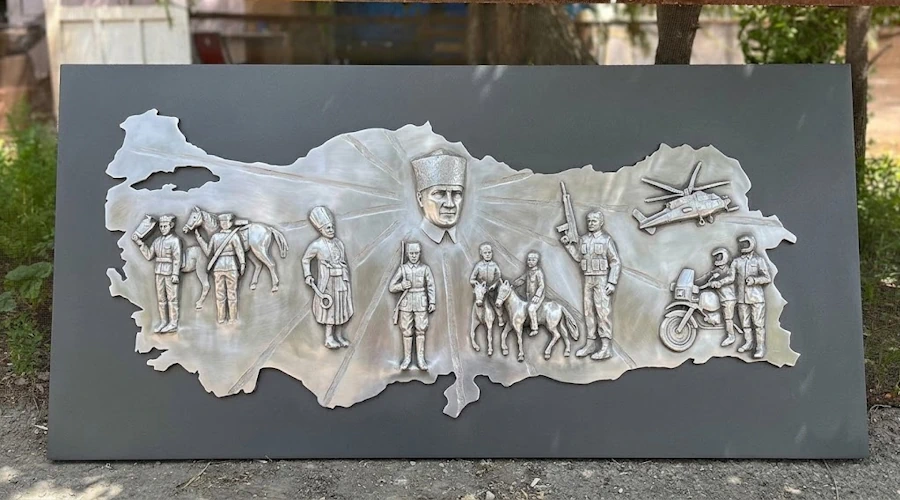
What Is Relief: Relief art is one of the most effective forms of sculpture for telling a story through figures that rise from a surface. This work is an aluminum relief carved on a dark gray panel. At the center of the piece is a map of Turkey, and in the middle of the map is a portrait of Mustafa Kemal Atatürk. The figures placed on the map tell a story that runs from the War of Independence to the present day. When the silvery shine of the aluminum meets the dark background, the piece takes on a look that is both modern and dignified.
What Is an Aluminum Relief?
Relief is a type of sculpture in which figures and embossed forms rise from a background surface. Unlike a fully round sculpture, a relief is viewed from one side and is displayed hung on a wall or mounted on a surface. An aluminum relief is made by producing these embossed forms in aluminum. Because it can be used as a wall panel, it is often preferred in building entrances, meeting rooms, schools, barracks and monument areas. It also creates a strong focal point in home and office decoration.
Turkey Map Relief: Symbol and Meaning
The main background of the relief is an aluminum surface cut in the shape of a map of Turkey. The map represents the homeland and its integrity. Because all the figures are placed on this map, it is clear that the story being told belongs to this land. The coastlines and borders of the map are shaped by hand. The dark gray panel background highlights the silver color of the map and lets the silhouette be read clearly even from a distance.
Atatürk Portrait Relief and the Ray Motif
At the very center of the relief is an Atatürk portrait. The portrait, shown wearing a kalpak and carved down to the shoulders, rises from the center of the map. Lines spreading outward from behind the portrait form a ray motif. These rays symbolize the rising sun, enlightenment and inspiration. They express how the new era created by Atatürk spread to every corner of the country. The ray lines pass between the figures on the map and tie the whole composition back to the portrait. In this way, the eye first goes to the center and then moves on to the scenes around it.
War of Independence Figures
On the left side of the map are scenes telling the story of the War of Independence. Soldiers and horses carrying supplies to the front remind us that this struggle was carried on the shoulders of the people. The figure carrying ammunition represents the sacrifice behind the lines. The horses and other animals show how difficult transport was in those days. The soldier figure standing in the middle of the map, just below the Atatürk portrait, symbolizes the watch and determination of the Turkish soldier, the Mehmetçik. Together, these scenes tell how independence was won through great sacrifice and solidarity.
People and Village Life Scene
The relief includes not only soldiers but also the people themselves. The child figures on a donkey and a horse represent the simple life of Anatolian villages and the civilians who shared the burden during the war years. This scene is one of the emotional centers of the relief, because it shows that liberation was won not only at the front but also in the village, in the field and on the road. The presence of children recalls the future and the legacy passed from generation to generation.
Today’s Turkish Armed Forces and Security Forces
On the right side of the map, the story is carried into the present. The armed stance of the soldier with modern equipment represents the Mehmetçik who stands guard over the homeland today. The helicopter flying overhead symbolizes the advancing technology and air power of the Turkish Armed Forces. The motorcycle figures represent the security forces serving on roads and in cities. When the mounted and foot figures on the left sit side by side with the helicopter and motorcycles on the right, the relief delivers a message of continuity from past to present. The chain stretching from the generation that won independence to the generation that protects it today becomes visible on a single surface.
Relief Composition: A Story Read from Left to Right
A good relief is not made of beautiful figures alone; it also builds a readable composition. In this work, the story flows from left to right. The past is on the left, Atatürk and his principles are in the center, and the present is on the right. The portrait at the center acts as a bridge connecting the two periods. The sizes and heights of the figures are distributed in balance, so the eye can travel across the whole scene without tiring at any point. The depth of the figures was created by embossing them at different levels. As a result, shadows form under light, and the relief takes on different looks throughout the day.
Why Aluminum? Material Advantages for Relief Sculpture
Many materials can be used for a relief. Bronze, stone, marble, fiberglass and aluminum are among the leading options. Aluminum offers strong advantages, especially for large panels.
The first is lightness. Aluminum is much lighter than bronze and steel. Even a large panel can be safely mounted on a wall, and transport, lifting and installation become easier. The second is durability. A natural oxide layer forms on the aluminum surface and prevents rust. It stays intact for many years against rain, humidity and temperature changes. The third is detail transfer. Aluminum flows well into the mold and reproduces fine lines successfully. Facial features, uniform folds and the edges of the map come out sharp and clear. The fourth is appearance. The silvery, metallic surface creates a very strong contrast against a dark background. It looks elegant even without paint or patina. The fifth is easy maintenance. The surface can be cleaned by wiping it with a damp cloth and needs no special care. The sixth is affordability. It costs less than bronze and is a recyclable material, which makes it a sensible choice for both budget and the environment.
Aluminum Relief Finishing and Wall Panel Installation
After the relief is produced, finishing processes are applied to its surface. The parts are cleaned, burrs are removed and the surface is brought to the desired level of shine. For this work, a matte, satin-like silver look was chosen. The raised areas of the figures look lighter and the recessed areas look darker, which increases the sense of depth. The relief is then fixed onto the dark gray panel background. The panel color is chosen to bring out the brightness of the aluminum. For wall installation, load-bearing connection points are prepared on the back. This allows the panel to be hung both securely and evenly.
Where Are Aluminum Relief Wall Panels Used?
Aluminum relief panels make a strong impact in many kinds of spaces. Entrance halls of public institutions, meeting and ceremony halls, school and university corridors, military units and barracks, municipal buildings and monument areas are the leading places of use. In private spaces, they are preferred at business entrances, on office walls and in villa living rooms. A panel like this, with a map of Turkey and an Atatürk portrait, gives its space a dignified and institutional identity. Being both decorative and meaningful also makes it popular for gift and commemorative orders.
Custom Relief Design and Order
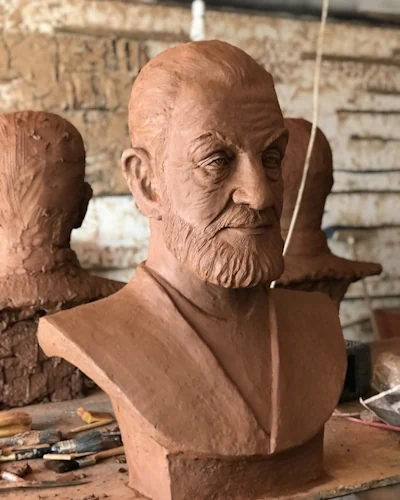
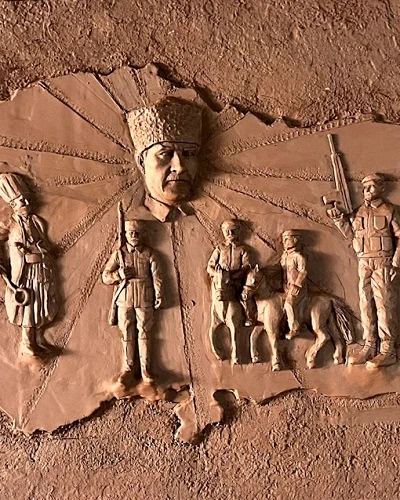
Relief works are mostly prepared as custom orders. The panel size, the shape of the map, the choice of figures and the composition are determined according to the client’s wishes. A company logo, a date, an inscription or special symbols can also be added to the design. The process begins by turning the idea into a sketch. Once the sketch is approved, clay modeling is carried out, the mold is made and the aluminum piece is produced. We exchange ideas with the client at every stage, so the finished work matches what was imagined.
Contact Us to Order an Aluminum Relief
If you want a Turkey map relief with an Atatürk portrait or a custom aluminum relief on another subject for your institution, school or space, get in touch with us. Share your ideas, dimensions and space details. Let us carry out the entire process meticulously, from sketch to installation.
Registration Date:
Rate:
5
1 Vote