
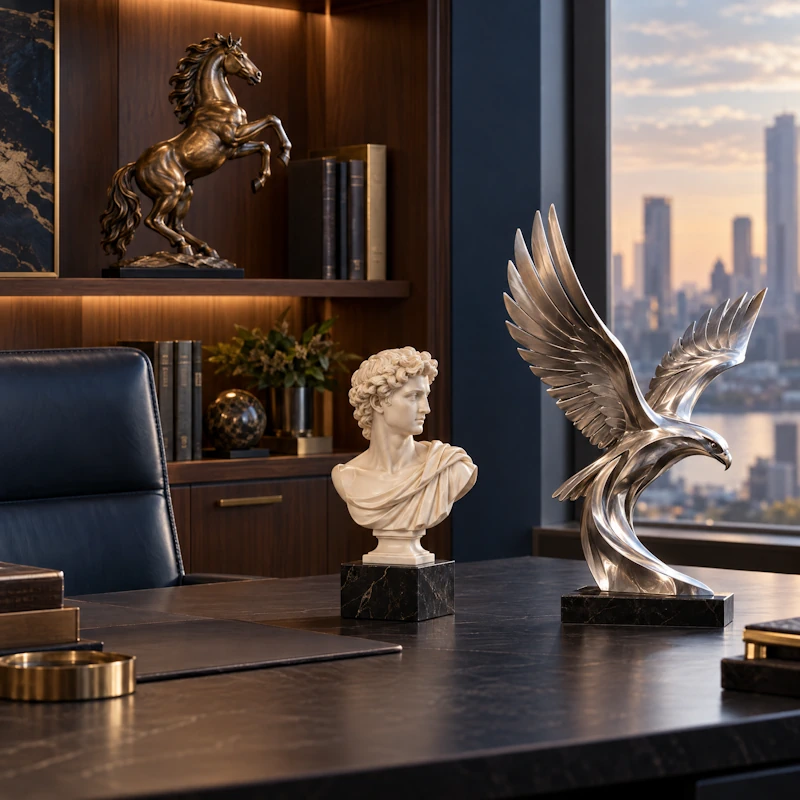
Sculpture Selection by Interior Space
Interior sculptures are decorative works of art that add character and elegance to enclosed spaces such as living rooms, entrance halls, studies, offices, meeting rooms and waiting areas. A sculpture chosen in the right size changes the atmosphere of a room, gives the decor a focal point and lends the space a special spirit. Modern and abstract forms in home decoration, figures reflecting a corporate stance in offices, and tabletop and floor sculptures used with lighting are the most preferred solutions. On this page you will find room size, lighting, color harmony and placement suggestions for choosing a sculpture by interior space. With material options such as bronze, marble, ceramic and metal, you can easily determine the custom-designed sculpture best suited to your living space. Total number of records on our Sculptures for Interior Spaces page: 1. Last Updated:
Sculptures for Interior Spaces
-
Executive office sculptures, fiberglass models for office decor and gifts
Sculpture Product Categories
Frequently Asked Questions - FAQ
When choosing a sculpture size for an interior space, consider the width of the room, the ceiling height and the wall or corner where it will stand. As a general rule, the sculpture should fill between one third and one half of the surface where it is placed. Very small sculptures get lost, while very large ones make the space feel cramped. Floor sculptures suit wide and tall areas, while tabletop sculptures look better on side tables and shelves. If you are unsure, you can cut a paper model and try it in place by eye. This information makes your planning easier.
Bronze, marble, ceramic, resin and metal are the most commonly used materials for indoor sculptures. Bronze and marble offer a long lasting and prestigious look, but they are heavy. Ceramic and resin are lighter and suit detailed, colorful designs. Metal sculptures blend very well with modern decor. Since there is no weather effect indoors, the choice depends mostly on appearance, weight and budget. The load bearing capacity of the floor and the placement area should also be taken into account when deciding on the material.
Indoors, the sculpture should be placed at a point that is noticed at first glance when entering the space. A corner that receives light, the front of an empty wall or the end of a passage are the best places. Leave breathing room around the sculpture and do not fill its surroundings with objects. Adjustable lighting highlights the form and details of the sculpture. For heavy works, the load bearing capacity of the floor should be checked, and fragile works should be kept out of reach of children and pets. This way you will not face surprises after placement.