What Is Waxing
What Is Waxing: The Intersection of Protection and Aesthetics in Sculpture Art
Sculpture art is not merely a process of creating form and mass, but also a discipline of making these works resilient against the corrosive effects of time. At this point, one of the most critical processes we encounter is waxing, which is a professional wax coating method applied to protect sculpture surfaces from external factors, prevent oxidation, and provide a profound luster to the work. This process is of vital importance for the longevity of works produced from materials such as bronze, metal, wood, and stone. Waxing prevents moisture, acid rain, and air pollution from penetrating the material by creating a micro-level thin barrier on the surface of the artwork.
Fundamental Advantages of the Sculpture Waxing Process
Waxing a sculpture is not just a visual preference but also a technical necessity. The greatest advantage provided by this process is the creation of corrosion resistance. Metal sculptures enter a natural oxidation process when they come into contact with air; wax keeps this process under control. Additionally, the wax layer minimizes the accumulation of dirt and dust by filling the pores on the surface. From an aesthetic perspective, waxing highlights the details in the sculpture's form and offers a rich texture appearance by ensuring that light is refracted more homogeneously on the surface. While revitalizing the color of the work, it allows for a final touch suitable for the artist's vision with matte or glossy finish options.
Waxing Techniques: Hot and Cold Application
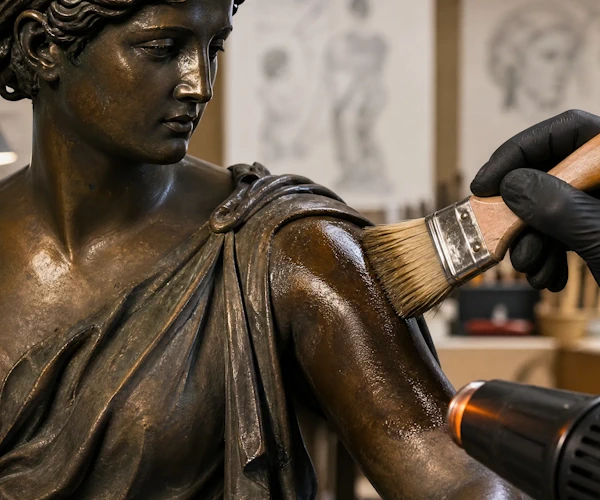
The process of applying wax to the sculpture surface is carried out with two main techniques depending on the material of the work and the desired result. In the hot waxing technique, the surface of the sculpture is heated to a certain degree with the help of a torch or heat gun. The wax applied to the heated surface penetrates deeply into the pores of the metal, ensuring a more permanent and robust adhesion. This method is generally preferred after the patina process for cast bronze sculptures. Cold waxing, on the other hand, is the application of wax to the surface at room temperature with a brush or a soft cloth in circular motions. Used on more sensitive surfaces or during periodic maintenance processes, this method gives the work a natural and soft glow. In both methods, after the wax has dried, a polishing (buffing) process is performed with a clean cloth to obtain a smooth surface.
Types of Wax Used and Material Selection
The quality of the material used in the waxing process directly determines the effectiveness of the protection. The most preferred type in the art world is known as microcrystalline wax. This petroleum-derived wax has a higher melting point than natural beeswax and does not cause any chemical degradation on metal surfaces as it does not contain acid. In addition to this wax, which provides museum-standard protection, plant-based carnauba wax is also frequently used due to its hardness and high-gloss properties. The mixture of these two materials gives the most ideal results in terms of both flexibility and durability. Natural beeswax is an alternative preferred mostly for indoor wooden sculptures to provide an aesthetic appearance without preventing the material from breathing.
SEO-Friendly Sculpture Maintenance and Waxing Strategies
The sculpture waxing process is part of a professional restoration and conservation process. In an SEO-oriented content strategy, using keywords such as "sculpture protection", "bronze polishing", and "wax coating" in a natural flow within the text increases its discoverability by experts and art lovers. Regular maintenance is essential for an artwork to preserve its value. It is recommended to renew the wax layer at least once a year for outdoor sculptures and every few years for indoor ones. The old wax layer should be cleaned with appropriate solvents before a new application, and the surface should be completely purified. This meticulous process is considered the most effective protection method that ensures the artwork maintains its original grandeur for generations.
Conclusion: The Subtle Touch That Extends the Life of Art
Waxing is a craft that takes place in the technical kitchen of sculpture art, requiring patience and expertise. When combined with the right material selection and appropriate application technique, it transforms an ordinary surface into an artwork that defies time. For artists and collectors acting with a sense of surface protection, waxing is not just a polishing process, but an effort to preserve the soul of art in the physical world. Regardless of the sculpture's material, the protective shield offered by the wax is the strongest ally in preserving the aesthetic value and historical texture of the work. It should not be forgotten that a well-preserved sculpture is the clearest bridge carrying the artist's message to the future. For the sustainability of art, correct application should always be a priority.
Date Added: