What is Enlargement?
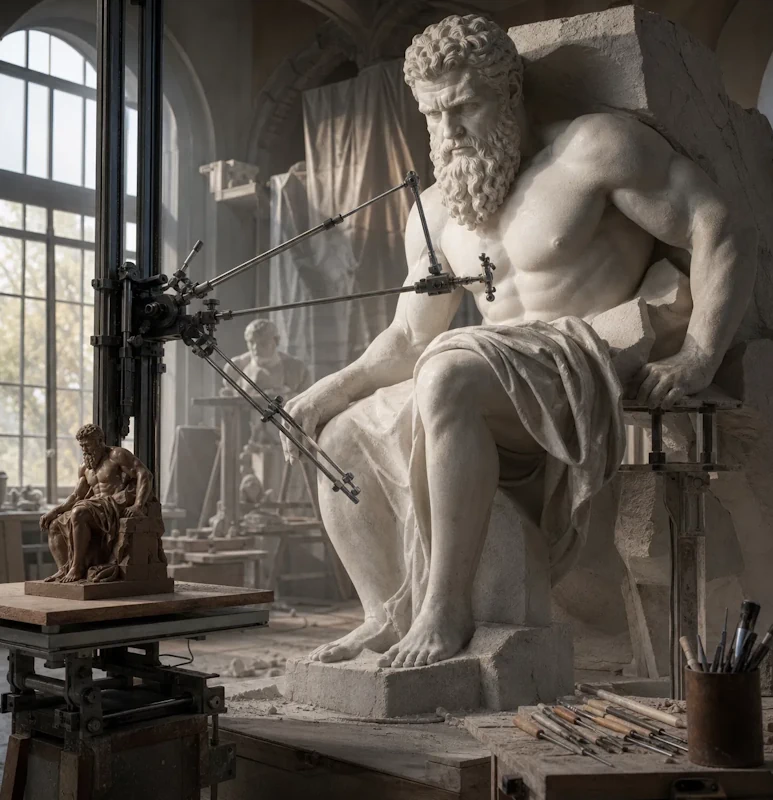
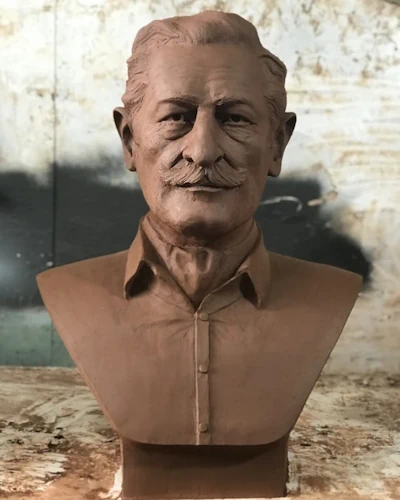
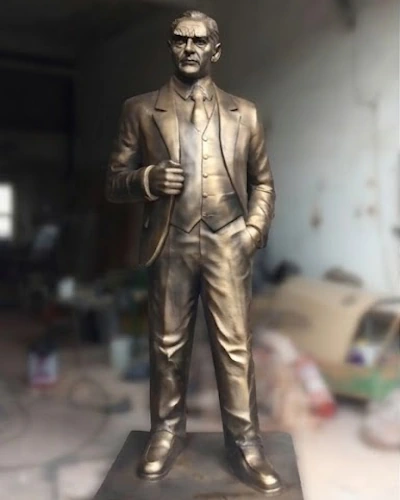
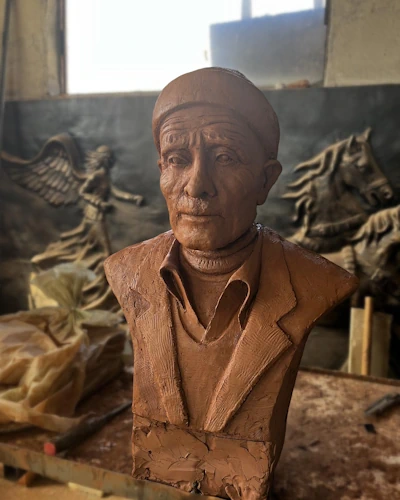
Agrandisment (enlargement) is the process of scaling up an image, form, or object beyond its original dimensions. The term — borrowed from the French word agrandissement, meaning "enlargement" — is used in different contexts across photography, sculpture, and architecture. In the art of sculpture, agrandisment refers to the process of transforming a small-scale model or bozzetto into the large-scale finished work.
The Agrandisment Process in Sculpture
In sculpture, agrandisment is an exceptionally precise and technical undertaking. Preserving proportions while scaling up a small model is critical to the success of the final piece. In the traditional method, a scale factor is determined and every dimension is multiplied by that factor to construct the large-scale armature and model. The agrandisment process is not simply a matter of making things bigger; it also means managing the new spatial relationships that emerge at a larger scale and the fresh visual dynamic the work establishes with its audience. For this reason, experienced sculptors actively intervene in the design during agrandisment, anticipating at large scale the problems that go unnoticed in the smaller model.
Methods for Transferring Proportions
Various methods are used to transfer proportions accurately during the agrandisment process. In the traditional approach, a pointing cage — a grid system made of wire or wood — is placed over both the small model and the large armature, allowing measurements to be transferred point by point. A mechanical device called a pantograph is used for two-dimensional drawing enlargements. Today, three-dimensional scanning and CNC milling technology make it possible to carry out the agrandisment process far more quickly and with millimetre-level precision.
Agrandisment and Monumental Sculpture Production
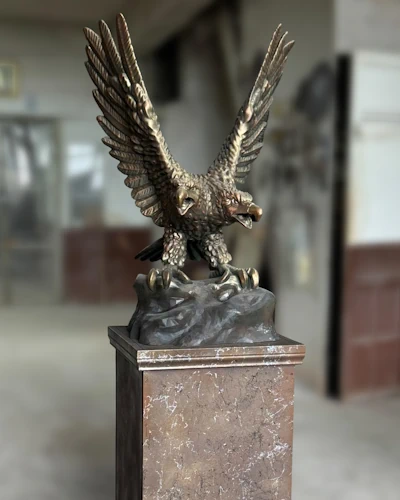
Monumental sculpture production is one area in which the success of the agrandisment process is decisive for the impact a work creates in the public realm. A model that looks perfect at small scale can appear disproportionate or lifeless once enlarged. For this reason, sculptors with experience working at monumental scale regard agrandisment as a distinct area of expertise in its own right. In large-scale works, factors such as the effects of gravity, wind loads, and appearance from a distance must all be taken into account from the design stage onwards.
Agrandisment in Photography
In photography, agrandisment refers to the process of enlarging a negative film or digital image to produce a print. In darkroom technique, the enlarger projects the image on the negative onto light-sensitive paper using a beam of light. In digital photography, software-based enlargement algorithms perform this function. As the magnification ratio increases, preserving image quality becomes progressively more difficult — a constraint that defines the technical limits of both analogue and digital photography.
As traditional agrandisment methods are increasingly supplanted by digital technologies, the measurement and proportion-transfer skills passed down through master–apprentice relationships in longstanding art forms such as sculpture and photography are themselves undergoing transformation — prompting art educators to reconsider the balance between preserving traditional competencies and embracing technological innovation.
Date Added: