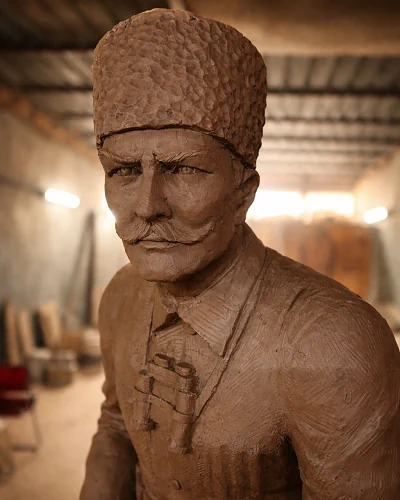
What is a Mirette?
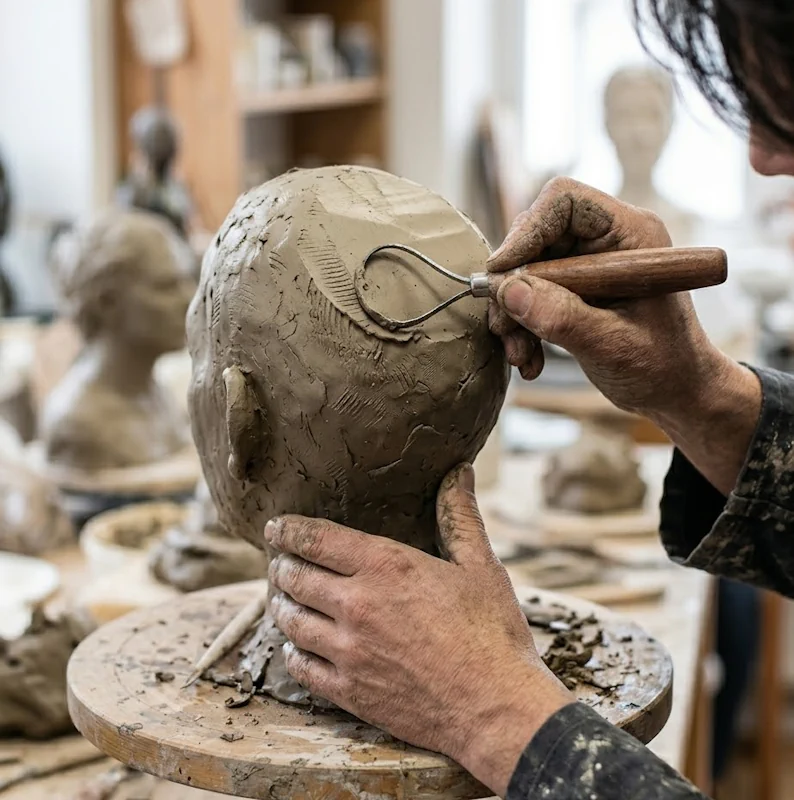
Mirette is a special hand tool made from wire or thin metal strips used in sculpture and modeling work to smooth the surface of clay, plaster and soft materials, eliminate roughness and create fine details. This term of French origin is used as a technical term in sculpture studios and is particularly the primary tool for the fine processing stage after rough modeling in figurative modeling.
Structure and Types of Mirette
The mirette generally consists of a wooden or plastic handle and a flexible wire or metal strip attached to this handle. The wire part is bent in a loop shape and formed into different shapes. The straight-edged mirette is used for flat surfaces; the serrated-edged mirette for rough and textured surfaces; and the curved mirette for concave and convex sloped areas. A mirette set generally contains many tools in different forms and sizes together. Professional sculptors gradually build special mirette collections according to their own usage habits over time.
Use of Mirette in Sculpture
Clay modeling involves the mirette at multiple stages of the process. It is used to cut and remove excess clay during the rough form creation stage. In the surface correction stage, the rough clay surface is smoothed with the mirette. Narrow-tipped mirette types are preferred for fine processing of muscles, curves and facial features in detail work. Working with a mirette requires a different hand coordination than holding a pen; this skill can only be developed through regular practice.
The Difference Between Mirette and Other Modeling Tools
Many different tools are used together with the mirette in a sculpture studio. Wooden spatulas are preferred for adding clay and smoothing large surfaces. Metal spatulas offer a harder pressing and cutting effect. Unlike other tools, the mirette can be used both to cut and to shape thanks to the flexibility of the wire. This dual functionality makes the mirette the most versatile tool in the modeling process.
Mirette in Professional Studios
In professional sculpture studios, the quality and variety of mirettes directly affects production quality. Quality mirette wires maintain their shape during long-term use while low-quality ones deform quickly. Some studios use custom-made mirettes in special sizes and forms for specific projects in addition to standard mirettes. Mirette maintenance also requires attention; if clay residues are not cleaned, the wire can rust and leave marks on the working surface.
Points to Consider When Choosing a Mirette
Mirette selection is a critical decision that directly affects the quality of modeling work. All-purpose mirette sets with medium-hardness wire are the most suitable option for beginner sculptors. Professional sets with different wire thicknesses and form varieties should be preferred for advanced level work. Wire quality is one of the primary determining factors in mirette selection; stainless steel wire is the most preferred material as it is both long-lasting and easily cleaned of clay residues. The ergonomic structure of the handle is also a detail that should not be overlooked; a handle that fits well in the hand and does not slip during long working sessions significantly reduces fatigue. The weight balance of the mirette is also a criterion frequently mentioned by masters, as an excessively heavy mirette can lead to hand trembling and uncontrolled surface marks. Attention should also be paid to the strength of the wire connection point when purchasing a mirette; mirette types with weak connections carry the risk of the wire part separating from the handle during intensive use.
Date Added: