Pushkin Museum - Moscow, Russia
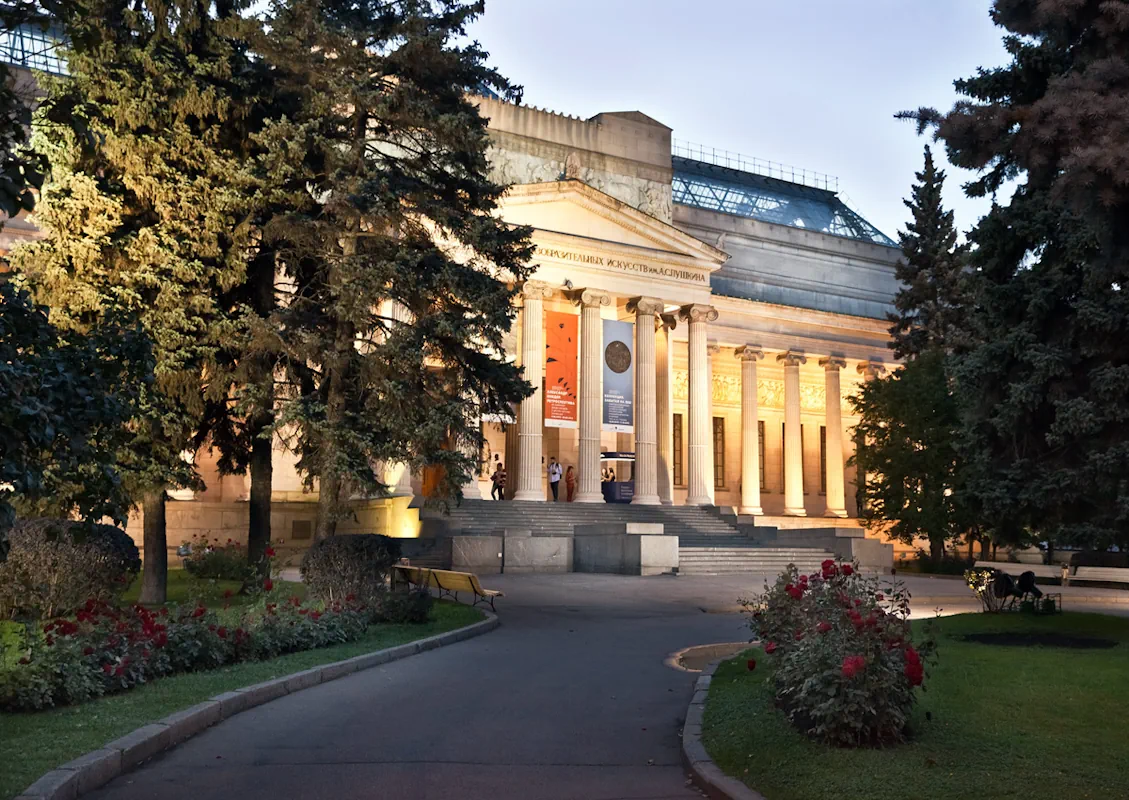
The Pushkin Museum is an art center in the heart of Moscow, very close to the Kremlin, and ranks among the most important museums of European art in Russia. With its rich collection stretching from Ancient Egypt to the Renaissance, and from the Impressionists to modern art, it is a favorite destination for art lovers every year. For Turkish visitors it carries a special meaning: most of the gold found at Troy is displayed here. In this article, you will find the museum’s history, its address, its collection, and the fascinating story of the Treasures of Troy.
What Is the Pushkin Museum? History and Founding
The museum was the brainchild of Ivan Tsvetaev, a professor at Moscow University. Tsvetaev envisioned a fine arts museum where students and the public could see world art up close. To turn this dream into reality, he brought the philanthropist and businessman Yuri Nechayev-Maltsov and the architect Roman Klein on board. Construction began in 1898 and lasted until 1912. Alongside Klein, the engineer Vladimir Shukhov also left his mark on the building’s design.
The museum opened on 31 May 1912 (13 June in the modern calendar) in the name of Emperor Alexander III. Tsar Nicholas II and his family also attended the opening ceremony. After the Revolution, the institution became a state museum; in 1932 it took the name State Museum of Fine Arts, and in 1937 it was named after the great Russian poet Alexander Pushkin. In other words, this is not a house museum dedicated to the poet’s life, but a large fine arts museum showcasing world art. Today, with a collection of around 700,000 works, it is considered one of the largest museums in Russia.
Where Is the Pushkin Museum? Address and Transport Information
The Pushkin Museum is located at 12 Volkhonka Street in Moscow’s Khamovniki district. Standing right next to the Kremlin and opposite the Cathedral of Christ the Saviour, it is easy to add to a tour of the city center. The metro is the most practical way to get there. The nearest station is Kropotkinskaya, and the museum is a few minutes’ walk from the exit. You can also walk from Red Square and the area around the Kremlin.
The museum is not a single building. Alongside the main building, at 14 Volkhonka Street, there is a gallery of 19th- and 20th-century European and American art. Opening hours may change from season to season. According to the information published on the official website, the main building is closed on Mondays. It can be visited on Tuesdays, Wednesdays, Saturdays and Sundays between 11:00 and 20:00, and on Thursdays and Fridays between 11:00 and 21:00. We recommend checking the current hours on the museum’s official website before you go.
Pushkin Museum Treasures of Troy: The Gold of Priam in Moscow
What makes the museum special for Turkish readers is the Treasures of Troy. These artifacts were found in 1873 by the German amateur archaeologist Heinrich Schliemann at the Hisarlık Mound in Çanakkale, that is, at ancient Troy. Frank Calvert also had a share in the excavations. Schliemann attributed the finds to Priam, the king of Troy in Homer’s account, and named them “Priam’s Treasure.” Today, however, it is accepted that the artifacts belong to the Troy II layer and date to around the middle of the 3rd millennium BC. In other words, the treasure goes back centuries before the war Homer describes. Gold diadems, earrings, bracelets, necklaces, pins and beads are the most striking pieces of the treasure.
The treasure’s journey is as gripping as a novel. Schliemann smuggled the artifacts out of Ottoman lands. The sight of his wife Sophia wearing them, calling them “Helen’s jewels,” led to the affair becoming public. The finds eventually settled in the Berlin museums. In 1945, the Red Army took Priam’s Treasure from Berlin and carried it to Moscow. For decades, the Soviet administration claimed to have no knowledge of the artifacts’ whereabouts. Finally, in 1994, the Pushkin Museum admitted that it held the treasure. In 1996, nearly 260 gold and silver artifacts went on public display for the first time after a gap of almost half a century.
Today, these artifacts can be seen in the museum’s permanent exhibition, in the hall devoted to the finds from Troy. In 2023, the museum also organized a special project on the occasion of the 200th anniversary of Schliemann’s birth and the 150th anniversary of the discovery of Priam’s Treasure. The legal ownership of the artifacts, however, is still disputed. In 1998, the Russian Duma declared these artifacts the property of the Russian state. Germany argues that the treasure was taken from its own museums and demands its return. Turkey, for its part, emphasizes that the artifacts were taken from Trojan soil. For this reason, the Treasures of Troy are not merely an art exhibition, but also one of the best-known examples of the debates over cultural heritage.
What Is in the Collection? From Ancient Egypt to Impressionism
The museum’s collection covers paintings, sculpture, drawings, decorative art, photographs, archaeological artifacts and coins. Most of the works in the Ancient Egypt hall have been on display since the 1912 opening and come from the collection of Vladimir Golenishchev. Greek vases, ancient sculptures, Byzantine and medieval works, and paintings by Renaissance and Dutch masters take visitors on a journey through time. The 19th- and 20th-century gallery, meanwhile, houses works by artists such as Monet, Renoir, Cézanne, Van Gogh, Gauguin, Matisse and Picasso. A significant part of this richness rests on the holdings of Moscow collectors such as Morozov and Shchukin.
For those interested in the art of sculpture, the museum holds a special place. The museum was founded on the casts of ancient sculptures that Tsvetaev collected to teach classical art. This tradition continues today. Plaster casts of famous works such as Michelangelo’s David can be examined up close here.
Pushkin Museum Visitor Guide: Practical Tips
If you plan to see the Treasures of Troy, put them at the start of your route. Since the layout of the halls may change over time, it is a good idea to check the current museum plan at the entrance. The main building and the gallery at 14 Volkhonka are separate structures. If you want to tour the entire collection, you should set aside at least half a day. Because the museum stays open until 21:00 on Thursdays and Fridays, spending the day around the Kremlin and moving on to the museum in the evening makes for an enjoyable plan. Follow the official website for ticket and event information; rules on photography and bags may change from time to time.
Date Added: