Pergamon Museum - Berlin, Germany
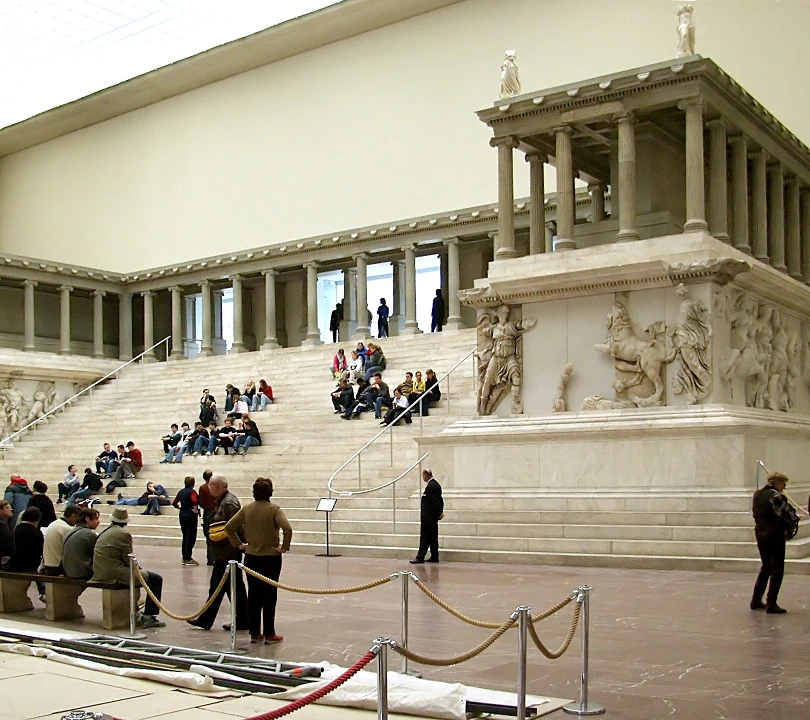
The Pergamon Museum, located in Germany's capital, Berlin, is a massive cultural institution regarded as one of the most important archaeological museums in the world. Situated on Berlin's Museum Island, the museum offers a unique experience by displaying large-scale architectural structures and archaeological artifacts brought from the ancient world in their original sizes. Welcoming millions of visitors every year, the Pergamon Museum is the most visited institution on Berlin's Museum Island, which is a UNESCO World Heritage site.
History of the Pergamon Museum
The museum's history is based on excavations carried out by German archaeologists in Anatolia during the late 19th century. Between 1878 and 1886, a German team led by Carl Humann conducted extensive excavations in the ancient city of Pergamon, located in the present-day Bergama district of Turkey. During these excavations, findings that would astonish the world were uncovered. To exhibit these works, the first museum building was opened in Berlin in 1901; however, as it became insufficient, a new and larger museum building designed by Alfred Messel and Ludwig Hoffmann was opened to visitors in 1930. The museum was damaged during World War II and remained on the East side of divided Berlin for many years. Following German reunification, extensive restoration work was initiated, and the museum regained its current grandeur.
The Pergamon Altar
The museum's most magnificent and famous work is the Pergamon Altar, which gives the museum its name. Built in Pergamon in the 2nd century BC, this monumental structure served as an altar dedicated to Zeus and Athena. The most striking feature of the altar is its frieze decorations, which are approximately 113 meters long. These massive friezes, crafted with the high-relief technique, depict scenes from the Gigantomachia—the legendary battle between the Olympian gods and the Giants. In terms of the art of sculpture, these friezes are considered among the most impressive and dynamic examples of the Hellenistic period. The dramatic poses of the figures, intense emotional expressions, and extraordinary anatomical details clearly demonstrate the mastery of the era's sculptors.
The Ishtar Gate
Another iconic masterpiece of the Pergamon Museum is the Ishtar Gate, brought from Babylon. Built in 575 BC during the reign of King Nebuchadnezzar II, this majestic gate is considered one of the largest and most impressive architectural works of the ancient world. Covered with bright blue glazed bricks, the gate's surface features mythological animal figures such as dragons and bulls. A significant portion of the original gate has been reconstructed in the museum for visitors. The Processional Way leading to the Ishtar Gate has also been partially restored in the museum, offering an impressive experience that allows visitors to feel the grandeur of Babylon.
Market Gate of Miletus
The third major monumental work of the museum is the 2nd-century AD market gate brought from the ancient city of Miletus, located in modern-day Turkey. This gate from the Roman period reflects a synthesis of Hellenistic and Roman architecture with its two-story facade. Consisting of columns, arches, and niches with statues, this grand structure was dismantled in pieces by German archaeologists in 1903 and transported to Berlin. Carefully reassembled in the museum, the gate vividly conveys the atmosphere of the central area of an ancient Roman city to its visitors.
Museum of Islamic Art
The Pergamon Museum is not limited solely to ancient artifacts. The Museum of Islamic Art, located on the upper floor, hosts an important collection focusing on the artistic and architectural heritage of the Islamic world. The most striking work in this section is the 8th-century decorated facade brought from the Mshatta Palace in Jordan. This embossed facade, adorned with plant motifs and animal figures, is among the most valuable examples of early Islamic art.
Visiting and Important Notes
The Pergamon Museum is located on Berlin's Museum Island, which is reached via bridges to this cultural island in the middle of the Spree River. The museum can be visited alongside the Neues Museum, Alte Nationalgalerie, and Bode Museum, all within walking distance. To explore all of the museum's large-scale exhibition halls, a visit of at least two to three hours should be planned. Since the main hall containing the Pergamon Altar is currently closed for restoration, it is recommended to check the museum's current open hall information before visiting. For anyone interested in the art of sculpture and ancient civilizations, the Pergamon Museum offers one of the most impressive museum experiences in Berlin and the world.
Date Added: