Abay Kunanbayev Statue - Kazakhstan Almaty
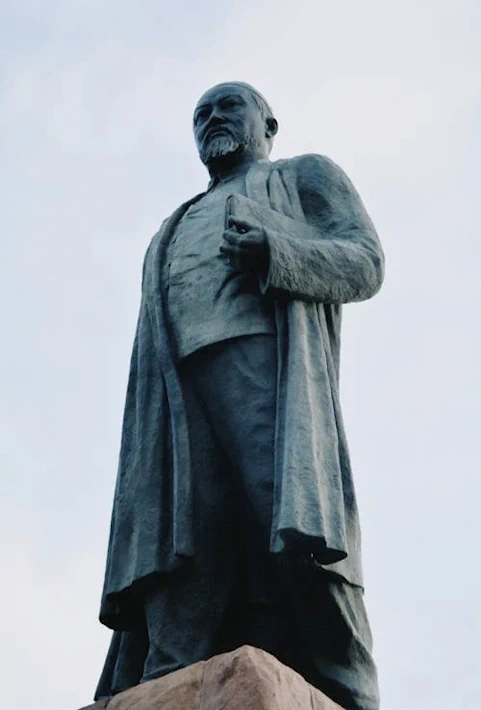
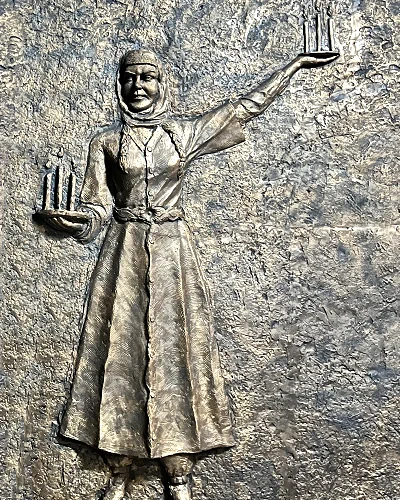
On one of Almaty's busiest avenues, a figure stands in the heart of the city: Abay Kunanbayev. The pinnacle of Kazakh poetry, the unproclaimed founder of Kazakh literature, and the voice of his people. The statue dedicated to him occupies the undisputed center of the city's cultural identity; while the surrounding Abay Square is one of Almaty's most important areas for gatherings, celebrations, and protests. Why is a statue of a poet placed at the focus of a city's most critical public space? To answer this question, it is necessary to understand who Abay was and why he holds such a deep place in Kazakh culture.
Abay Kunanbayev: The Voice of Kazakh Poetry
Ibrahim Kunanbayev was born in 1845 in the Semipalatinsk (today's Semey) region of northeastern Kazakhstan. Known over time by the nickname "Abay," this poet drew attention from childhood with an extraordinary intellectual capacity. The education he received both in traditional Kazakh settings and Russian schools made him one of the best-educated Kazakh intellectuals of his era. Knowing Persian, Arabic, and Russian, Abay functioned as a bridge, transferring the literatures of these languages into Kazakh culture.
Abay's poetry combines the strongest elements of the Kazakh oral tradition with the discipline of written literature. His poems describing nature, humanity, love, and justice exhibit the musical richness of the Kazakh language while carrying philosophical depth. The forty-five prose paragraphs known as the Book of Words are considered the most intense expression of Kazakh ethical understanding and social criticism; these works are taught and memorized in Kazakh schools today.
Abay Square and Urban Memory
The square located in front of the Abay Statue in Almaty is one of the city's most meaningful public spaces. Notable for its size and location, this area has also set the stage for significant political events in Kazakhstan over the years. During the protests that began across Kazakhstan in January 2022 and spread rapidly, Almaty witnessed dense crowds in this square. A square dedicated to a poet transformed into a natural gathering area for political expression and social opposition; this transformation strikingly demonstrates how public spaces and statues become involved in the flow of history.
Around the square, the Kazakh State Philharmonic Hall, various cultural institutions, and the city's vibrant cafe culture exist together. By being situated at the center of this lively urban fabric, the Abay Statue has moved beyond being just a commemorative monument; it has become part of a living, breathing urban experience.
Modern Reflections of Abay
The legacy of Abay Kunanbayev is extremely vibrant in contemporary Kazakhstan. His poems are mandatory in school curricula, his birthday on August 10 is officially celebrated, and a significant portion of Kazakh cultural institutions bear his name. Series and documentaries about Abay's life broadcast on Kazakh television take on the function of introducing him to new generations.
In the international arena, UNESCO declared 2020, the 175th birth anniversary of Abay Kunanbayev, as the Year of Abay. This recognition shows that Abay is accepted not only as a national but as a universal cultural figure. As the representative of Kazakh language and literature on the world stage, Abay carries a meaning that transcends national borders. The statue in Almaty continues to both fascinate and provoke thought in its visitors as the local and concrete expression of this universal heritage.
Abay Route in Almaty
The Abay Statue and its surrounding square are candidates to be the starting point for cultural tours of Almaty. From here, a route extending to the Kazakh National Museum, Panfilov Park, Zelyony Bazaar, and the Medeu Ice Skating Rink and Shymbulak Ski Resort located on the mountain slopes south of Almaty creates a comprehensive experience presenting both the cultural and natural riches of the city. The Abay Statue is the cultural anchor of this rich picture; it offers visitors the key to understanding Kazakhstan.
Date Added: