Turkish Relief Price and Sales
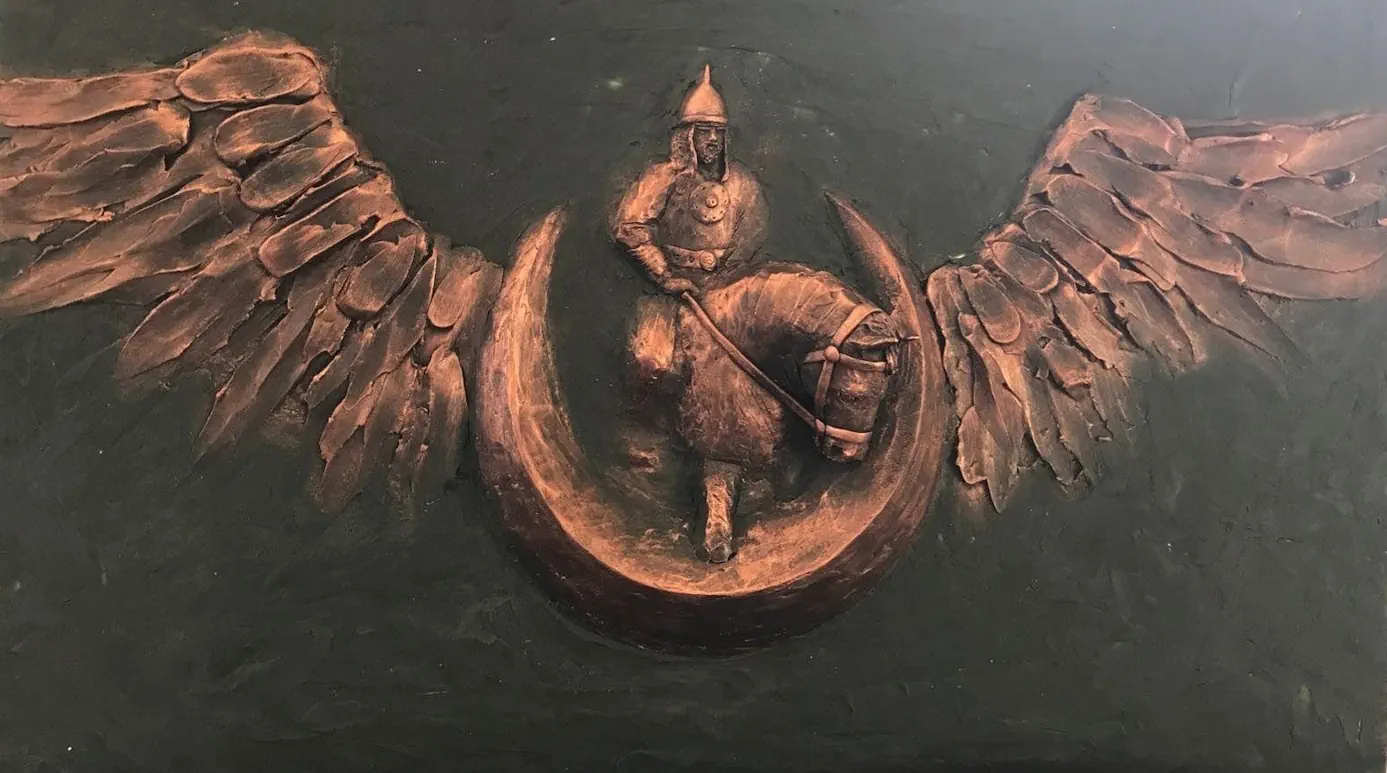
When you look at the work in the photograph, the first thing you feel is weight. Bronze figures rising on a dark background, a mounted Turkish warrior inside a crescent, and wings spreading out to both sides. This relief is not just a wall ornament, it is an epic cast in stone and metal. When the mounted warrior figure, the crescent, and the wings are used together, the resulting composition captures the essence of Turkish culture in a single work.
Relief art sits somewhere between sculpture and painting. Figures that rise and swell from a flat surface give the viewer both a sense of depth and a feeling of movement. This effect has been achieved very powerfully in the work in the photograph. When the feather details of the wings, the craftsmanship in the muscles of the horse, and the details in the warrior's armor all come together, the result is a truly impressive piece.
Symbols Used in Turkish Reliefs
Certain symbols in Turkish art and culture have remained unchanged for centuries. The crescent leads the list. Having been an inseparable part of Turkish identity since the Ottoman era, the crescent in this relief has become almost a throne for the mounted warrior. The warrior sits within the crescent and the crescent embraces him. This composition is not coincidence, it is a deliberate design choice.
Wings hold a deep place in Turkish mythology. From the Grey Wolf legend to the Ergenekon epic, the image of wings has always symbolized freedom, ascension, and divine power. The wide spreading of the wings to both sides in this relief adds both aesthetic balance and meaning to the work. The mounted warrior looks as though he is about to take flight together with those wings.
The mounted warrior figure is perhaps the most universal Turkish symbol. Stretching from the steppes of Central Asia to Anatolia, this figure represents a tradition thousands of years old. This warrior standing with his armor, helmet, and horse tells not of an individual but of a spirit.
Turkish Relief Order Process
Municipalities, cultural centers, museums, and private institutions have been showing great interest in relief orders in recent years. The most important reason for this is that reliefs can easily be used in both indoor and outdoor settings. Turkish themed reliefs placed on the exterior facade of a municipal building, on the entrance wall of a cultural center, or on the back panel of a square instantly give that space an identity.
The first step in the ordering process is defining the concept. Which symbols will be used, what the composition will look like, what the dimensions will be, what material will be used. Looking at the work in the photograph, it is clear that these decisions were made very well. The choice of bronze color on a dark background, how much the figures will rise from the surface, the placement of the wings within the composition. All of these were thought through in advance and brought into harmony with one another.
Material selection is also a critical decision. For outdoor use, bronze or bronze coating is the most durable option. For indoor use, polyurethane, plaster, or composite materials can also be preferred. The bronze coating technique used in the work in the photograph gives the piece both visual depth and a long lifespan.
Turkish Relief Examples Across Turkey
Turkish themed reliefs can be encountered in public buildings, cultural centers, and squares in many cities across Turkey. The interest of municipalities in Central Anatolia and Eastern Anatolia in particular toward these types of works has increased noticeably in recent years. Reliefs that interpret Seljuk and Ottoman motifs with a modern approach stand out in cities like Konya, Ankara, and Erzurum.
The composition of the work in the photograph is one of the standout examples in this field. There are very few works that handle the trio of crescent, wings, and mounted warrior together this successfully. The proportion of the figures to the surface, the balance of the wings, and the central position of the warrior in the composition make the work strong both aesthetically and in terms of meaning.
One of the greatest advantages of this type of relief is that it can be personalized. The same composition can be enriched with different symbols if desired. Text can be added, different figures such as a double-headed eagle can be integrated, or the dimensions can be changed according to need. This flexibility makes reliefs an ideal choice for both corporate and public projects.
If you would like to have this product or a similar work made, please inform us using the message form below.
Registration Date:
Rate:
5
5 Vote