Public Sculpture, Atatürk Monument Production Price and Sales
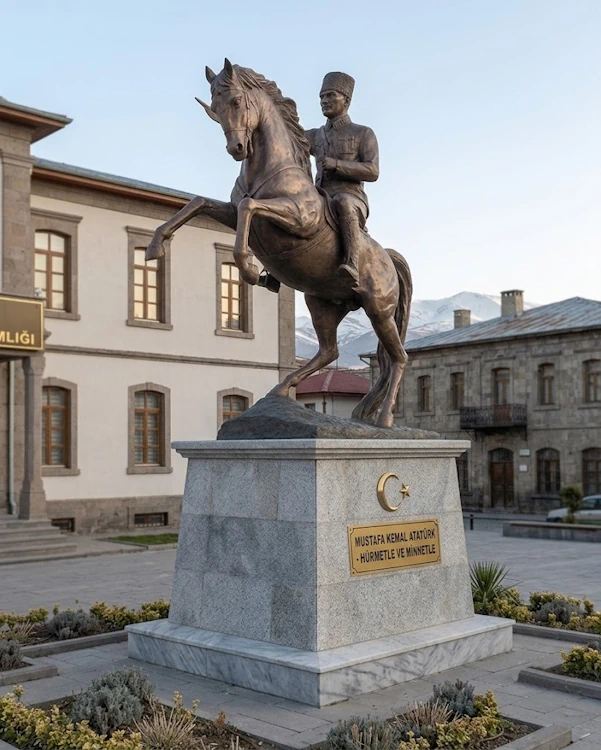
A statue placed in a city or district square becomes part of that location’s collective memory. This project is a custom-made equestrian Ataturk statue, commissioned for the area in front of a district governor’s office. The statue was produced from fiberglass. It was created as a replica of the equestrian Ataturk statue featured in our collection, while the pedestal and surrounding landscaping were also completed by our workshop. In other words, the entire project was managed under one roof, from statue production to installation in the square.
What Is an Equestrian Ataturk Statue?
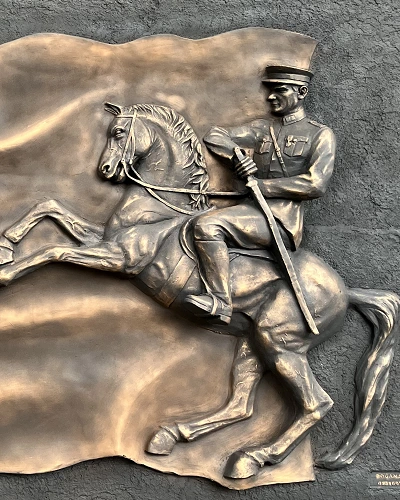
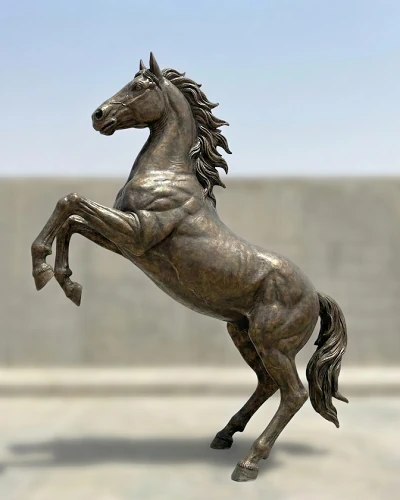
An equestrian Ataturk statue is a type of monument sculpture depicting Mustafa Kemal Ataturk on horseback. It is one of the most frequently seen monuments in Turkish squares, in front of public buildings and in parks. The horse figure represents movement and determination, while the Ataturk figure symbolizes leadership and dignity. For this project, the horse was modeled in a dynamic pose with both front legs raised. The Ataturk figure was portrayed upright and composed, wearing his military uniform and kalpak. The silhouette of the statue remains clear even from a distance. This is particularly important in public spaces, where the artwork must create a strong impression both up close and from afar.
Custom Public Monument Sculpture Process
A public monument commission begins with the institution’s requirements. For this project, the client requested an equestrian Ataturk statue for the area in front of a district governor’s office. It was decided that the statue would be based on a similar model already available in our collection. This approach provides significant advantages in terms of both design and production time. Since the model has already been tested and its proportions have been refined, the institution’s expectations can be clearly addressed from the beginning. Where necessary, the scale, pose and details are adapted to suit the characteristics of the location. As a result, the statue does not look like a standard product; it appears as an artwork prepared specifically for that square.
Advantages of a Fiberglass Monument Statue
This artwork was produced using fiberglass. Fiberglass is becoming an increasingly preferred material for public sculptures. The main reasons include the following:
First, durability. Fiberglass can withstand rain, snow, sunlight and temperature changes for many years. This quality is essential for statues installed in open spaces such as public squares. Second, lightweight construction. Because fiberglass is much lighter than a bronze or stone statue of the same size, transportation, installation and placement on the pedestal can be carried out more safely and efficiently. Third, detail reproduction. Facial features from the clay model, folds in the uniform, the horse’s muscles and mane details are transferred accurately to the fiberglass through the mold. Fourth, surface finishing options. A fiberglass surface can be painted with a bronze-look patina. This makes it possible to achieve the grandeur of a classic bronze statue at a more accessible cost.
Bronze-Look Patina and Surface Finishing
The surface of the statue was completed with a bronze-look patina. Patina is a specialized painting and finishing process that gives a surface depth and a sense of age. Lighter tones were applied to raised areas and darker tones to recessed sections, helping emphasize the horse’s muscles and the details of the figures. This treatment gives the statue a vivid appearance under changing light. As the daylight shifts throughout the day, the tones across the surface also change. A protective coating was applied during the final stage. This coating helps delay color fading and protects the surface against outdoor conditions.
Monument Pedestal Design and Construction
The impact of a monument statue is completed together with its pedestal. For this project, the statue pedestal was designed and constructed by our workshop. Light-colored granite and marble-look stone cladding were used on the pedestal. The stepped marble base created a solid and dignified foundation for the statue. On the front, the pedestal features the crescent and star symbol from the Turkish flag, along with a brass-colored inscription plaque below it. The plaque reads: Mustafa Kemal Atatürk - With Respect and Gratitude. The proportions of the pedestal were determined according to the height of the statue and the scale of the surrounding buildings. A pedestal that is too high can overpower the statue, while one that is too low can diminish its presence. Finding this balance is one of the most critical aspects of public sculpture design.
Square Landscaping and Site Design
The area surrounding the statue was also redesigned as part of the project through a complete landscaping and site-planning process. Simple landscaping was arranged around the pedestal. The design includes a stone-paved surface, low planting areas and clearly defined borders. This arrangement strengthens the relationship between the statue, the building and the square. Visitors can approach the statue, stand in front of it and take photographs. Well-planned landscaping makes the monument a natural part of the square. Rather than appearing as an object added afterward, the statue looks like an integrated work designed together with its surroundings.
Monument Statues for District Governor’s Offices and Public Buildings
The areas in front of district governor’s offices, governorates, municipalities and other public buildings are among the most suitable locations for monument statues. These spaces are both heavily used and representative of the state and society. A monument statue installed in front of a public building reinforces the identity of the institution. Ataturk statues in these locations serve both as expressions of respect and as symbols of shared values. In projects of this type, the scale of the statue must complement the building façade and the square layout. The installation angle, direction of sunlight and viewing distance should also be assessed in advance. For this project, the statue was positioned to face the building façade and the square.
Statue Installation and Placement Process
Once production is complete, the statue is transported to the site. The installation stage begins after the pedestal is ready and the ground has been properly prepared. The statue is lifted onto the pedestal with the help of a crane. Connection points are secured to withstand wind and other outdoor conditions. The lightweight nature of fiberglass provides a major advantage during this stage. After statue installation, any minor surface touch-ups are completed and the surrounding area is cleaned. This ensures that the statue is fully ready and in place on the day it is delivered.
Our Workshop’s Experience in Public Sculpture
Our workshop specializes in monument statues, public sculptures and large-scale relief production. The experience we have gained producing Ataturk busts, equestrian Ataturk statues, fiberglass figures and wall reliefs supports us at every stage of projects like this. We manage the entire process in-house, from clay modeling and mold-making to fiberglass production, patina finishing, pedestal construction and landscaping. This integrated structure allows projects to be completed consistently, under control and on schedule.
Contact Us for a Public Monument Sculpture Commission
If you are planning to commission corporate statues for the front of your institution, municipality or district governor’s office, contact us. You can review the equestrian Ataturk model in our collection and share your requirements regarding dimensions and placement with our team. We prepare the statue, pedestal and surrounding landscaping carefully and professionally under one roof.
Registration Date:

Rate:
5
1 Vote