Garden Landscape Sculpture Price and Sales
Outdoor design is not merely about organizing green spaces; it is the art of revealing the soul, character, and artistic depth of an area. The most prestigious way to crown nature's inherent, magnificent balance with human-shaped artistic touches is through garden landscape sculpture products. Parks, expansive villa gardens, open spaces of corporate buildings, or urban squares transform from ordinary open areas into living art galleries with a correctly chosen sculpture. Sculpture art, when exhibited outdoors, integrates with the shifting light of nature, the wind, and seasonal transitions, offering a dynamic visual feast reborn at every moment.
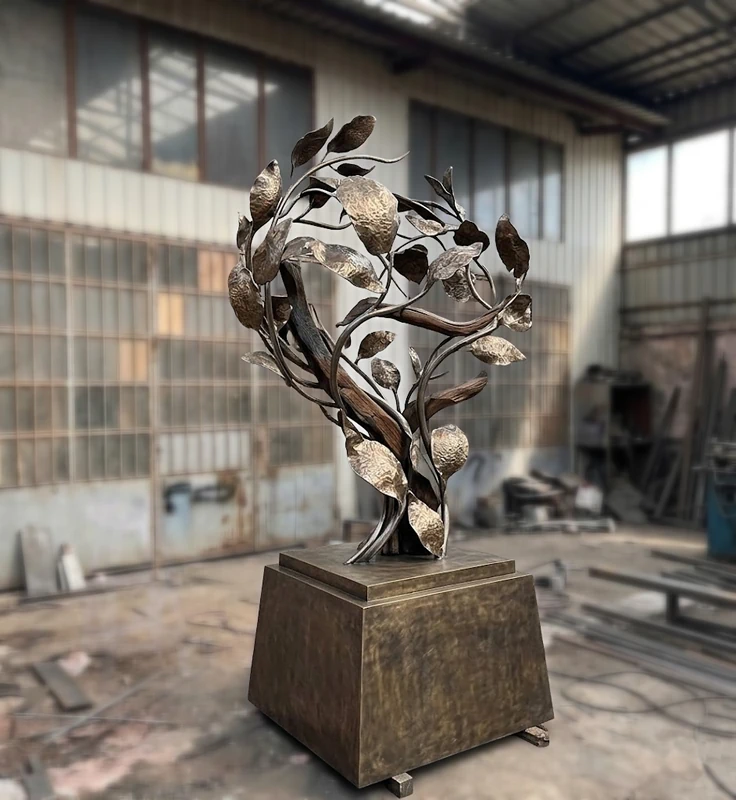
In our workshop, this custom design in the form of leaves and trees, produced to bring an artistic vision to modern landscape architecture, symbolizes the growth cycle and elegance of nature. With its bronze-patinated surface craftsmanship, wide base, and leaf motifs sprouting upwards, this piece instantly creates a focal point in any landscape project it is placed in. When stepping into a garden, the first thing the eye seeks is a powerful form standing amidst the complex greenery, giving it direction and meaning. In this article, we will thoroughly examine all the details of decorative garden sculptures that beautify outdoor spaces, from selection to manufacturing processes, material quality to SEO-oriented architectural integration.
Creating an Artistic Focal Point in Open-Air Spaces
In landscape architecture, the concept of a "focal point" is used to draw the visitor's attention in a specific direction and manage the perception of depth in the space. When a sculpture is not used in a large garden or a wide green area, the eye constantly wanders in a void, and the space loses its sense of integrity. Decorative garden sculptures act as a balancing element outdoors, precisely filling this void. This abstract work in leaf form both supports vertical architectural lines and provides a flawless harmony with the organic curves of nature through its amorphous structure.
The placement of a sculpture in an outdoor space is at least as important as the piece itself. For a correct layout, the following criteria should be considered:
- Scale and Proportion: The size of the sculpture must be proportional to the square footage of the garden where it will be placed and the height of the surrounding trees. A massive monument in a small garden can feel suffocating, while a figure that remains too small in a vast estate will visually disappear.
- Light and Angle Management: The greatest advantage of an outdoor piece is that the patina and shadows constantly shift throughout the day with the angle of incoming sunlight. The textured surface of the leaves gleams with a different golden/bronze tone under the morning sun and a completely unique hue at sunset, offering a living form.
- Background Integration: Fences, stone walls, or tall tree groups located behind the sculpture serve as a natural frame that highlights the piece. Industrial or natural stone backdrops, as seen in the visual, reflect the power of bronze and metallic tones much more clearly.
Durable Material Selection and Manufacturing Technologies for Outdoor Conditions
Unlike an indoor piece, outdoor sculpture products are directly exposed to harsh atmospheric conditions such as rain, snow, intense UV rays, freezing, and high temperatures 365 days a year. Therefore, technical durability is as much of a necessity in manufacturing as aesthetics. In the landscape sculptures produced with our workshop's over 22 years of sectoral experience, high-quality composite casting, fiberglass, resin-reinforced panels, and special metal armatures that show the highest resistance to the outdoor environment are utilized.
During the production phases of the leaf-shaped piece shown in the visual, internal steel construction supports were implemented against wind loads. The multi-layered bronze patina technique applied to the outer surface grants the material a timeless antique metal appearance while forming a protective shield against acid and moisture corrosion. The combination of fiberglass and industrial casting techniques allows the piece to look heavy and prestigious—like a solid bronze casting weighing tons—while offering a structurally portable, safely mountable lightness that optimizes the floor load. This guarantees long-lasting use without the risk of collapse on soft landscape soils or concrete bases.
The Role of Abstract and Natural Forms in Landscape Design
Alongside traditional figurative sculptures, abstract and nature-inspired (biomorphic) forms have become far more popular in modern landscape designs. The primary reason for this is that abstract forms liberate human imagination and flow in harmony with nature's geometry instead of competing with it. This design, reminiscent of leaf waves rising from a tree, both stands as an extension of the botanical cover and proclaims the artistic power of human genius through its metallic reflections.
The advantages of using such artistic outdoor sculptures in garden designs include:
- Four-Season Visual Value: A garden that sheds its leaves, remains flowerless, and loses its greenery during the winter months continues to maintain its artistic aesthetics and vitality thanks to this sculpture. The view of bronze leaves under the snow adds a dramatic and luxurious atmosphere to the landscape.
- Corporate and Residential Prestige: The presence of an art piece of this scale at villa entrances, open areas of hotel lobbies, or luxury residential projects directly elevates the brand value and aesthetic perception of that property to the peak.
- Harmony with Architectural Lines: The sharp, vertical, and horizontal reinforced concrete lines of modern buildings are softened thanks to the circular and curved contours of this sculpture; thus, an aesthetic bridge is established between harsh architecture and soft nature.
Base Selection and Maintenance Guide for Long-Lasting Garden Sculptures
The success of a sculpture is hidden where it makes contact with the earth, namely its base. As seen in the piece in the visual, a wide, prismatic monolithic base sharing the same texture and patina as the sculpture's own body has been preferred. Such heavy and wide-bottomed bases absolute prevent the sculpture from tipping over due to wind, tremors, or external factors, while granting the piece a monumental stance and height. In outdoor applications, the base must be anchored and mounted onto hidden concrete blocks buried in the ground using steel studs.
Regarding maintenance; our high-quality outdoor sculptures are sealed with acrylic and polyurethane-based special protective varnishes to require minimal upkeep. Wiping the surface with a damp, soft cloth once or twice a year to clean off accumulated dust and tree pollen is sufficient to preserve the patina's first-day brilliance. Chemical solvents, hard brushes, or abrasive cleaning agents must be strictly avoided as they can damage the special artistic finish on the surface. With proper positioning and simple care, these pieces will remain the most valuable heritage of your garden for generations.
Conclusion: Shape Your Garden with Art
If soil, water, grass, and trees form the body of a garden, a sculpture is the soul of that body. With the strength of our over 22 years of sculpture manufacturing experience and hundreds of completed projects, we approach each piece not just as a production object, but as an artistic responsibility under which we place our signature. If you wish to break away from the ordinary in your outdoor projects and add luxury, aesthetics, and lasting artistic value to your garden, you can review our Garden Landscape Sculpture collections; you can always contact our workshop for custom order solutions best suited to the dimensions and design language of your space. Let us shape the permanent traces of art together in the heart of nature.
Registration Date:
Rate:
5
3 Vote