How to Determine the Ideal Sculpture Size for a Space?
Scale and Space Harmony in Sculpture: A Guide to Ideal Size Selection
The most common mistake when choosing a sculpture for a space is falling in love with the work first and then thinking about where to place it. However, this process should work exactly in reverse. After the size, proportions, light conditions, and purpose of the space are determined, a sculpture suitable for these data should be sought. Otherwise, a work that is incompatible with the space, no matter how visually impressive it is, will overwhelm both the space and itself.
How to Determine the Ideal Sculpture Size for a Space?
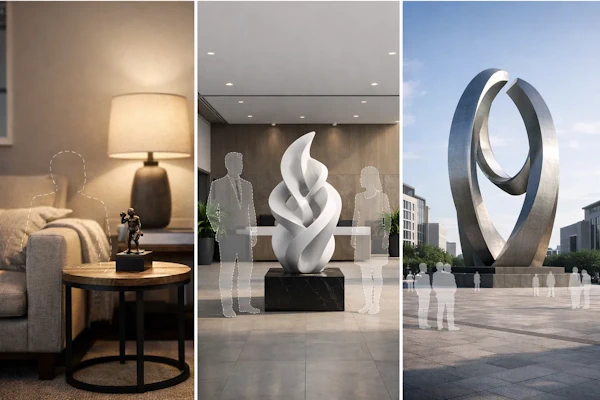
The most fundamental rule used in determining size is that the sculpture must be proportional to the total volume of the space. In interior spaces, this ratio usually works as follows: A sculpture that does not exceed one-third of the ceiling height will not create a suffocating effect in the space. For example, in a room with a ceiling height of three meters, the ideal sculpture height should generally remain under one meter. The only exception to this rule is when the sculpture is designed as the focal point of the room; then, a larger work can be accepted as a conscious choice.
Size Selection in Interior Spaces
When determining sculpture size in an interior space, not only the height but also the depth and width of the work must be taken into account. A wide-based sculpture placed in a narrow corridor makes passage difficult and narrows the space. Conversely, a small sculpture placed in a large hall disappears and fails to create a visual impact. Therefore, all dimensions of the sculpture should be evaluated along with the usable area of the space. Additionally, the viewing distance should be considered; for a work with detailed surface craftsmanship, a gap should be left where the viewer can pull back at least two steps.
Relationship Between Size and Scale in Outdoor Spaces
In outdoor spaces, the calculation works quite differently. Since the human eye has a much wider frame of reference in the open air, a sculpture that looks large indoors may appear small outside. For this reason, much larger dimensions are preferred for outdoor sculptures compared to indoor ones. A work to be placed in a garden or public area must be proportioned with the surrounding trees, buildings, and the width of the open space. A piece suitable for a small courtyard may completely lose its visual impact in a large city square.
Human Scale and Perception Psychology
Human scale is also an important reference point when determining sculpture size. Works that remain below human height generally create an intimate, personal, and close feeling. Sculptures on the same scale as human size evoke a sense of equality and sincerity in the viewer. Large works above human size give a sense of power, monumentality, and dominance. When these psychological effects are used consciously, they perfectly serve the purpose of the space. For example, a large-scale sculpture placed at the entrance of a corporate headquarters conveys a message of corporate power, while a small-scale work in the garden of a therapy center creates a sense of peace and intimacy.
Pedestal Height and Total Visual Impact
The pedestal must also be taken into account when evaluating sculpture size. A work can gain a completely different proportion together with its pedestal. A low pedestal brings the sculpture closer to the ground and creates an accessible feeling; a high pedestal carries the work above the viewer, producing a monumental effect. The color, material, and form of the pedestal also affect the work's relationship with the space. Therefore, when choosing the size, the sculpture and the pedestal should be evaluated as a whole, and the total height should be calculated along with the proportions of the space.
A Practical Method: The Cardboard Silhouette Test
If you are having difficulty deciding on size, there is a very practical method. Prepare a cardboard silhouette approximately the size of the sculpture you are considering, place it inside or outside the space, and take photos from different angles. This simple trial shows how the size relates to the space much more clearly than digital images or catalog photos. Many experienced galleries also suggest this method to their clients for major purchases.
Finding the right size sometimes requires a long research process. But the time and effort spent on this process far outweigh the disappointment experienced after moving a work of the wrong size into a space. Get to know the space well first, then choose the piece.
How to Determine the Ideal Sculpture Size for a Space? FAQ
The most common mistake in sculpture selection is focusing solely on the artistic form of the work without considering the physical characteristics of the space. Most people first buy a sculpture because they like its aesthetic appearance, but they fail to account for the dimensions of the area, light angles, and the proportions of the existing decoration. This causes a highly admired piece to either get lost in the space or, conversely, completely overwhelm the area, leading to visual clutter. The correct approach is to first determine the volume of the space and then search for a sculpture that fits these data. An incompatible piece, regardless of its value, visually diminishes both itself and the environment.
The balance of a sculpture with the ceiling height in interior spaces directly affects the spaciousness of the room. As a fundamental rule, it is recommended that the total height of a sculpture should not exceed one-third of the ceiling height. For example, in a room with a three-meter ceiling, it is ideal for the sculpture to stay under one meter. This ratio allows the work to breathe within the space and prevents a suffocating feeling for the viewer. However, this rule is not a strict limit; larger scales can be preferred when the sculpture is designed as the primary focal point of the room. The key is to establish a hierarchy between the ceiling height and the sculpture's vertical scale that does not disturb the viewer.
When a sculpture is designated as the focal point of a space, standard size rules can be consciously flexed. Although the one-third of the ceiling height rule is normally followed, larger and more dominant scales can be used for a work intended to capture all the attention of the space. Focal point sculptures create a visual hierarchy by being positioned higher or with more volume than the surrounding furniture and architectural elements. In such cases, the large size of the sculpture can convey a message of corporate power or create a monumental effect. Increasing the size in this manner allows the work to evolve from a decorative object into the main character that defines the identity of the space.
When choosing a sculpture for narrow spaces, not only height but also the depth and width of the work are of vital importance. Especially in areas like corridors or narrow entrances, wide-based sculptures block the path and reduce the utility of the space. In these types of areas, slender works with a strong vertical form that occupy less horizontal space should be preferred. Additionally, for works with detailed surface craftsmanship, a viewing distance must be left where the viewer can step back at least two steps. If the space is narrow, rather than choosing bulky and protruding models, planar forms or those that can stand close to the wall should be selected to maintain the visual and physical flow of the space.
Sculpture scaling in outdoor spaces works with a completely different logic than indoor rules. Since the human eye has a very wide frame of reference in the open air, a sculpture that looks massive indoors may appear quite small in a large garden or square. Therefore, in outdoor projects, much larger dimensions should be preferred based on elements such as trees, buildings, and the vastness of the sky. A work to be placed in a garden or public area must be proportioned with the surrounding natural and architectural scale. Since a sculpture ideal for a small courtyard will lose its visual impact in a large city square, bolder and larger sizes should always be used in open areas.
The total visual impact of a sculpture changes directly with the selected pedestal height; therefore, the pedestal and sculpture must be viewed as a whole when calculating size. A low pedestal brings the sculpture closer to ground level, establishing a more intimate, accessible, and personal bond with the viewer. In contrast, a high pedestal carries the work above the viewer's eye level, adding monumentality, power, and a sense of inaccessibility. The material and form of the pedestal also reinforce the work's relationship with the space. When choosing size, the height added by the pedestal must be calculated together with the ceiling or surrounding proportions of the space. The right pedestal choice can make even a small work much more impressive and dominant.