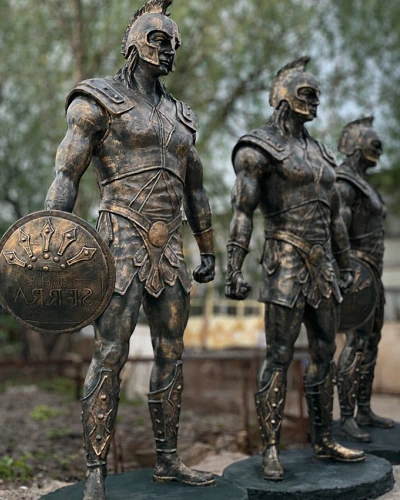
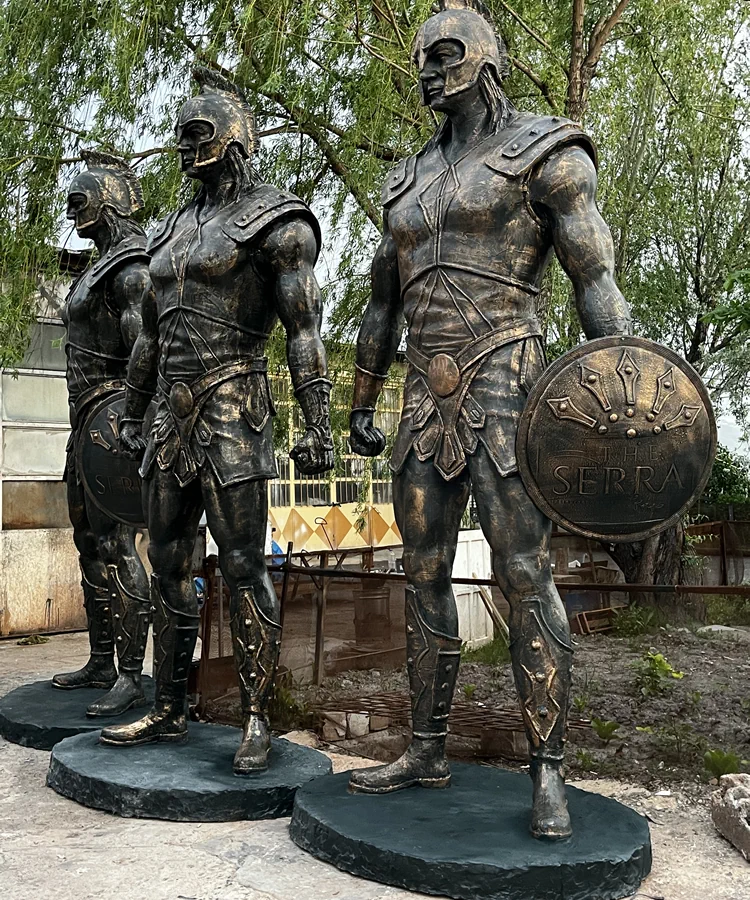
Spartans, who went down in history as the bravest and most disciplined warriors of the ancient world, are symbols of military excellence, courage, and patriotism. Spartan soldiers inspired fear and admiration throughout the Greek world with their mastery of the art of war and unwavering discipline. This special sculpture work brings the glory, power, and mythological stance of Spartan warriors to modern spaces with an artistic expression.
Statue Features
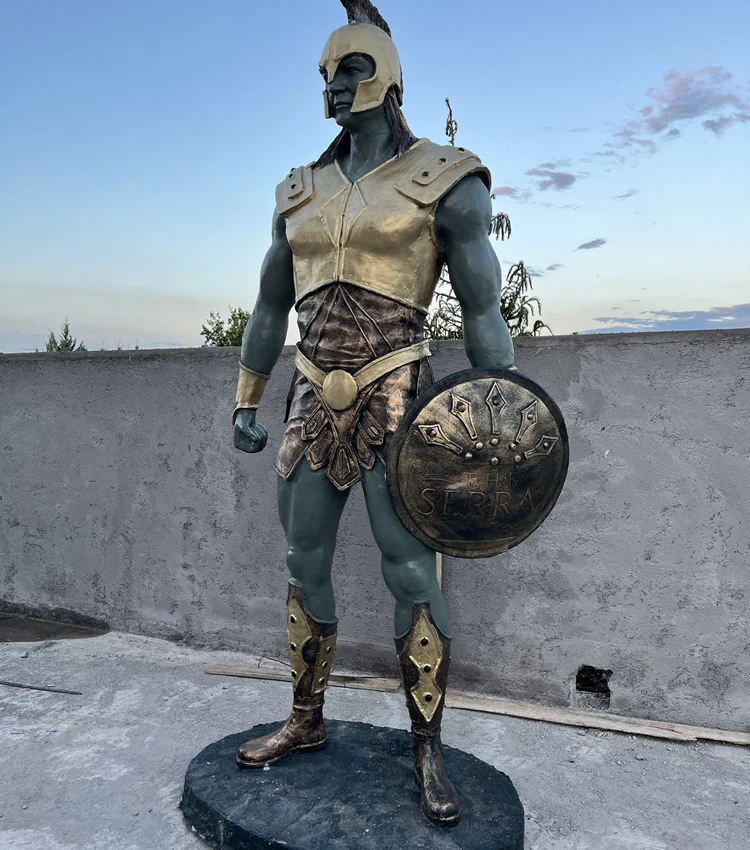
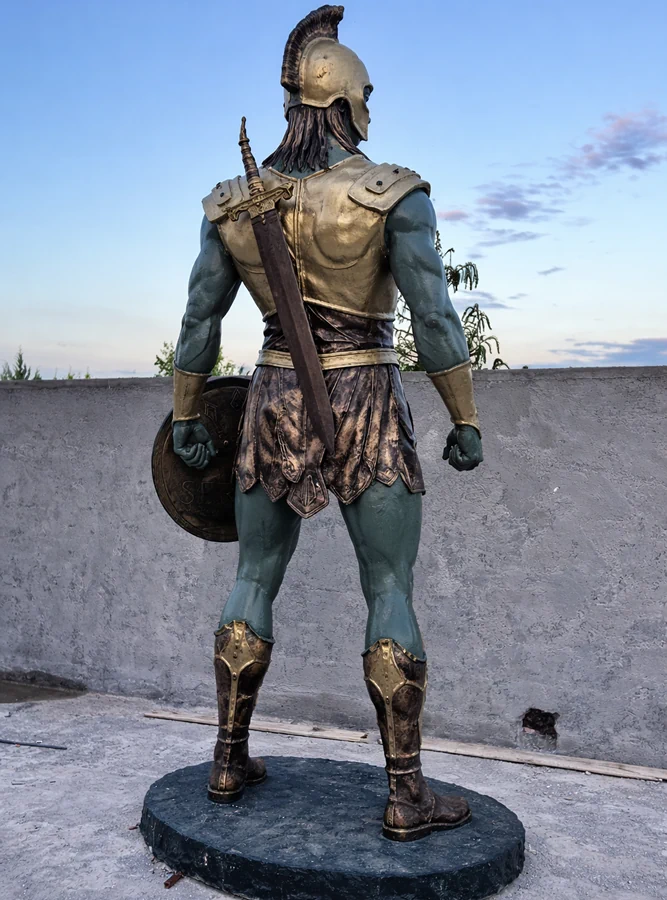
Produced from high-quality fiberglass and polyester materials, this detailed sculpture group offers a timeless appearance with its antique bronze patina coating. The armor details, shield decorations, and anatomical structure of each figure are meticulously crafted. Its durable structure suitable for outdoor use is resistant to weather conditions. Custom production can be made in desired dimensions and different patina color options can be offered.
Usage Areas
It creates a powerful visual impact for museum entrances, military facilities, sports complexes, history-themed restaurants, hotel gardens, and prestigious architectural projects. This work, reflecting Ancient Greek history and warrior spirit, adds historical depth and aesthetic value to your spaces. It is an impressive collection piece for history, mythology, and art enthusiasts.
Date Added: | Last Updated:
Decorative 90 cm 250 cm 90 cm Fiberglass Custom Made 70 kg
This Sparta statue represents the Classical Period of Ancient Greece (5th-4th century BC). During this period when Sparta was at its most powerful, Spartan hoplites gained fame throughout the Mediterranean world with their military superiority. The statue reflects the appearance of Spartan warriors in historical conflicts such as the Persian Wars and Peloponnesian War. Shield, spear and characteristic armor details show military equipment specific to this period. The work reflects the spirit of the era by combining historical accuracy with artistic interpretation.
Sparta was the only city-state in Ancient Greece with a professional military state system. Spartan men were subjected to strict military training from the age of 7 and devoted their entire lives to being warriors. This training system called Agoge raised the most disciplined and brave warriors in the world. The epic resistance of King Leonidas and 300 Spartans in the Battle of Thermopylae became a symbol of courage and sacrifice. Therefore, Sparta went down in history as the most famous military power of the ancient world and became identified with warrior identity.
The figures depicted in this statue represent general Spartan hoplite warriors. Rather than a specific historical figure, the typical appearance and stance of Spartan soldiers is reflected. Equipped with characteristic Corinthian helmets, round aspis shields and armored chest plates, these warriors show the standard equipment of the classical period Spartan army. The powerful stance and combat position in the statue symbolizes the disciplined formation of Spartan soldiers on the battlefield. Each figure is a collective representative of Sparta's legendary military power, reflecting the Spartan spirit rather than an individual hero.
Spartan warriors used bronze chest armor (thorax), leg armor (greaves) and Corinthian-type helmets. Their round bronze shields called aspis were approximately 1 meter in diameter and were the main defensive element of the phalanx formation. The armors were designed to be both protective and allow mobility. They were recognized by their red cloaks (chlaina) and shields marked with the lambda letter. All these details are carefully crafted in this statue, and an authentic appearance is provided with bronze patina coating. The armor details produced in accordance with historical sources offer a realistic representation.
This Sparta statue is designed based on archaeological findings and historical records. Armor types, weapon details and warrior stance are consistent with information about the 5th-4th century BC Spartan army. Corinthian helmets, aspis shields and anatomical armor plates reflect the characteristic features of the period. However, since this is an artwork, it also includes artistic interpretations. Muscle structure and dramatic stance are idealized to increase aesthetic value. Overall, it is a work that balances historical accuracy with artistic expression. It carries both visual and historical value for museums and educational institutions.
Yes, the Sparta statue can be custom produced in different colors and sizes according to customer requests. Apart from standard antique bronze patina, dark bronze, light bronze, copper tones or special color options can be offered. There is also flexibility in size; production can be made from small decorative sizes to monumental dimensions. Customization according to your space's dimensions and concept is possible. Antique or modern appearance can be preferred with different patina applications. You can evaluate color samples and size options by consulting with our advisors before ordering. Each production is carried out to high quality standards.