6 Key Differences Between Bronze, Marble, and Fiberglass
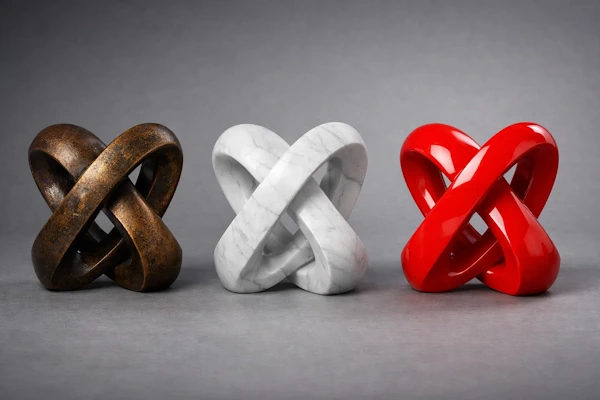
Bronze, marble, and fiberglass are the three most common materials in the world of sculpture. Although they may appear merely as raw materials, these three differ fundamentally in terms of durability, cost, maintenance, production process, and aesthetic language. Understanding these differences directly impacts both purchasing and production decisions.
6 Fundamental Differences Between Bronze, Marble, and Fiberglass
Let’s list these six distinct factors as follows:
1. Production Process
Bronze statues are produced using the casting method. The model created by the artist is first molded, and then molten bronze is poured into this mold and cooled. This process is both long and costly, but it allows for multiple works to be obtained from the same mold. Marble, conversely, is shaped through the carving method; the artist or studio carves the desired form out of a raw stone block, and this process is irreversible. Fiberglass is obtained by combining resin and glass fiber poured into a mold; its production is relatively fast and inexpensive.
2. Weight and Ease of Transport
Marble is the heaviest among the three materials. Large-scale marble works can reach tons in weight and require special equipment for transport. Bronze is also a heavy material, but bronze works produced with the hollow casting technique can be surprisingly light despite their solid appearance. Fiberglass is by far the lightest of the three, making it ideal for large-scale temporary installations and works that need to be transported.
3. Outdoor Durability
Bronze is the most durable material for outdoor use. The patina layer it develops over time protects it against further oxidation, allowing it to maintain its integrity for centuries. Marble is much more sensitive outdoors; acid rain, freeze-thaw cycles, and humidity lead to surface erosion. Fiberglass may experience yellowing and surface cracking when exposed to UV light for long periods; it is not long-lasting outdoors without special coatings.
4. Cost Comparison
Marble and bronze are much higher in cost compared to fiberglass. Factors such as the transportation of the marble block, the carving process, and labor costs—along with the casting process, metal raw materials, and finishing operations in bronze—drive the price up. Fiberglass is much more economical in terms of both raw materials and the production process. This cost difference is directly reflected in pricing; a fiberglass version of a work of the same size and complexity can cost a small fraction of the bronze version.
5. Aesthetic Language and Surface Character
Each material carries its own unique aesthetic language. Marble provides a cold, noble, and timeless feel. It scatters light softly across the surface, an advantage that is unique for imitating skin and fabric textures in figurative works. Bronze creates a heavy, permanent, and powerful feel. Its color, which changes over time, gives it a vivid and organic character. Fiberglass has an extremely flexible surface character, offering a wide range of finishing options such as matte, glossy, colored, or metallic coatings.
6. Maintenance Requirements
Bronze works require a wax application and light cleaning once or twice a year. Since marble surfaces are sensitive to acids, they should only be cleaned with pH-neutral products; cleaning with lime-heavy water can leave stains on the surface. While fiberglass appears to be the material requiring the least maintenance, it needs to be repainted or recoated when the surface finish wears off over time. Neglected fiberglass works reach a worn-out appearance faster than the other two materials in the long run.
Differences of Materials and the Resulting Message
When these six differences are evaluated together, it becomes clear which material meets which need. If permanence and investment are the priorities, bronze or marble is the right choice; if speed and economy are the priorities, fiberglass is more suitable. Stone and marble materials used as raw materials in sculpture making are found in nature and are easily supplied. Fiberglass differs in terms of procurement as it is formed as a result of certain processes and mixtures. However, when it comes to the actual construction of a statue, Fiberglass stands out significantly from the others.
Date Added: | Last Updated: