What is Carving?
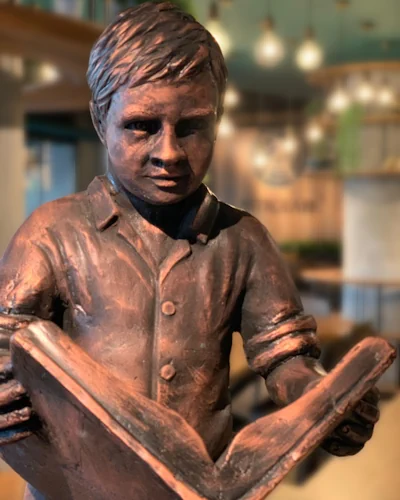
Carving, one of the most fundamental and traditional production methods of sculpture art, means shaping a material by cutting, scraping, or abrading. The counterpart of the word "sculpt," which comes from the Latin root "sculpere" meaning "to cut, to carve," is essentially based on the act of carving in Turkish. Processing solid materials such as stone, wood, bone, and ivory through carving is one of the oldest known artistic practices of humanity; a deep-rooted tradition stretching from the Venus figurines of the Paleolithic period to the giant monumental figures of Egypt and the marble athletes of Ancient Greece reveals the transformation of the art of carving over time.
Historical Development of the Carving Technique
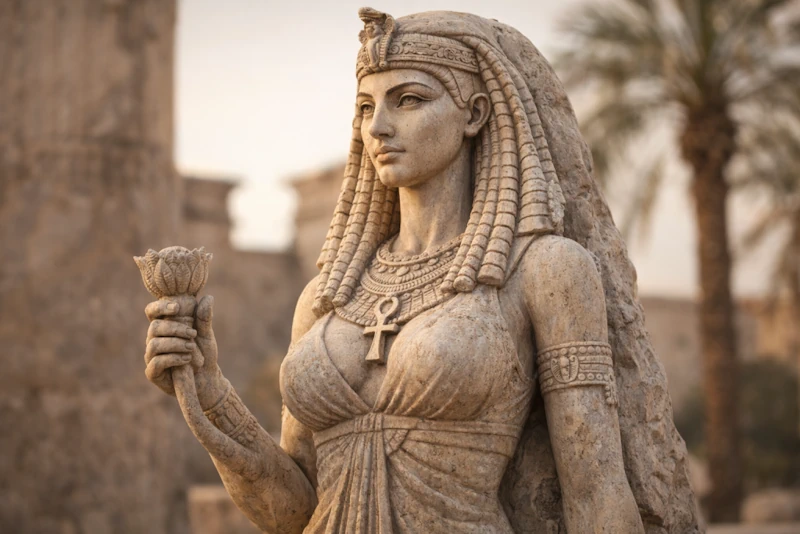
Humanity's first carving tools were made of stone, and these tools were used to shape both everyday objects and ritual figures. The oldest carving examples reaching from the prehistoric period to the present are ivory and bone figurines dating back 40,000 years. The anatomical observation and understanding of form in these works clearly reveal how seriously humanity invested in the art of carving at such an early stage. In the Egyptian civilization, carving turned into the most powerful visual tool of state power and religious belief; giant pharaoh statues carved from granite and diorite represented the peak this technique could reach in terms of scale and quality.
In Ancient Greece, the art of carving turned into a philosophical practice exploring the ideal beauty of the human body on marble. Masters such as Pheidias, Polykleitos, and Praxiteles created the most influential sculpture works in human history by combining the carving technique with anatomical knowledge, mathematical proportion, and deep artistic intuition. In the Renaissance, Michelangelo's words "the sculpture is already inside the marble, it is enough to carve away the excess" went down in art history as the most concise and impressive expression of the carving philosophy.
Carving Tools and Techniques
The carving process requires different tool sets and techniques depending on the type of material. In stone carving, steel chisels, mallets, rasps, and sandpaper are among the most basic tools. In modern workshops, angle grinders, diamond-tipped milling systems, and water jet cutters have largely replaced traditional hand tools. In wood carving, carving chisels, saws, and rasps are used; due to the fiber structure of wood, the grain direction is a critical factor that must be constantly considered during the carving process. In both materials, the basic carving principles are common: going from large to small, determining the general form first, and processing the details at the final stage.
Comparison of Carving with Other Sculpture Techniques
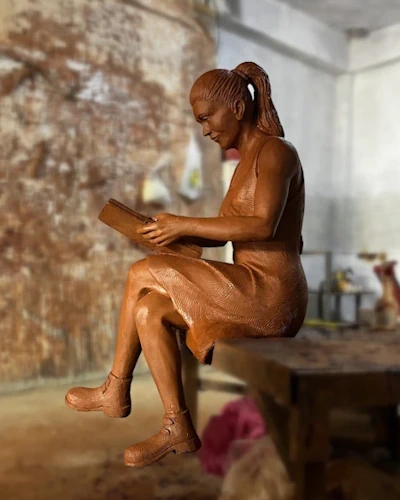
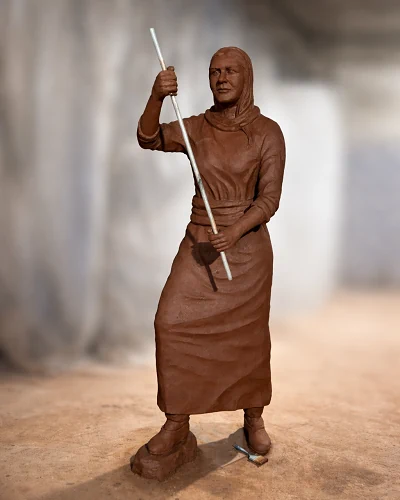
Carving is positioned as the exact opposite of the modeling technique. While modeling is an approach that creates form by adding material to a plastic material like clay, carving is a process that reveals the form by removing material from an existing block. This fundamental difference leads to decisive results in terms of the freedom and constraints these two techniques offer the artist. A mistake made in carving cannot be reversed; the removed material cannot be put back. This irreversibility makes the art of carving both one of the riskiest and most exciting sculpture techniques and increases the value of a master carving artist many times over.
Date Added: