What is Abstraction?
Abstraction is an artistic process where objects, figures, or natural forms from the real world are stripped of detail and reduced to their essential essence while preserving their core meaning. In the philosophy of art, abstraction is not an attempt to reproduce reality but to reinterpret it. Abstraction has taken various forms across many artistic disciplines such as sculpture, painting, music, and architecture, becoming one of the most influential movements in art history as an independent aesthetic approach in the 20th century.
Abstraction in Sculpture
In the art of sculpture, abstraction refers to the process of moving away from figurative narrative and heading toward the essence of form. During this process, a human figure may gradually transform into geometric shapes, a natural form may evolve into an abstract silhouette, or a completely non-figurative formal language may be adopted. Constantin Brancusi is considered the pioneer of abstract sculpture. Brancusi’s marble and bronze works achieve a pure and essential form while maintaining their figurative starting points. Abstract sculpture invites the viewer to step outside conventional ways of seeing and establish a new relationship with form, volume, and space.
Historical Process of Abstraction
The tendency toward abstraction in art gained momentum at the beginning of the 20th century with the emergence of avant-garde movements such as Cubism, Futurism, and Constructivism. The Cubist paintings of Pablo Picasso and Georges Braque centered on abstraction as an effort to show objects from multiple angles simultaneously. In the field of sculpture, artists like Jean Arp, Alexander Calder, and Henry Moore developed abstraction through their own unique languages. The works of these artists, with their organic and abstract forms inspired by nature but not literally reflecting it, formed the foundation of contemporary sculpture art.
Degrees of Abstraction
Abstraction is not a one-size-fits-all concept but a process that encompasses different degrees across a wide spectrum. In semi-abstract works, reference points from the real world are still recognizable. In fully abstract works, there are no figurative references; instead, form, color, texture, and spatial relationships generate meaning on their own. Many different sculptural approaches fit within this broad range between the two extremes. Today, many sculptors develop a unique language by combining figurative and abstract elements.
Abstract Sculpture in Turkey
The tradition of abstract sculpture in Turkey began to take shape in the mid-20th century under the influence of Western art movements. Generations trained in fine arts academies adopted abstraction as a tool to reinterpret their own cultural heritage and local forms. Today, contemporary sculpture workshops in Turkey produce both abstract and figurative works, and abstract sculptures are increasingly finding a place in public spaces.
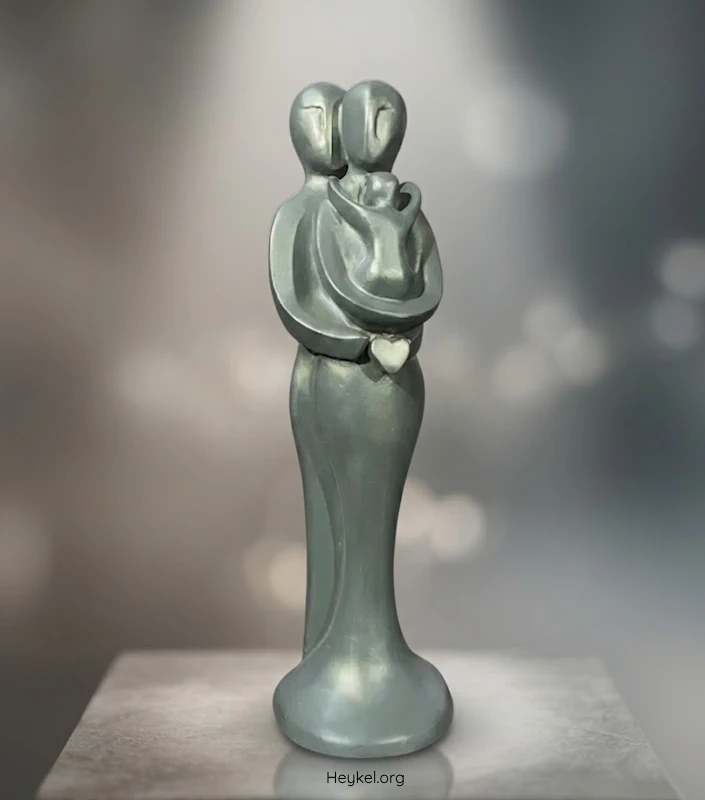
The featured image above is one of the finest examples of abstraction in the art of sculpture, produced in the heykel.org studio. It is an abstract sculpture study emphasizing the importance of family.
Date Added: