Sun Yat-sen Statue – Taiwan Taipei
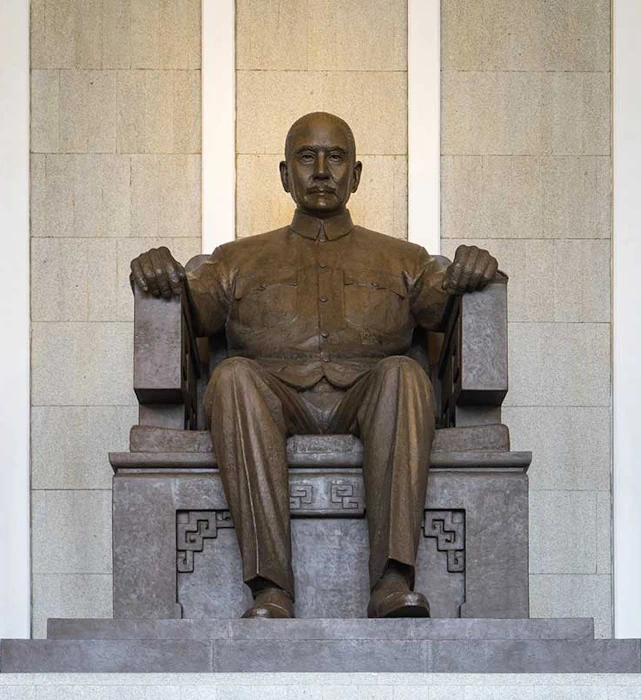
Taipei, the capital of Taiwan, is home to a magnificent structure dedicated to the memory of a historic figure recognized as the "Father of the Nation" of the Republic of China and modern China. Sun Yat-sen revolutionary, physician, and statesman was born in China in 1866 and became the architect of the 1911 Revolution that overthrew the Qing dynasty and established the Republic of China. Taipei is today home to a memorial hall and cultural center bearing his name, one of the city's most iconic landmarks. The sculpture work has become an unmissable stop for history enthusiasts and tourists visiting the region.
Construction and History of the Memorial
Construction of the National Sun Yat-sen Memorial Hall was initiated by a 1964 decision of the Taiwanese government, with the groundbreaking ceremony conducted by President Chiang Kai-shek in 1965. Architect Wang Ta-hong's design was selected through an open competition and revised at Chiang Kai-shek's direction to emphasize traditional Chinese architectural elements. Construction was completed on May 16, 1972, and the memorial hall was opened to the public. In a curious twist of history, Chiang Kai-shek's own funeral was held in this very hall in 1975. The complex, located in Taipei's Xinyi district, covers 29,464 square meters of indoor space and 115,000 square meters of outdoor area, and is frequently compared to the Lincoln Memorial in the United States.
Features and Artistic Details of the Sculpture
A large seated bronze statue of Sun Yat-sen stands at the main entrance of the memorial hall. The formal changing of the guard ceremony, held every hour on the hour, has become a major attraction for both locals and international tourists. The statue portrays Sun Yat-sen in a calm, contemplative pose befitting a statesman. The complex also houses exhibitions on Sun Yat-sen's life and the Xinhai Revolution, a world-class concert hall, a multimedia theater, classrooms, and a library containing more than 300,000 books.
Zhongshan Park and Surroundings
The memorial hall is located within Zhongshan Park in Taipei's Xinyi district. The park offers visitors a tranquil atmosphere with its manicured gardens, decorative historic walls, and exhibition and performance spaces surrounding Lake Cui, also known as Emerald Lake. The Taipei 101 skyscraper is visible from the complex, and the combined skyline of the two structures forms one of Taipei's most iconic photographic compositions. The memorial is within walking distance of Sun Yat-sen Memorial Hall Station on the Blue Line of the Taipei Metro. The prestigious Golden Horse Film Festival, Taiwan's most distinguished cinema awards ceremony, is also held annually at this hall.
The Legacy of Sun Yat-sen
Sun Yat-sen was born in 1866 in Guangdong province, China. After receiving medical training in Hawaii and Canada, he turned to revolutionary activities against the Qing dynasty. His political philosophy known as the "Three Principles of the People" Nationalism, Democracy, and People's Livelihood laid the ideological groundwork for the founding of the Republic of China. Sun served as the first president of the Republic of China, established on January 1, 1912, and passed away in Beijing on March 12, 1925. Both Taiwan and the People's Republic of China on the mainland honor Sun Yat-sen as a shared founding figure a rare distinction that reflects his unique significance to both sides.
Visitor Information
The Sun Yat-sen Memorial Hall is located in Taipei's Xinyi district, within walking distance of Sun Yat-sen Memorial Hall Station on the Blue Line of the Taipei Metro. The memorial hall and exhibitions are open to visitors free of charge. Note: The hall was closed for renovation works in early 2024 and is planned to reopen to visitors in 2026; it is recommended to confirm opening status before your visit.
Date Added: