Sultan Qaboos Statue - Oman - Muscat
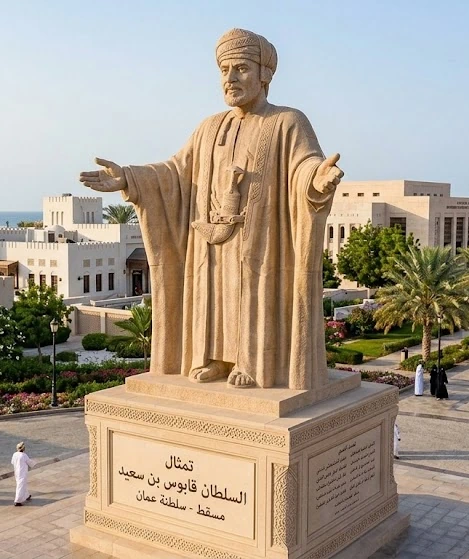
Muscat, the capital of the Sultanate of Oman, is home to a monument dedicated to one of the most beloved and respected leaders of the Arab world. Sultan Qaboos bin Said Al Said, who ruled Oman for over half a century, was born in 1940; from 1970 until his death in 2020, he was the architect of reforms that brought the country into the modern era. Today, Muscat hosts a monument statue that keeps his name and legacy alive, becoming one of the city's most important symbols. This structure has become an indispensable stop for tourists and history enthusiasts visiting Oman.
Construction and History of the Statue
The statue of Sultan Qaboos was erected as a concrete expression of the deep mourning and gratitude felt by the Omani people following his passing on January 10, 2020. Muscat was placed at the center of commemorative projects launched nationwide; buildings, squares, and monuments bearing Sultan Qaboos's name were brought to life in various parts of the city. The design of the statue was shaped to highlight the Sultan's statesmanship and the deep bond he established with his people. The project is part of a comprehensive cultural heritage program implemented to pass Oman's national identity and Sultan Qaboos's legacy to future generations.
Features and Artistic Details of the Statue
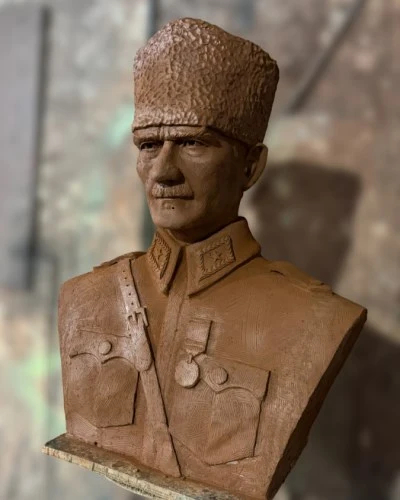
The statue depicts Sultan Qaboos in traditional Omani attire and turban. The figure is portrayed with a strong, dignified, and open stance facing the public, reflecting themes of leadership, service, and unity. Arabic inscriptions are featured on its pedestal, referencing the Sultan's vision and services for Oman. The design combines traditional Omani artistic sense with contemporary sculpture techniques. The figure, brought to life through bronze casting, was designed to be long-lasting with a material choice resistant to tropical climate conditions.
Muscat and Its Surroundings
The statue is located as part of the urban axis taking shape around the Sultan Qaboos Grand Mosque, the symbolic center of Muscat. In its immediate vicinity are the Muscat Grand Mall, Al Alam Palace, and the unique view of the Gulf of Muscat. The region stands out with its unique character that brings Oman's traditional architecture together with modern urban fabric. Access to the region is extremely easy thanks to its proximity to Muscat International Airport and the developed highway network.
The Legacy of Sultan Qaboos
When Sultan Qaboos took over power from his father in 1970, Oman was one of the poorest and most isolated countries in the world. Transforming the country radically during his fifty-year reign, the Sultan turned Oman into one of the most stable and developed countries in the region through reforms in the fields of health, education, and infrastructure. Taking on a unique mediator role in the Gulf region with the principle of neutrality he followed in foreign policy, Qaboos built bridges between Iran, Israel, and Western countries. Sultan Qaboos, who passed away on January 10, 2020, is known as the "Father of the Renaissance" in Oman; the reforms initiated by his successor, Sultan Haitham bin Tariq, are built upon his legacy.
Visitor Information
The Sultan Qaboos Statue is located on the central axis of Muscat and can be easily reached thanks to the city's developed highway network. The surrounding parks and public spaces are open to visitors year-round. The most suitable period to visit Muscat is between October and April, when the climate becomes milder. A trip planned together with the surrounding historical and cultural sites, especially the Sultan Qaboos Grand Mosque, offers the opportunity to discover Oman's rich heritage from a holistic perspective.
Date Added: