Sitting Bull Monument - Mobridge, USA
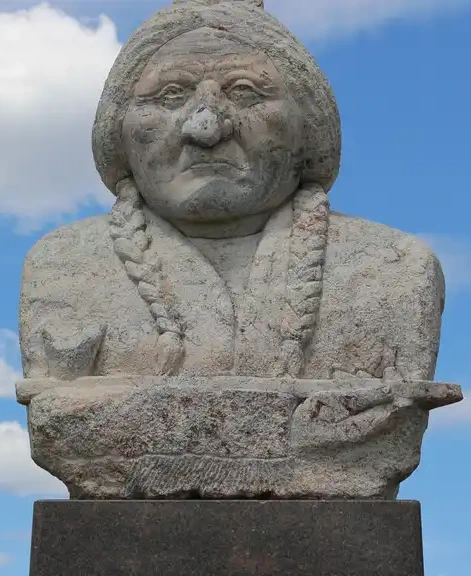
The small city of Mobridge, on the banks of the Missouri River in South Dakota, hosts one of the most important figures in American history. Rising on a hill overlooking the river outside the city, the Sitting Bull statue is almost always the first stop for visitors to this region. The statue depicts Sitting Bull standing with a dignified and powerful posture. Its location is deeply meaningful; Sitting Bull's grave is located very close to this statue. Thus, the monument serves not only as a symbolic reminder but also as a true pilgrimage site. Especially for members of the Hunkpapa Lakota Sioux community, this place is a deeply meaningful space where feelings of mourning, respect, and identity intertwine.
Who is Sitting Bull?
Tatanka Iyotake, or Sitting Bull, was born around 1831 in what is now South Dakota. A member of the Hunkpapa Lakota tribe, Sitting Bull possessed an extremely rare dual identity as both a military and spiritual leader. Known as a brave warrior from a young age, Sitting Bull earned the title of chief of his tribe and also wichasha wakan, or holy man, in his thirties. This dual role placed upon him the responsibility of being not only a military authority but also the spiritual guide of his society.
Sitting Bull's name is most identified in American history with the Battle of the Little Bighorn. This victory, won in 1876 against U.S. Army forces under the command of General Custer, was the pinnacle of Sitting Bull's visionary leadership. His vision, shared during the Sun Dance ceremony before the battle, in which he described seeing U.S. soldiers falling into the Lakota camp, became a powerful source of morale for his community. During the battle itself, he took on the role of protecting the elderly, women, and children rather than fighting directly; this behavior shows that his identity as a leader was based on a sense of responsibility far broader than military victory.
Importance of the Mobridge Statue and the Grave
The grave of Sitting Bull has been a subject of debate for many years following his death. Buried at Fort Yates immediately after he was killed in 1890, Sitting Bull's remains were moved near Mobridge at midnight in 1953 by a group of South Dakotans. This transfer took place under both controversial and dramatic conditions; North Dakota struggled for many years to have the remains returned. However, Sitting Bull's descendants chose Mobridge, and his remains still lie here today.
The bust placed over the grave and the large Sitting Bull monument nearby have transformed this area into one of the most important pilgrimage sites in Lakota history. Every year, many Lakota Sioux community members and history enthusiasts come here, establishing a deep connection on that quiet hill overlooking the Missouri River. The landscape surrounding the monument—the open sky, the river, and the vast countryside—creates a visual continuity with the world in which Sitting Bull lived. This harmony increases the emotional impact of the monument manifold.
Death and Legacy
Sitting Bull passed away on December 15, 1890, at the Standing Rock reservation during a clash while Lakota police were attempting to arrest him. His death was like a harbinger of the Wounded Knee Massacre that would take place two weeks later; this massacre became the symbol of the effective end of the Lakota resistance movement. The death of Sitting Bull was not just the loss of a leader, but the closing of an era and a way of life.
Today, Sitting Bull is remembered as one of the most powerful symbols of the Native American resistance tradition. His name and image constantly come to the forefront in land rights struggles, the Standing Rock protests, and Native identity movements. During the Standing Rock protests against the Dakota Access Pipeline in 2016, Sitting Bull's name and legacy became one of the most powerful historical references inspiring thousands of protesters. His statue in Mobridge is the quietest but most permanent expression of this living legacy. That statue, on that hill where the wind and history blow simultaneously by the bank of a river, represents not just a man, but the unextinguished fire of a people's resistance.
Date Added: