Salvador Dalí - Spanish Sculptor
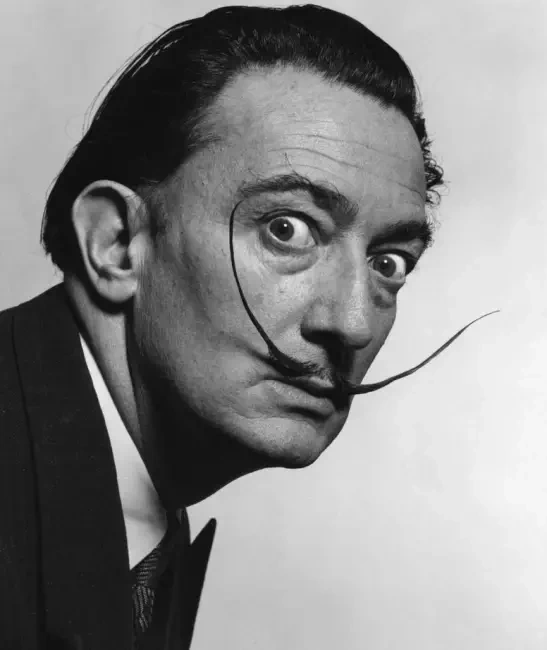
When Salvador Dalí is mentioned, the first things that come to mind are usually melting clocks and that iconic mustache; but to define Dalí only as a painter is a sign of how narrow a part of his artistic universe you are seeing. Born in 1904 in the Catalonia region of Spain, in the city of Figueres, Dalí was a creative force who produced in diverse fields such as sculpture, installation, film, fashion design, and performance, constantly pushing boundaries. Having gone down in history as the most striking and long-lasting representative of the Surrealism movement, Dalí researched images of the subconscious, desire, death, and time with an unprecedented freedom both on his canvas and in his three-dimensional works. What distinguished him from other surrealists was his ability to present this freedom together with the highest technical mastery.
Where is Dalí, Information About Him: A Genius Opening from Figueres to the World
For those who want to trace the footsteps of Salvador Dalí, the most accurate starting point is the city of Figueres, where he was both born and buried after his death. The Dalí Theatre-Museum here is an extraordinary place that the artist designed himself and turned into a living work. The museum itself is already a sculpture and installation on its own; the pink exterior, giant eggs, and the glass dome on top embody Dalí's perspective on the world on a building scale. His house in Cadaqués and Port Lligat on the Catalonia coast are also extremely valuable places for those who want to discover Dalí's geographical and spiritual roots. In addition to these, the Reina Sofía Museum in Madrid and various collections in Barcelona also house important works belonging to different periods of Dalí.
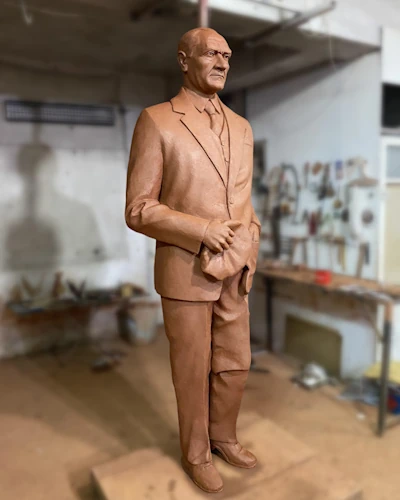
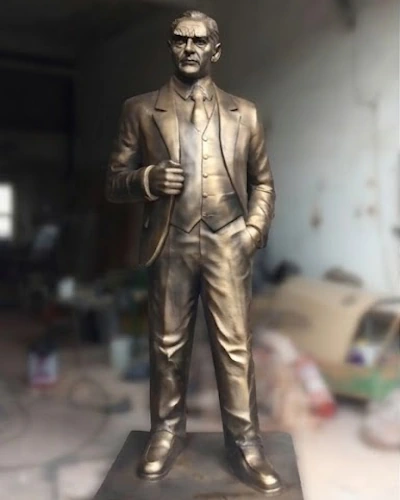
As for his work in the field of sculpture, Dalí's three-dimensional works are less known than his paintings but are just as surprising. Bronze cast sculptures add a completely new layer of meaning to the iconic images in his paintings while carrying them into three dimensions. Long-legged figures rising on elephants, soft watches, and anthropomorphic forms reveal the tension between the rigidity of the sculpture material and the fluidity of the subconscious in the most visible way. This tension is the most original feature that distinguishes Dalí's sculpture from other Surrealist three-dimensional works.
Meeting of Surrealism and Sculpture
Dalí's understanding of sculpture is an attempt to realize the basic principle of Surrealism, namely, transforming the uncensored images of the subconscious into an artistic language, in three-dimensional form. In works such as "Elephant in Space" and "Profile of Time", habitual laws of physics are suspended, objects are torn from their usual contexts and placed into new relationships of meaning. For Dalí, sculpture is not a continuation of painting; it is a unique and independent experiment in bringing dreams in painting to life in real matter. This perspective turns his sculptural production from a purely decorative side branch into an inseparable part of artistic integrity.
Dalí's large jewelry designs can also be counted among his works that push the boundaries of sculpture. The Dalí Jewelry Collection in New York consists of small-scale but extremely complex and meaningful three-dimensional objects. Lapels designed in the shape of a beating heart, brooches containing eyes, and ornaments that behave like living organisms completely eliminate the boundary between jewelry and sculpture. These works are the strongest proof that Dalí's creative energy knows no boundaries of scale and category.
Legacy and Its Place in Art History
Salvador Dalí passed away in 1989 in Figueres and was buried in the crypt under the Theatre-Museum in accordance with his will. Even this last gesture is a perfect summary of Dalí's artistic attitude: turning even death into a part of the art space he created. Dalí's legacy today holds an indisputable place in both art history and popular culture. Dalí, who took Surrealism out of being an academic movement and turned it into a mass image, and proved that art can be entertaining, provocative, and deep at the same time, still continues to be one of the most recognized artists in the world today. His sculpture works, on the other hand, constitute one of the most valuable layers of this great legacy waiting to be discovered.
Date Added: