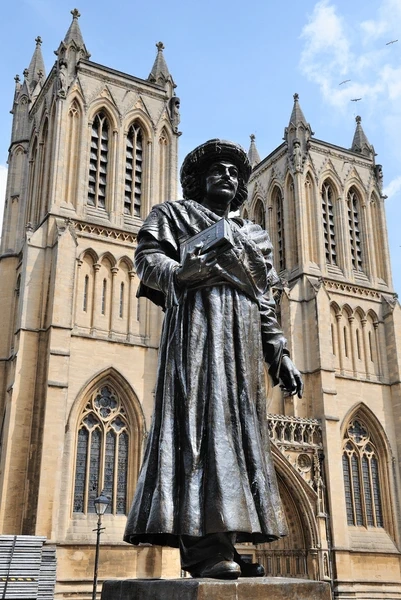
Raja Ram Mohan Roy Statue - India - Kolkata
In the history of India, there are names that shape not only the destiny of the era they lived in, but also the generations that came after them. Raja Ram Mohan Roy is precisely such a name. Born in 1772 in the village of Radhanagar in Bengal, Roy was the child of a deeply rooted Brahmin family. Yet he never hesitated to question the rigid molds of the society into which he was born. From an early age he learned Arabic, Persian and Sanskrit; he then added English and Greek to his repertoire. This linguistic richness opened for him a direct gateway into the intellectual worlds of different civilizations and became one of the most important sources nourishing his ideas.
The era in which Roy came of age was an extraordinarily complex one for India. British colonialism was shaking the established order to its foundations, while traditional Hindu society responded by turning inward. Roy, on the contrary, was in pursuit of a synthesis one that drew upon the Enlightenment thought of the West while also embracing the core values of the Hindu tradition. He was neither a blind admirer of the West nor a traditionalist resistant to change. This search for balance is the fundamental quality that makes him one of the intellectual founding fathers of modern India.
The Historic Struggle Against the Sati Tradition
The name of Raja Ram Mohan Roy is most prominently associated in history books with his struggle against the sati tradition. Sati was the practice in which a woman whose husband had died was thrown into, or voluntarily entered, the funeral pyre on which her husband was being cremated. Although "voluntariness" was theoretically the basis of the practice, in reality many women were subjected to it under pressure and coercion. This brutality had been perpetuated for centuries under the guise of religious and cultural necessity.
Roy mobilized both his pen and his political acumen to oppose this tradition. He demonstrated through scholarly arguments that sati was in fact not commanded in Hindu sacred texts, but was a product of misinterpreted traditions. This multi-front struggle waged against both the British colonial administration and the conservative segments of his own society bore fruit in 1829. The British Governor-General Lord William Bentinck, partly under the influence of Roy's persistent advocacy, signed the decree legally banning the sati tradition. This is regarded as one of the turning points in the social history of India. With this victory, Roy had opened not only a tradition but also society's entire view of women to scrutiny.
Education, Freedom of the Press and Brahmo Samaj
Roy's struggle was not confined to the matter of sati alone. He strove for years to remove the obstacles standing before women's education; he advocated for girls to be sent to school and displayed a vision far ahead of his time in this regard. He was also a powerful advocate of press freedom. He published newspapers in both Bengali and English, and through these outlets sought to bring reformist ideas to wide audiences. He took an open stand against the restrictions imposed on the press by the colonial administration.
The Brahmo Samaj movement he founded in 1828 is his most enduring legacy in the field of religious thought. Brahmo Samaj is a religious reform movement based on monotheism, rejecting idolatry and opposing all forms of caste discrimination. The movement ignited the fuse of a fundamental transformation not only in the religious sphere but also in the social, educational and political spheres. Brahmo Samaj continued to be developed after Roy by figures such as Debendranath Tagore and Keshub Chandra Sen, and became one of the cornerstones of the Bengal Renaissance.
Where Is the Raja Ram Mohan Roy Statue?
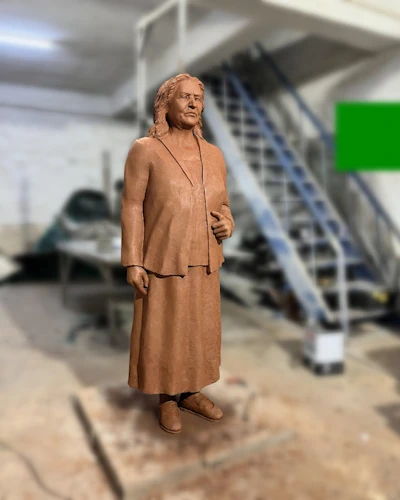
Kolkata is for Raja Ram Mohan Roy not merely the city where he lived, but the land where he nurtured his ideas, grew his struggle and left his legacy. The Roy statue in Kolkata stands in one of the city's busiest and culturally most vibrant districts. The statue depicts Roy in a thoughtful and resolute posture an appearance that symbolizes both his intellectual depth and his belief in social change.
The area where the statue stands plays host to numerous ceremonies and commemorative events every year. The events held particularly on the anniversaries of Roy's birth and death reveal how deeply his legacy is intertwined with Bengali identity. For history and culture enthusiasts visiting Kolkata, this statue is one of the most important gateways to understanding the intellectual soul of the city.
What Does His Legacy Mean Today?
Raja Ram Mohan Roy passed away in 1833 in the city of Bristol, England. He departed from this world far from India, in the very midst of his struggle for reform. Yet the legacy he left behind proved far more long-lived than his physical presence. Modern India's understanding of constitutional equality, the struggle for women's rights and the secular education system are the trees grown over centuries of the seeds Roy planted.
Roy, referred to in India today by the title "Father of Modern India," is not merely a historical figure but a reference point that continues to retain its relevance. In every struggle waged against the caste system, religious oppression and social inequality, his name resurfaces as a source of inspiration. His statue in Kolkata is the most visible, most accessible and most emotionally resonant reminder of this legacy. That figure carved in stone is the symbol of courage, enlightenment and the belief in change.
Date Added: