Prithviraj Chauhan Statue – India – Ajmer
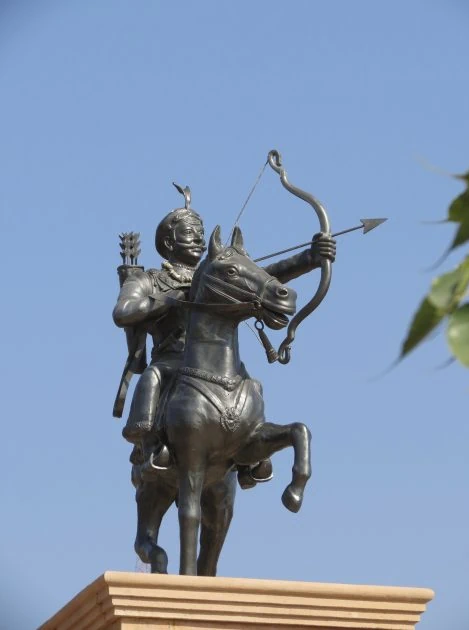
In the city of Ajmer, where history is embedded in every stone, located in India's Rajasthan state, right in the middle of the main street, a warrior figure on horseback rises tall. This figure is not merely a statue; it is the immortalized form of the most powerful Rajput king of the 12th century, the last great Hindu ruler of North India, Prithviraj Chauhan. Even a first-time visitor to Ajmer can feel the weight of history hanging in the air when standing before this statue. Because in these lands, every stone carries the trace of a battle, every street the mark of a legend, and the Prithviraj Chauhan Statue is the most visible and most powerful of these traces. This legendary warrior, who personally lived through one of the most turbulent periods of the Indian subcontinent and whose life was filled with both victories and bitter defeats, continues to this day to be one of the most important symbolic figures of Rajasthan and all of India. His statue stands tall in the heart of Ajmer as one of the most powerful means of passing this great legacy on to future generations.
Who Is Prithviraj Chauhan? His Life and Struggle
Prithviraj Chauhan was born in 1149 and lived a short but extremely turbulent life. He was still very young when he ascended to the throne of the Chahamana dynasty; yet despite his young age, his military genius and leadership qualities soon made themselves known. Prithviraj, who ruled over a vast geography including Delhi and Ajmer a large part of North India went down in history as the most powerful Hindu ruler of his era. A leader who embodied all the values of the Rajput tradition within himself; he was recognized as a concrete representative of courage, honor, loyalty, and the spirit of a warrior. Prithviraj, who won victories time and again in his struggles with neighboring kingdoms, reshaped the political balance of North India.
The most defining period of Prithviraj Chauhan's life began with his struggles against Muhammad Ghori, who came from Afghanistan. At the First Battle of Tarain (1191), Prithviraj inflicted a great defeat on Muhammad Ghori, earning immense fame throughout all of India with this victory. However, Ghori returned a year later with a far more powerful army. At the Second Battle of Tarain (1192), the balance shifted completely; Prithviraj's army suffered a crushing defeat and he was taken prisoner. This battle marked not only the effective end of a Rajput ruler, but also of Rajput dominance in North India. Historians regard this battle as one of the most pivotal turning points in India's political history.
The Historical Significance of Ajmer and the Location of the Statue
Ajmer is one of India's cities with the richest historical layers. This city, where both Hindu and Muslim cultures coexist, has been a crossroads of different civilizations for centuries. While the Dargah Hazrat Khwaja Moinuddin Chishti transforms Ajmer into a global pilgrimage site as one of the most important centers of visitation in the Islamic world; Hindu temples and Rajput remains reveal the city's ancient cultural fabric. Within this multi-layered structure, the Prithviraj Chauhan Statue stands out as the most powerful representative of Rajput identity and Hindu tradition.
The area where the statue is situated is located at a central point that pulses with the city's daily life. From the early hours of the morning until late in the evening, thousands of Ajmer residents pass by this statue; some pause for a moment and look on with respect, some take photographs, and some tell their children about this historical figure. This scene clearly reveals that the statue is not merely a tourist attraction; it is also a piece deeply embedded in the daily lives and collective memory of the local people. The area arranged around the statue is designed so that visitors can stroll comfortably and examine the statue from various angles.
The Artistic Features and Design of the Statue
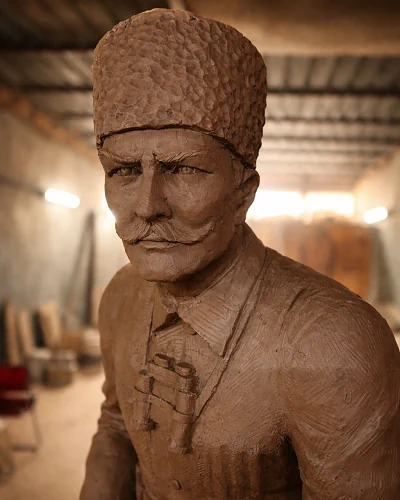
The Prithviraj Chauhan Statue stands out as one of the most impressive examples of equestrian warrior statues. The figure, cast in bronze, is depicted in the attire and with the weapons reflecting the Rajput martial tradition of the period. His helmet, the weapon in his hand, and his posture on horseback simultaneously convey both Prithviraj's military might and his royal dignity. The proportions and anatomical details of the statue enable the figure to create both a realistic and monumental effect. The inscriptions on the pedestal offer visitors brief yet concise information about Prithviraj's identity and struggle.
One of the most striking features of the statue is the dynamic energy the figure conveys. Prithviraj, standing on horseback, is depicted not in a static pose, but in a stance that gives the impression he is about to charge toward the battlefield at any moment. This dynamism not only adds aesthetic power to the statue, but also reflects Prithviraj's character and life philosophy. The sculptor's choices transform the figure from a passive object of commemoration into a living historical narrative.
Its Place in India's Historical Memory
Prithviraj Chauhan continues to be one of the most debated and most interpreted figures in Indian history. On one side stands the nationalist interpretation that sees him as the symbol of the last great Hindu resistance; on the other, the historiography that views his defeat as the beginning of Turkic-Muslim dominance in North India. The tension between these two interpretations leads to Prithviraj remaining a politically and culturally charged figure in present-day India. His statue in Ajmer also concretely represents this contested legacy; it stands tall in the heart of the city as a silent yet powerful witness to history.
Date Added: