Ossip Zadkine - Russian-French Sculptor
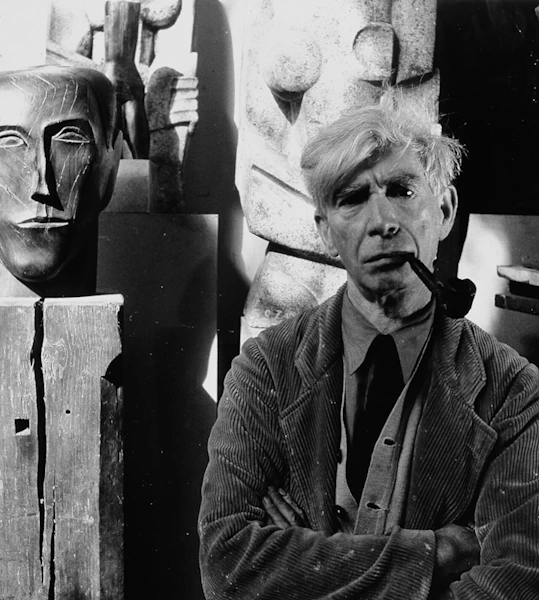
Ossip Zadkine is one of the most original and emotionally charged sculptural voices of the 20th century. Born in 1890 in the city of Vitebsk, Russia, Zadkine was not only from the same city as Marc Chagall but also a representative of a generation carrying the artistic energy of the Eastern European Jewish culture of that period. Continuing the art education he began in London in Paris, Zadkine produced in close contact with contemporaries such as Picasso, Brancusi, and Léger in the vibrant art scene of Montparnasse from 1909 onwards. Inspired by Cubism but never applying it in a mechanical way, Zadkine developed his own unique and highly emotional sculptural language. However, the work that strictly distinguishes him from other Paris school sculptors is the sculpture "The Destroyed City," completed right after the end of World War II and standing in Rotterdam today.
Where is Ossip Zadkine, Information About Him: The Workshop in Paris and the Pain in Rotterdam
For those who want to trace Zadkine's footsteps, the most valuable address in Paris is the Musée Zadkine. This place, where the workshop where the artist lived and worked was converted into a museum, preserves both his works and Zadkine's daily working environment with its originality. This small but extremely profound museum in Paris's 6th arrondissement has a comprehensive collection covering all of Zadkine's artistic periods. On the other hand, the "The Destroyed City" sculpture in Rotterdam is a must-visit location for those who want to see the artist's most striking public work in situ. This sculpture conveys the destruction and pain the war inflicted on the city so powerfully that it creates a sense of deep shock in every visitor standing before it.
In addition to these, Zadkine's works are included in permanent collections at the Pompidou Center, Musée d'Art Moderne de Paris, and many different museums around the world. Continuing his production during the World War II years he spent in exile in New York, Zadkine influenced young American artists by teaching at Columbia University during this period.
The Destroyed City: Casting a Pain into Bronze
Dedicated to Rotterdam, whose historic center was largely destroyed by German bombing in 1940, the sculpture "De verwoeste stad," or "The Destroyed City," was completed in 1953 and placed in the Leuvehaven harbor. The screaming figure with its heart torn out and arms opened toward the sky went down in sculpture history as one of the most universal visual expressions of collective pain and despair. In this work, Zadkine's understanding of Cubist fragmentation becomes a highly suitable tool for conveying the bodily and spiritual destruction of war. The void in the figure's chest is a wound in a real sense; the embodiment of what was torn from the heart of both the city and humanity.
This work introduced Zadkine internationally in the field of monumental public sculpture and proved how vast the emotional capacity of his art was. Sculptures that establish the balance between abstraction and expression with such mastery are rarely encountered in art history.
Contribution to Sculpture Art and His Legacy
Ossip Zadkine passed away in 1967 in Paris. The legacy he left behind carries both the vitality of the School of Paris and the artistic memory of 20th-century human suffering. Zadkine, who used Cubism as an emotional tool, turning it into a carrier of the most personal and universal pains instead of a cold formal experiment, continues to be one of the most humane and touching voices in contemporary sculpture history.
Date Added: