Museum of Anatolian Civilizations - Ankara Turkey
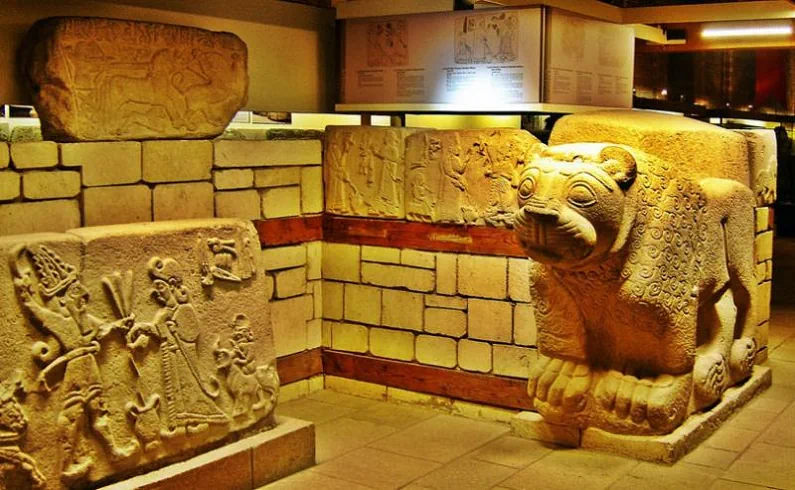
At the very heart of Ankara's historic fabric, rising at the foot of Ankara Castle, the Museum of Anatolian Civilizations is more than just a museum; it is a living space of memory that holds humanity's oldest traces within its walls. This unique structure, which brings together tens of thousands of years spanning from the Paleolithic Age to the Ottoman period under a single roof, is a must-visit stop for every history and culture enthusiast traveling to Turkey.
History and Establishment of the Museum
The museum's foundations rest on the Eti Museum, opened on October 1, 1921, in Akkale, based on Mustafa Kemal Ataturk's vision of establishing a Hittite Museum. As Hittite artifacts collected from across the country gradually outgrew this small space, the need for a more comprehensive building arose. Two historic Ottoman structures on the southeastern slope of Ankara Castle — the Mahmut Pasha Bedesten and the Kurşunlu Han — were therefore decided to be converted into a museum. Restoration work that began in 1938 was completed in 1968, and the museum acquired its current comprehensive and organized form over the years.
Architecture: The Rebirth of Two Ottoman Structures
The two buildings housing the museum are historical witnesses in their own right. The Mahmut Pasha Bedesten was constructed between 1464 and 1471 by Mahmut Pasha, the powerful vizier of the reign of Mehmed the Conqueror. Serving as the distribution center for Ankara's mohair fabrics, this structure is one of the finest surviving examples of classical Ottoman bedesten architecture. The Kurşunlu Han was a well-established caravanserai attributed to another vizier of the same era, Mehmet Pasha, featuring twenty-eight rooms at the entrance and thirty on the first floor. Today, the Mahmut Pasha Bedesten is used as an exhibition hall, while the Kurşunlu Han houses the administrative sections, library, laboratory, conference hall, and researcher rooms.
The Collection: Silent Witnesses of Thousands of Years
The Museum of Anatolian Civilizations holds a vast collection of over one million artifacts. However, the items on display represent only five percent of this enormous collection. Artifacts from the Paleolithic, Chalcolithic, Early Bronze, Assyrian Trade Colonies, Early Hittite, Hittite Empire, Phrygian, Urartu, Lydian, and Classical periods are presented to visitors in chronological order. This collection, consisting of sculptures, ceramics, jewelry, weapons, and textiles, reveals the multi-layered civilizational heritage of Anatolia.
Highlighted Artifacts
Among the must-see artifacts in the museum, the most striking is the world's oldest known map. Dating to around 6200 BC and depicting the city plan of Çatalhöyük, this map is the first concrete evidence of humanity's understanding of space. The terracotta figurine attributed to the mother goddess Cybele stands out as one of the earliest representations of feminine power and fertility in Anatolia. The Sun Disc is a bronze artifact unearthed from the Alacahöyük excavations, dated to 2500–2250 BC; it encapsulates the Hittite civilization's understanding of the universe, belief, and power in a single object. The approximately three-thousand-year-old wooden table recovered from King Midas's tomb reveals just how rarely Phrygian-era wooden artifacts have survived to the present day.
European Museum of the Year Award
On April 19, 1997, at the European Museum Forum held in Lausanne, Switzerland, the Museum of Anatolian Civilizations was selected as first among 68 museums and received the European Museum of the Year Award. This was the first time a museum in Turkey had won this title, and it is the strongest testament to the museum's standing in the international arena. With its unique collection and historic architectural fabric, there is no question that it deserves this achievement.
A Journey Through Time at the Museum
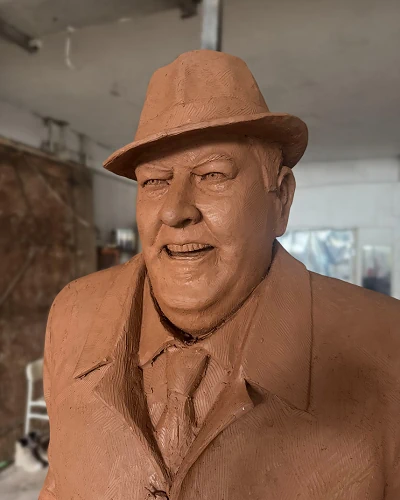
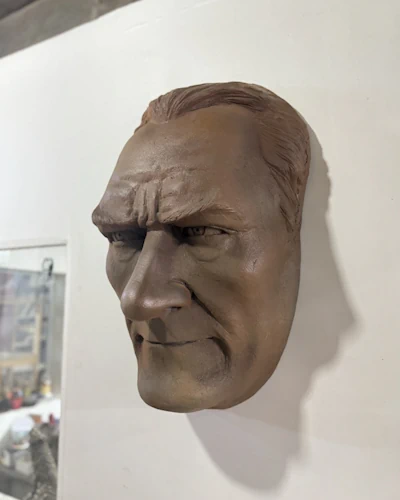
Visiting the museum is like passing through a time tunnel. The exhibition begins with the first stone tools of the Paleolithic Age and extends through the traces of settled life in the Neolithic period, the magnificent artifacts of the Bronze Age, and the complex civilizational structure of the Hittites. Each section is built upon the previous one; why Anatolia is one of the world's most important civilizational geographies becomes self-evident within this chronological flow. As visitors move from hall to hall, they trace not only objects but also the turning points of human history step by step. Alongside bust-style sculptures, relief sculptures are also on display.
The Museum's Place in World Cultural Heritage
Anatolia is a unique geography that has been home to different civilizations for thousands of years, leaving the imprint of each in its soil. The Hittites, Phrygians, Urartians, Lydians, Assyrians, and many others have left their mark on these lands. The Museum of Anatolian Civilizations is the most comprehensive exhibition platform for this accumulated heritage. Even when compared with many prestigious museums around the world, this institution stands out for the originality and depth of its collection, and it fulfills an extremely important function in Turkey's cultural diplomacy.
Visitor Information
The Museum of Anatolian Civilizations is located at Gözcü Sokak No:2 in the Altındağ district of Ankara. It can be reached by heading from the Ulus neighborhood toward Ankara Castle. The museum, which houses a library, conference hall, photography and restoration workshops, and researcher rooms, is also an important reference center for academic studies. This venue, which every tourist visiting Ankara should add to their itinerary, is one of the most powerful symbols of the city's cultural identity.
Date Added: