Most Beautiful Statues in the World - Famous Female Statues and Names
There is no single answer to the question, “What are the most beautiful statues in the world?” Beauty is subjective and can vary depending on the era and the person looking at the artwork. Still, some sculptures have been admired for centuries by art historians, art lovers, and travelers alike. From ancient Greek marble sculptures and Renaissance masterpieces to monumental sculptures of the modern era, these works share several qualities: masterful craftsmanship, powerful storytelling, and a lasting impact.
In this article, we’ll take a look at some of the world’s most admired and most visited statues, along with their names. We’ll also explore the works often considered the most beautiful statues of women and look at how iconic sculptures can be reimagined today using modern materials such as fiberglass.
Names of the Most Beautiful Statues in the World
The list below features some of the most widely recognized and frequently visited sculptures around the world. While researching, we may have missed some details, such as dates or measurements.
- David: Michelangelo carved this marble masterpiece between 1501 and 1504. It is displayed at the Galleria dell’Accademia in Florence, Italy, and stands approximately 5 meters tall.
- Pietà: Another marble masterpiece by Michelangelo, located in St. Peter’s Basilica at the Vatican. It depicts Mary holding the body of Jesus.
- The Thinker: A bronze sculpture by Auguste Rodin. It is known both as a standalone sculpture and as part of his larger work, The Gates of Hell.
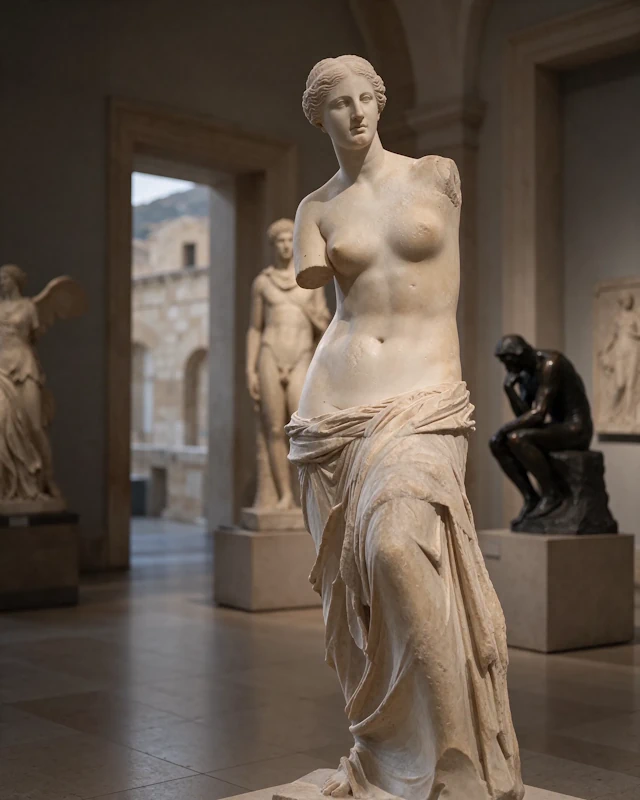
- Venus de Milo: An ancient Greek marble statue of a woman. Discovered on the island of Milos in 1820, it is now displayed at the Louvre Museum in Paris.
- Winged Victory of Samothrace: An ancient marble sculpture depicting the winged goddess of victory. It stands at the top of the staircase in the Louvre Museum.
- Statue of Liberty: Designed by Frédéric Auguste Bartholdi, this copper-clad monument was unveiled in New York in 1886. Its internal framework was engineered by Gustave Eiffel.
- Christ the Redeemer: This monumental statue stands atop Corcovado Mountain in Rio de Janeiro, Brazil. Completed in 1931, its reinforced concrete structure is covered with stone mosaic.
- Psyche Revived by Cupid’s Kiss: A marble sculpture created by Antonio Canova in the late 18th century. It is housed at the Louvre Museum.
- Apollo and Daphne: A marble sculpture by Gian Lorenzo Bernini, created in the 1620s. It is displayed at the Galleria Borghese in Rome.
- The Little Mermaid: A bronze statue created by Edvard Eriksen in 1913. It is one of the most recognizable landmarks in Copenhagen, Denmark.
- Mount Nemrut Statues: Colossal stone statues in Turkey dating back to the Kingdom of Commagene. The site is listed as a UNESCO World Heritage Site.
What Is the Most Beautiful Statue of a Woman in the World?
This question comes down to personal taste. However, the Venus de Milo is often mentioned as the most beautiful statue of a woman in the world. Despite its missing arms, the balance of its posture, the graceful lines of the figure, and the way the drapery falls over the hips have made it an enduring symbol of classical beauty. The position of the statue’s arms remains a subject of debate, and that mystery only adds to its appeal.
Other notable contenders include:
- Winged Victory of Samothrace: Although the head and arms are missing, the wind-swept drapery and sweeping wings make this one of the finest examples of how movement can be captured in stone.
- The Ecstasy of Saint Teresa: Created by Bernini for the Church of Santa Maria della Vittoria in Rome, this work is renowned for the artist’s masterful expression of emotion in marble.
- The Three Graces: An elegant marble composition by Antonio Canova featuring three female figures.
- Statue of Liberty: One of the world’s most recognizable statues, this female figure has become a universal symbol of freedom.
- The Little Mermaid: Though small in size, this statue is one of the most photographed female figures, thanks to its fairytale story and close connection to the identity of Copenhagen.
What Makes a Statue Beautiful?
When you look closely at famous sculptures, you’ll notice several qualities they often have in common. Understanding these features can help you appreciate artworks more deeply in a museum and make informed choices when planning your own sculpture project.
- Proportion and balance: Harmony between the parts of a figure or composition can create a sense of calm and stability.
- A sense of movement: Although stone and metal are solid materials, a well-crafted sculpture can feel lively rather than static.
- Emotional expression: Facial expressions, hand gestures, and posture can tell a story without words.
- Surface detail: Details such as folds in fabric, the texture of hair, and the softness of skin reveal the artist’s skill.
- Harmony with its surroundings: The most striking sculptures are often designed with their setting in mind, whether that is a public square, garden, or interior space.
- Meaning and story: Sculptures built around a powerful idea stay with us not only because of how they look, but also because of what they represent.
What Materials Are Used to Create Famous Sculptures?
Many of the world’s most famous sculptures are made from marble, bronze, or stone. Marble gently reflects and diffuses light, giving figures a lifelike, skin-like appearance. Bronze is a durable casting material that can capture fine details and delicate forms. Copper has also been used as a lightweight, weather-resistant exterior covering for large monuments.
Traditional materials have their advantages, but they also have limitations. Marble is heavy, takes a long time to carve, and leaves little room for error. Bronze casting can be expensive. That is why fiberglass is becoming an increasingly popular choice for decorative sculptures and custom-made pieces.
Reimagining Famous Statues in Fiberglass
Fiberglass is a lightweight, durable material made by combining glass fibers with resin. Because it is produced using molds, it can reproduce fine details, flowing lines, and surface textures with precision. Paint and patina finishes can also create the look of marble, bronze, stone, or polished metal.
For these reasons, fiberglass statues inspired by classical works are often used in gardens, parks, hotel entrances, restaurants, stores, and commercial spaces. Some of the main benefits of fiberglass statues include:
- Lightweight construction: Fiberglass is much lighter than a marble or bronze sculpture of the same size, making transportation and installation easier.
- Outdoor durability: With the right surface treatment, fiberglass can withstand rain, moisture, and sunlight for years.
- Flexible sizing: Fiberglass sculptures can be made in a range of sizes, from small tabletop pieces to large outdoor installations.
- A range of finishes: Popular options include marble white, bronze patina, gold, and custom-colored paint.
- Cost-effective production: Once a mold has been made, producing additional copies can be faster and more affordable.
What Should You Consider Before Ordering a Statue?
If you’re looking to commission a statue inspired by a famous artwork or created just for you, clarifying a few details early on can make the process easier. First, decide where the statue will be displayed. A sculpture intended for an outdoor setting will need a more weather-resistant finish than one designed for an indoor space.
Next, choose the size to suit the space. A piece that is too small may go unnoticed, while one that is too large can overwhelm its surroundings. It’s also helpful to discuss the color and finish early in the process. Matte, glossy, metallic, and patinated finishes can affect both the appearance of the sculpture and its maintenance needs. Finally, if you want an original design, clarify your idea with sketches and measurements. This can help reduce the need for revisions during production.
It is common to draw inspiration from classical works and those in the public domain. However, copyright may still apply to works by living artists or artists who lived in more recent times. It is a good idea to check the rights status of a work before starting your project.
How Do the World’s Most Beautiful Statues Inspire Modern Spaces?
The work of great sculptors inspires us not only in museums, but also in today’s spaces. A graceful female figure in a hotel lobby, a sculpture inspired by classical Greek forms in a garden, or a simple yet striking monument in a public square can give a space its own identity. The key is not simply to copy an artwork, but to reinterpret it in a way that suits the character of the space.
Thanks to the flexibility of fiberglass, classical forms can also be adapted to modern settings. The same pose can be brought to life in a different size, color, or surface finish. This approach preserves the artistic character of the design while offering solutions suited to the budget and intended use.
Date Added: