Kwame Nkrumah Statue - Ghana Accra
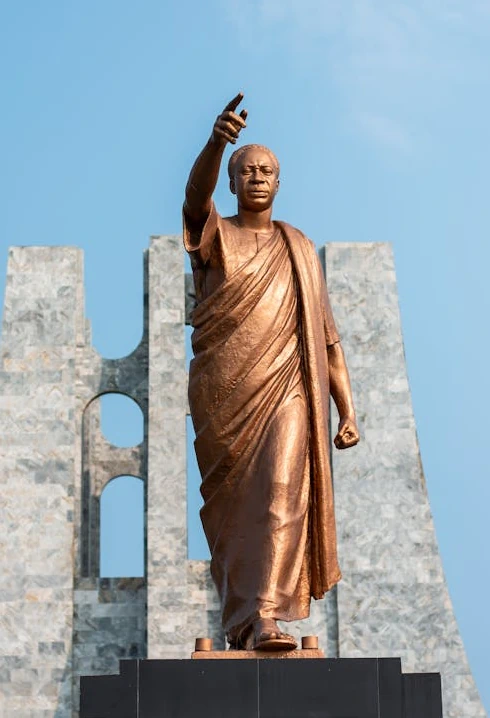
In Accra, the vibrant capital of Ghana—one of West Africa’s most stable nations—shaped by the breezes of the Atlantic Ocean, stands the monument of the most powerful voice of the Pan-African movement: Kwame Nkrumah. Known to history as the "Architect of Africa," Nkrumah earned his place among the 20th century’s most influential political figures as a resolute defender of independence and unity ideals, not just for Ghana, but for the entire African continent. His statue and the adjacent memorial complex in Accra serve as a profound source of inspiration for both Ghanaians and visitors from across the globe.
Who is Kwame Nkrumah: Life and the Pan-African Ideal
Kwame Nkrumah was born in 1909 in what was then known as the Gold Coast. During his education in the United States and the United Kingdom, he was deeply influenced by Pan-Africanist thinkers such as Marcus Garvey and W.E.B. Du Bois. Nkrumah believed that Africa could only escape the shackles of colonialism as a unified power. Upon returning to the Gold Coast, he became the most active organizer of the independence struggle, mobilizing the masses through street protests and civil disobedience.
With Ghana’s declaration of independence in 1957, Nkrumah secured a unique place in history as the leader of the first sub-Saharan African country to break free from colonial rule. This historic moment served as a powerful catalyst for independence movements across the continent. During his presidency, Nkrumah worked tirelessly to establish a formal framework for Pan-African unity, playing a decisive role in the founding of the Organization of African Unity (OAU) in 1963. Though removed from power by a military coup in 1966, the intellectual legacy he left behind continues to resonate throughout Africa today.
Strategic Location: Kwame Nkrumah Memorial Park, Accra
The Kwame Nkrumah Statue rises at the heart of the Kwame Nkrumah Memorial Park in central Accra. Located precisely where Nkrumah declared independence in 1957, this complex serves as a comprehensive historical window into Ghana’s sovereignty. The site includes:
- The Bronze Statue: A monumental figure of Nkrumah marking the exact spot of the independence proclamation.
- The Mausoleum: The final resting place of Nkrumah and his wife, designed with symbolic architecture.
- The Museum: A collection showcasing personal artifacts and documents from the liberation era.
Accra is one of West Africa’s most cosmopolitan hubs, and the Memorial Complex stands as its most significant cultural and historical landmark, where modern business centers meet the deep-rooted heritage of the nation.
Artistic Analysis: Symbolism and Monumental Craftsmanship
From an artistic and technical perspective, the Kwame Nkrumah Statue is a masterpiece of modern African figurative sculpture:
- The Gesture: Depicted with his finger pointing toward the horizon, the pose represents his role as a visionary guide. It powerfully communicates the message of "Forward, Africa!" and the Pan-African vision.
- Expert Casting: As a high-quality bronze work, the statue’s commanding presence reflects the durability and strength of the ideals it represents.
- Symbolic Posture: The forward-leaning stance symbolizes progress, determination, and an unwavering commitment to the people.
- Industry Insight: For sculpture professionals, this piece demonstrates how a specific silhouette and directional gesture can define the narrative of a public monument.
Global Tourism and Cultural Heritage Impact
The Kwame Nkrumah Memorial Complex is a cornerstone of Ghana’s tourism industry. Alongside Cape Coast Castle, Elmina, and the National Museum of Ghana, the statue is an essential stop for those interested in Pan-Africanism and anti-colonial history. For the African diaspora, the complex is more than a tourist site; it is a sacred space for reconnecting with their ancestral roots. This monument stands as a testament to the power of public art in preserving the soul of a continent's struggle for freedom.
Date Added: