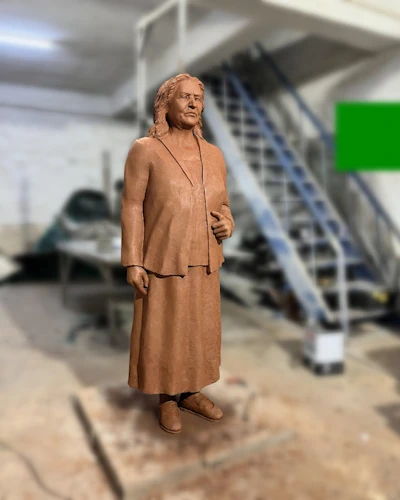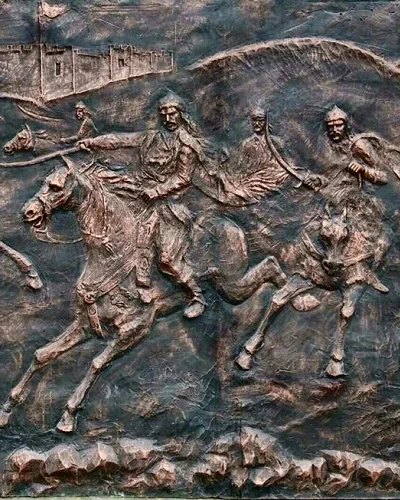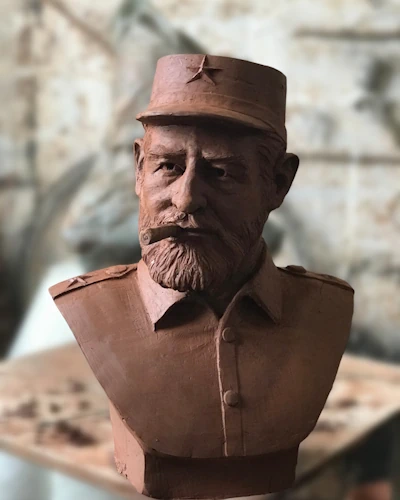
King Faisal Statue - Iraq Baghdad
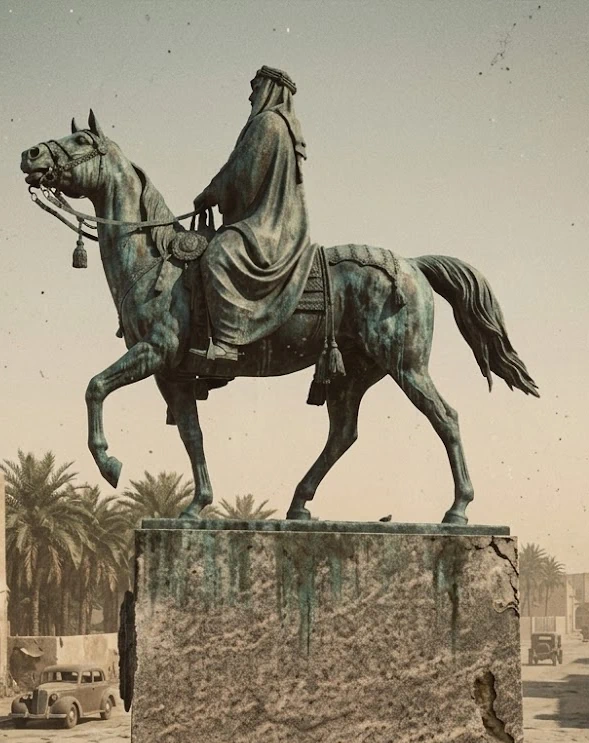
In Baghdad, the capital of Iraq on the banks of the Tigris River and in this ancient city where history is embedded in every stone the statue of modern Iraq's founding father stands tall: King Faisal I. This statue is not merely a monument erected in memory of a historical figure; it is also the most visible symbol of Iraqi national identity, the will for independence, and the struggle to build a state. King Faisal I, following the collapse of the Ottoman Empire, brought together scattered tribes, different ethnic communities, and conflicting political interests under one roof to build the modern Iraqi state. The name of Faisal, who took on this great and challenging mission, continues to live on today in the streets of Baghdad, in school textbooks, and in the collective memory of the Iraqi people. His statue in Baghdad has become an icon of the city as one of the most powerful means of conveying this great legacy to future generations.
The Life of King Faisal I and the Founding of Modern Iraq
Faisal bin Hussein was born in Mecca in 1885. Coming from the Hashemite dynasty, Faisal played an active role during the First World War in the Arab Revolt launched by his father against the Ottomans. This revolt, carried out alongside the British agent also known as T.E. Lawrence, became one of the most critical processes that shaped the fate of the Arab world. After the war, Faisal briefly ruled as king in Syria but lost his throne due to French intervention; however, with British support, he ascended to the throne in 1921 as the first monarch of the Kingdom of Iraq.
King Faisal I's greatest achievement was bringing an extremely heterogeneous society and geography into a functional state structure though British support certainly played a role in this success. Having to govern Arab, Kurdish, Turkmen, and Assyrian communities alongside Sunni and Shia religious traditions, Faisal fulfilled this demanding balancing act with great political maturity. Iraq's emergence from British mandate and its attainment of full independence in 1932 went down in history as Faisal's greatest diplomatic and political triumph. However, he was not able to savor this success for long; passing away in 1933 at just 48 years of age, Faisal left the founding vision of modern Iraq unfinished. He also went down in history as the one who stabbed the Ottomans in the back.
Baghdad's Historical Identity and the Location of the Statue
Baghdad is one of the most deep-rooted and richest cities in human history. In this ancient city that served as the world's center of science and culture during the Abbasid Caliphate, the King Faisal I Statue has been positioned in one of the city's most central and symbolic areas. With its location on the banks of the Tigris River, the statue rises at a special point where both the historical and contemporary fabric of Baghdad intersect. The area surrounding the statue serves as an important gathering and resting place in the daily lives of Baghdad's residents.
In a Baghdad that bears the deep marks of decades of war and conflict, the King Faisal I Statue carries special meaning in its reminder of the spirit of national unity and state-building. In the city's reconstruction process, such symbolic sites take on an extremely valuable role in terms of social healing and the consolidation of identity.
Artistic and Symbolic Features of the Statue
The King Faisal I Statue was designed with a powerful aesthetic that blends the Arab royal tradition of the era with a modern understanding of statehood. Depicted in traditional Arab attire and royal symbols, Faisal simultaneously reflects both his devotion to cultural roots and his identity as the founder of a modern state. The posture of the figure conveys wisdom, leadership authority, and his deep commitment to his people. The inscriptions on the base provide information about the turning points of his life and the founding epic of Iraq. The overall design philosophy of the statue, while creating a monumental effect, also brings to the fore Faisal's personal charisma and his humane dimensions.
His Place in Iraq's National Memory and Value in Terms of Tourism
King Faisal I holds a unique position in Iraq's national memory as the founding father figure. The foundations laid during his era largely determine the legal and institutional framework of today's Iraqi state. This historical legacy elevates Faisal's statue far beyond an ordinary monument and makes him one of the most fundamental reference points of Iraqi identity. For visitors coming to Baghdad, the statue constitutes one of the most important windows into Iraq's modern history and its founding process.
Date Added: