Julius Nyerere Statue - Tanzania Dar es Salaam
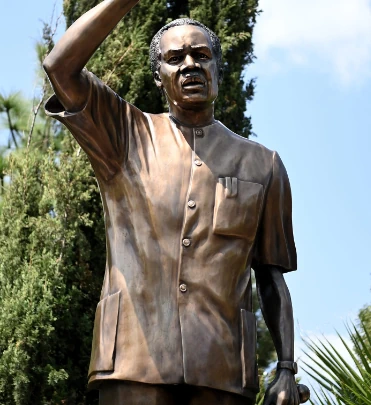
Dar es Salaam, Tanzania, the largest city and commercial hub of East Africa, carries the legacy of one of the most revered figures in the continent's independence history. Known by the nickname "Mwalimu" (Teacher), Julius Kambarage Nyerere, born in 1922, played a decisive role in Tanzania's independence, became one of the pioneers of the Pan-African movement, and charted a long-term course for his country with the philosophy of Ujamaa (African socialism). Today, Dar es Salaam hosts monuments that keep his legacy alive and important structures bearing his name. These structures have become an indispensable stop for history enthusiasts and tourists visiting the city.
Construction and History of the Monument
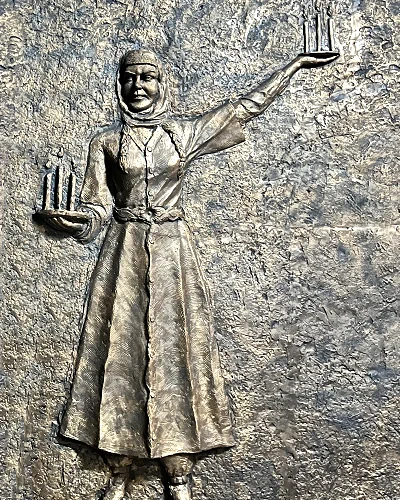
The 3-meter statue dedicated to Julius Nyerere, designed by Russian sculptor Nikolay Vorobyov, is a concrete expression of respect for the country's founder in Dar es Salaam. Nyerere's legacy is not limited to this statue and the monuments in the city; Dar es Salaam's international airport, international conference center, and many public buildings bear his name. Nyerere is also one of the rare leaders honored with a statue at the African Union headquarters. This statue was unveiled on February 18, 2024, at the AU Headquarters in Addis Ababa, Ethiopia, with a ceremony attended by the President of Mauritania (AU Chairperson) and Tanzanian President Samia Suluhu Hassan. On the granite plinth beneath the statue are Nyerere's words from 1959: "We want to light a candle at the top of Mount Kilimanjaro and let it shine beyond our borders; to bring hope where there is despair, love where there is hatred, and dignity where there is humiliation."
Features and Monumental Details of the Statue
The monuments in Dar es Salaam and the structures bearing his name reflect Nyerere in his "Mwalimu" identity, with a teaching and guiding stance. The Uhuru Monument (Independence Monument) in the city is a historical structure located in Mnazi Mmoja Park, directly associated with Nyerere's declaration of independence in 1961. The "Uhuru Torch" he lit on the summit of Kilimanjaro in 1961 continues to be kept alive with annual national ceremonies. Nyerere also made profound contributions to Dar es Salaam's art and culture scene with Nyumba ya Sanaa (Mwalimu Nyerere Cultural Center), which he founded in 1972.
Dar es Salaam and Nyerere's Legacy
Under Nyerere's leadership, Dar es Salaam became the center of the liberation struggle not only for Tanzania but for all of Africa. The South African Liberation Committee established its headquarters here; representatives of many liberation movements, including ANC, ZANU, FRELIMO, and PLO, found refuge and organized in the city. Polish journalist Ryszard Kapuściński described this period with the words, "All of Africa is conspiring here." Malcolm X, Angela Davis, and Che Guevara also visited the city. Dar es Salaam, under Nyerere's administration, served as the coordination center for global liberation movements in the 1960s and 70s.
Nyerere's Personal Legacy
Julius Nyerere, born in a small fishing village in 1922, was educated at Edinburgh University and led Tanganyika to independence on December 9, 1961. In 1964, he united with Zanzibar to form Tanzania and became its first president. He implemented collective village farms with his Ujamaa policy, placed great importance on education and health, but the economic results remained controversial. Nyerere, who voluntarily stepped down from office in 1985, went down in history as one of the rare African leaders to peacefully transfer power. Nyerere, who passed away on October 14, 1999, continues to be remembered with respect around the world even 25 years after his death.
Visitor Information
The monuments dedicated to Julius Nyerere and the structures bearing his name in Dar es Salaam are located at different points in the city. The most important historical monument, the Uhuru Monument, is located in Mnazi Mmoja Park and can be reached on foot from the city center. Julius Nyerere International Airport and Julius Nyerere International Conference Center are also among the important visiting points of the city. The most suitable period to visit the region is during the dry season, between June and October.
Date Added: