Eduardo Chillida - Spanish Sculptor
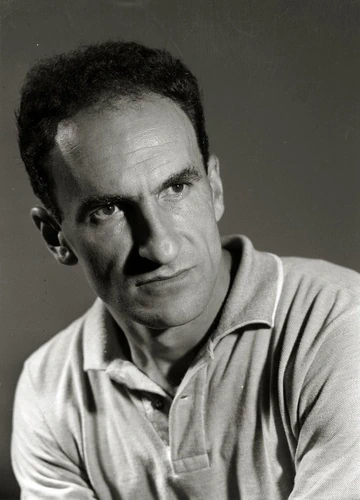
Although Eduardo Chillida is considered one of the greatest sculptors of the 20th century, he was a silent but extremely powerful voice who always stayed a bit away from the noisy centers of the art world. Born in 1904 in the city of San Sebastián in Spain's Basque Country, Chillida incorporated the wind, sea, and stone of his geography into his works so deeply that when looking at them, one can almost hear the sound of the Basque shores. Evaluated as both one of the two giant names of the Basque sculpture tradition alongside Oteiza and as one of the most important contributors to the history of international abstract sculpture, Chillida maintained his deep relationship with iron, steel, granite, and wood throughout his life not just as a material practice, but as a philosophical investigation.
Where is Eduardo Chillida, Information About Him: From Basque to the World
For those who want to experience Chillida's works most intensely, the right address is the Chillida Leku Museum near San Sebastián. This open-air museum, designed by the artist himself, houses dozens of large-scale sculptures in a 12-hectare forested area. Granite and steel works rising from among the trees make it one of the rare places where sculpture and nature establish such an organic bond. After being closed for a long time, the museum reopened to visitors in 2019 and has become a primary stop for art enthusiasts visiting San Sebastián today. In addition, the "Comb of the Wind" installation located near La Concha bay in San Sebastián has become integrated with the city's silhouette as one of Chillida's most recognized and beloved public works.
Chillida's works also find a place in the world's leading museums. Institutions such as Guggenheim Bilbao, Reina Sofía, MoMA, and Tate Modern count his sculptures among the most valuable pieces of their permanent collections. Large-scale works placed in public spaces in Germany, France, and America demonstrate most tangibly how much Chillida transcended Basque borders.
The Bridge Between Material and Philosophy
For Chillida, sculpture is not only a way of shaping material but also a way of thinking about space and emptiness. Emptiness is the most active component of his works. The gaps between iron or granite masses, the negative spaces within the sculpture, the invisible volumes accumulating at the boundaries of the form; for Chillida, all of these are as important as the material itself. This understanding fundamentally distinguishes him from the view of the Western sculpture tradition that focuses on solid mass and gives his works an extremely meditative character. Chillida, who read the thoughts of philosophers such as Heraclitus, Heidegger, and Zhuangzi in parallel with his own work, is one of the rare artists who blends intellectual depth with daily workshop practice.
Inspired by traditional Basque blacksmithing when starting to work with iron, Chillida brought this craft origin together with an academic understanding of abstraction. The rough texture of hand-forged iron surfaces creates a deliberate contrast with the cold smoothness of cast bronze. This difference makes one feel that the works establish a tactile rather than just a visual language. In his granite works, there is an interiority that carries the harsh geology of the Basque lands directly into the work, as it were.
Contribution to Sculpture Art and His Legacy
Eduardo Chillida passed away in 2002 in San Sebastián. The legacy he left behind is extremely comprehensive in terms of both production richness and intellectual depth. The relationship between material, emptiness, and space is truly difficult to find researched so consistently and originally by another sculptor. Someone standing in front of Chillida's works does not only see an object; they also face a way of thinking, the silent weight of matter, and the limits of the human scale. This experience is exactly what makes him one of the most enduring voices of 20th-century sculpture.
Date Added: