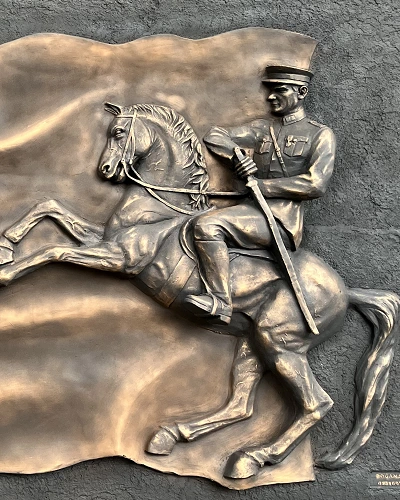
History of the Art of Sculpture
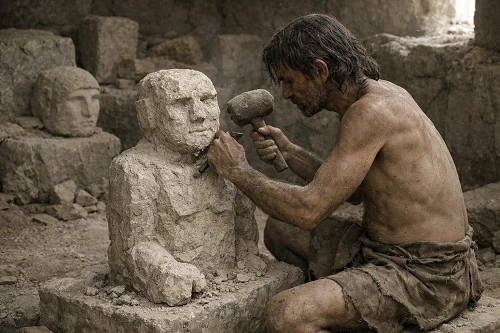
Sculpture art is one of the oldest and most enduring forms of expression in human history. From early ages to the present, sculptures have not only been aesthetic objects but also tangible documents reflecting the beliefs, power, social structures, and aesthetic sensibilities of civilizations. As the art of conveying thoughts and emotions through three-dimensional forms, sculpture has evolved across different cultures using various materials and techniques throughout history. This article will examine the historical journey of sculpture art, from the Paleolithic period to modern and contemporary art, focusing on key periods and movements. Sculpture, as an art form, has always been a mirror of humanity's effort to understand itself and the universe.
Origins of Sculpture Art: From Early Ages to Ancient Civilizations
The origins of sculpture art date back to the earliest periods of humanity, the Paleolithic Age. The most well-known examples from this period are small, stylized female figures representing fertility and birth cults. Works such as the "Venus of Willendorf," dating back approximately 30,000 years, show that the primary purpose of sculpture was religious and ritualistic. In the Neolithic period, with the transition to settled life, sculpture began to take on larger and more permanent forms representing gods and ancestors. In the first great civilizations like Mesopotamia and Egypt, sculpture often assumed a monumental role, symbolizing the power of rulers and the majesty of gods. The rigid posture, symmetry, and idealized forms in Egyptian sculptures reflect a search for stability and continuity that lasted for thousands of years.
Ancient Greek and Roman Sculpture: The Rise of the Ideal Human Form
Sculpture art experienced its golden age in Ancient Greece and was redefined through a human-centered philosophy. Greek sculptors broke away from the rigid rules of Egypt, aiming to capture the idealized, dynamic, and natural form of the human body. This period is examined in three main stages: the Archaic Period (Kouros and Kore figures), the Classical Period (the quest for proportion and balance defined by Polykleitos's "Doryphoros"), and the Hellenistic Period (the pinnacle of dramatic emotion and movement seen in works like Laocoön and His Sons). Roman sculpture, on the other hand, inherited the Greek tradition but prioritized realism and individuality, focusing more on portrait art and the relief style depicting historical events. Roman sculptures also served a propagandist function, emphasizing the power of emperors and the authority of the state.
Medieval Sculpture: The Power of Religious Narrative
In the Middle Ages, beginning with the fall of the Roman Empire, sculpture art entered entirely into the service of the Christian faith. During this period, sculptures integrated with the architectural structure of churches and cathedrals, becoming a visual tool to tell Bible stories and the lives of saints to an illiterate public. In the Romanesque and Gothic periods, figures gradually gained a more stylized and emotional expression. The sculptures on the doors of Gothic cathedrals, in particular, best demonstrate the depth of religious narrative and its organic link with architecture. The individuality of the artist remained in the background; the goal was to convey the religious message in the most effective way.
Renaissance and Baroque: The Rediscovery of Man and Emotion
The Renaissance, which began in Italy in the 15th century, symbolizes a return to Ancient Greek and Roman art. Masters like Donatello and Michelangelo placed the human body back at the center, using knowledge of anatomy and proportion to add unprecedented realism and psychological depth to sculptures. Michelangelo's "David" represents the ideal human form and technical perfection of this era. In the following Baroque period, sculpture aimed to create dramatic movement, intense emotion, and a theatrical effect, as seen in Bernini's "Ecstasy of Saint Teresa." Sculptures of this period are filled with dynamic compositions intended to make the viewer a part of the work.
The Birth of Modern Sculpture and Abstraction
Modern sculpture, beginning with Rodin in the late 19th century, started to question traditional forms and rules. Rodin brought a raw, unfinished surface texture and intense emotional expression to his sculptures, moving sculpture from a monumental narrative to an individual experience. In the 20th century, sculpture turned entirely toward abstraction, pushing its boundaries through experiments with materials and form. Brancusi's simplified, pure forms sought the essence of sculpture. Artists like Picasso, Calder, and Henry Moore treated sculpture not just as mass, but as a form that relates to space and emptiness. During this period, sculpture stepped down from its traditional pedestal and became an installation interacting with its surroundings.
Contemporary Sculpture: Conceptual and Experimental Approaches
From the second half of the 20th century onwards, contemporary sculpture art shifted toward a conceptual and experimental direction. Artists began using industrial waste, light, sound, and even temporary elements like performance alongside traditional materials. The question of what sculpture is became a matter of debate where the idea and concept behind the work gained more importance than the piece itself. The large-scale Land Art of Christo and Jeanne-Claude, the massive steel installations of Richard Serra, and the works of Jeff Koons reflecting popular culture demonstrate the boundlessness and diversity of contemporary sculpture. At heykel.org, we aim to contribute to the future of sculpture art by combining this rich historical heritage with our philosophy of handmade and natural art.
Date Added: | Last Updated: