What is Repoussé?
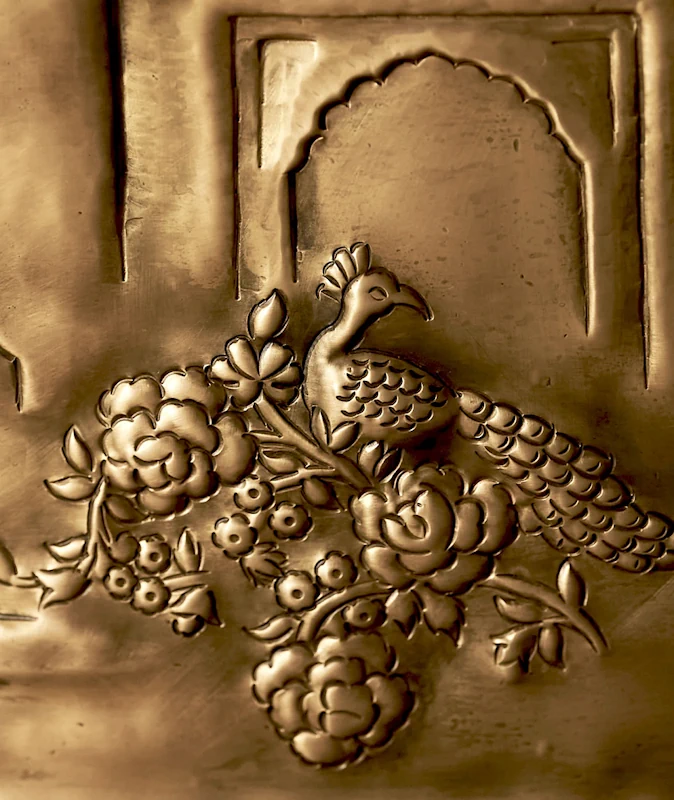
Repousse is a technique of creating a raised form on the upper surface by pushing and hammering a thin metal sheet from the back with specialized tools. Derived from the French word "repousser," meaning to push back, this term defines one of the oldest and most nuanced techniques of metalworking. Generally applied to malleable metals such as gold, silver, copper, and bronze, the repousse technique is used for both decorative and monumental purposes and possesses a deep-rooted history spanning thousands of years.
Application of the Repousse Technique
In the application of repousse, the metal sheet is first softened by annealing. It is then placed face down onto a special filling material containing pitch or resin. This filling material ensures that the metal retains its shape while being worked. Pressure is applied from the back using hammers and specialized chasing tools to push the metal forward. The repousse process is completed not only by pushing, but also by detailing the raised form from its front surface. This second stage is called chasing (chasing and repousse), and when both techniques are applied together, extraordinarily detailed surface treatments are achieved.
Historical Importance of Repousse
The repousse technique appears in almost every period and geography of history. In Ancient Egypt, gold masks and decorative plaques were produced using this technique. In Ancient Greece, bronze armor and shields were shaped with repousse. In Medieval Europe, church vessels, reliquaries, and jewelry were crafted using this method. In the pre-Columbian civilizations of the Americas, gold objects were produced with the repousse technique. This wide geographical and historical distribution reveals that repousse is an inseparable part of humanity's shared craft heritage.
Repousse and the Art of Sculpture
The repousse technique shares a deep relationship with the art of sculpture. It has played an exceptionally vital role, particularly in the production of large-scale metal sculpture. The Statue of Liberty in New York consists of copper sheets shaped using the repousse technique. This technique allows large-scale metal sculptures to be both lightweight and structurally sound. Today, metal sculptors continue to use the repousse technique by reinterpreting it with modern tools and materials.
Repousse Today
Today, the repousse technique is sustained by traditional artisans and contemporary metal artists. This technique is still preferred in the production of handmade jewelry, decorative vessels, and tableware. The importance given to repousse training in jewelry schools and craftsmanship courses has been increasing in recent years. In an age where traditional manual skills are thought to be unable to compete with digital production processes, the repousse technique continues to hold a prestigious place due to its unique organic texture and the value carried by being handmade.
Material Selection and Technical Challenges in the Repousse Technique
The success of the repousse technique is directly related to the purity and thickness of the chosen metal. Since metal that is continuously hammered during the process hardens and becomes brittle, the material must be periodically and control-annealed (heated); otherwise, irreversible cracks and tears occur on the sheet. This delicate process, which requires the artist to know the flexibility limits of the metal intimately, faces the risk of puncturing the material with the slightest use of excessive force. Therefore, repousse requires not only theoretical knowledge but also a technical expertise based on a high level of manual dexterity capable of feeling the metal's response to impacts, developed through years of workshop practice.
Date Added: