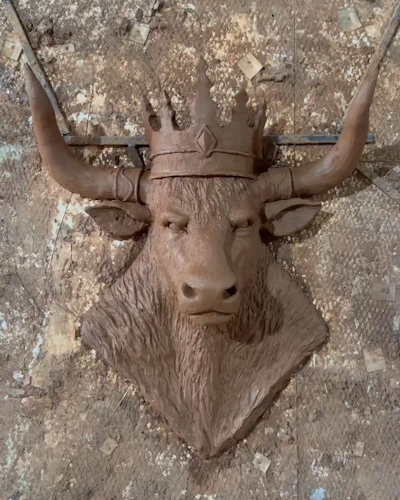
What is Cidar?

The term "cidar" (wall thickness), which appears as a technical term in the art of sculpture, refers to the thickness of the walls of a sculpture or a mold. Although it may seem like a mere technical unit of measurement, wall thickness is one of the most critical parameters that directly determines both the physical resistance and the production cost of a sculpture. Especially in bronze, fiberglass and polyester sculptures produced using hollow production methods, the wall thickness directly affects whether the work will be long-lasting, whether it will sustain damage during shipping, and how well it will withstand outdoor weather conditions. Therefore, in professional sculpture production, the calculation of the wall thickness constitutes an inseparable part of the design phase.
Why Wall Thickness is Important
The wall thickness of a sculpture varies significantly depending on the material choice and the intended use of the work. In bronze sculptures, the wall thickness generally ranges between 4 to 8 millimeters, while in fiberglass sculptures, this value is kept between 3 to 6 millimeters. A wall that is too thin makes the sculpture unnecessarily fragile, whereas a wall that is too thick leads to both material waste and transport difficulties. The correct wall thickness must be meticulously calculated, taking into account the mechanical properties of the material, the size of the sculpture, the environment where it will be exhibited, and the expected lifespan.
Controlling the wall thickness is of critical importance, particularly in the lost-wax casting method. In this method, the thickness of the wax model directly determines the wall thickness of the final bronze sculpture; consequently, every millimeter of error made during the modeling phase is reflected exactly in the final piece. An experienced master sculptor utilizes specialized tools and measurement techniques to maintain an even and consistent wall thickness while preparing the wax model.
Wall Thickness in Hollow and Solid Sculptures
There are two fundamental form approaches in sculpture production: solid and hollow production. While small-scale decorative sculptures are mostly produced as solid pieces, large monumental works are designed as hollow structures due to weight and cost advantages. Since the wall thickness in hollow sculptures is the sole element ensuring the structural integrity of the work, this parameter gains even more critical importance. For large sculptures to be exhibited outdoors, it is recommended to keep the wall thickness slightly above standard values, considering wind loads, temperature fluctuations, and moisture effects.
Controlling the wall thickness in fiberglass sculptures is somewhat more flexible, as it can be adjusted relatively easily by adding or removing layers of glass fiber. In contrast, it is impossible to change the wall thickness after the bronze casting process has begun; therefore, the calculations made during the design and modeling phases must be carried out with extreme care. All these technical requirements make the "cidar" both the most invisible and one of the most decisive parameters in the art of sculpture.
Date Added: