What is an Arcosolium?
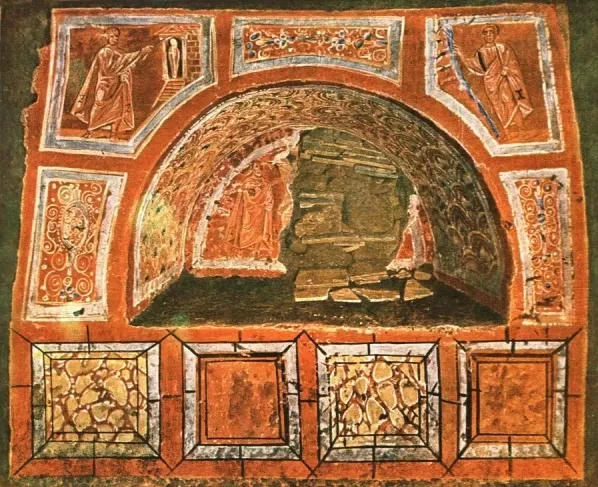
An arcosolium is an arched burial niche carved into the walls of underground catacombs from the early Christian period. Formed by the combination of the Latin words "arcus" (arch) and "solium" (throne or sarcophagus), this term typically defines private burial spaces reserved for saints, clergy, and noble figures. Arcosolia are characteristic architectural elements frequently encountered in the catacomb systems of Rome and its surroundings.
Architectural Features of the Arcosolium
An arcosolium consists of a niche carved horizontally into the wall, topped with a semicircular arch. At the base of the niche is a rectangular cavity that houses the body or a sarcophagus. The inner surface of the arch and the side walls are generally decorated with frescoes. These frescoes depict biblical scenes, portraits of saints, and symbols of paradise. Arcosolium frescoes are considered among the most valuable documents of early Christian art. In some arcosolia, sarcophagi made of marble or stone are also found.
Arcosolia and Early Christian Art
Arcosolia played a critical role in the development of early Christian art. During periods when worshipping in the open air was dangerous, Christians took refuge in catacombs and transformed these underground spaces into areas for both worship and artistic production. The frescoes within the arcosolium niches reveal the beliefs, hopes, and perceptions of death held by the Christian communities of that era. These works also serve as visual records of the transition period extending from the ancient Roman painting tradition to Byzantine art.
Arcosolia in the Roman Catacombs
The catacomb system in Rome constitutes one of the most extensive underground cemetery networks in the world. The catacombs of Callixtus, Domitilla, and Priscilla house the richest examples of arcosolia. The arcosolia discovered in these areas provide extremely valuable architectural and artistic information. Some arcosolia are known to belong to saints, making these spaces focal points for pilgrimages. Today, these catacombs are protected under the UNESCO World Heritage program.
The Relationship Between Arcosolia and Sculpture
In some arcosolia, relief sculpture decorations are found alongside frescoes. Figurative reliefs located in the spandrels of the arches and sculpted scenes on the surfaces of sarcophagi demonstrate the relationship between the arcosolium and plastic arts. These reliefs predominantly feature Christian symbolism; motifs such as fish, doves, crosses, and the "Good Shepherd" are the most common. The arcosolium tradition became the precursor to interior church burial niches and wall-embedded sarcophagi in later periods.
Date Added: