Umberto Boccioni - Italian Sculptor
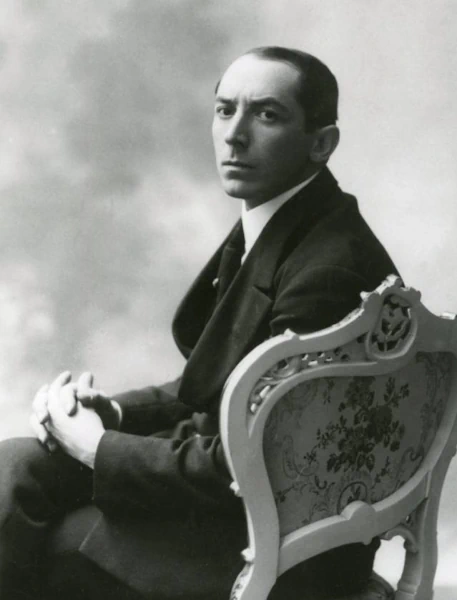
Umberto Boccioni was both the brightest and the shortest-lived light of Italian Futurism. Born in 1882 in Reggio Calabria, Boccioni embraced Futurism not merely as a theoretical manifesto, but as a living, breathing, and constantly transforming artistic practice. Striving to capture movement, speed, and the energy-charged dynamism of modern life on both canvas and in sculpture, Boccioni produced some of the most influential works of 20th-century art history within a very brief career. His death in 1916 at the age of 33, following a cavalry training accident, is regarded as one of the greatest early losses in art history. It is impossible to predict what else he might have achieved, yet the legacy he left behind remains profoundly earth-shattering.
Who is Umberto Boccioni? Famous Sculptures and Artworks
Boccioni's most renowned and influential sculpture is "Unique Forms of Continuity in Space," completed in 1913. This bronze sculpture depicts a human figure in motion, yet it bears no resemblance to any traditional figurative approach. The figure appears to be movement itself; not a frozen snapshot of a moment, but the very flow of time. Muscles, garments, and the surrounding air seem to fuse into an inseparable whole. This work has gone down in art history as one of the boldest and most original answers to the question of how sculpture can convey motion. New York’s MoMA and various institutions in Milan house Boccioni’s works, including casts of this iconic masterpiece.
Boccioni also stands out for his theoretical writings that accompanied his sculptural work. His 1912 Technical Manifesto of Futurist Sculpture is a text that radically questioned the sculptural understanding of the period and drew a new roadmap. Advocating for the integration of industrial materials such as glass, wood, and wire into sculpture while rejecting traditional material concepts, this manifesto left a lasting impact on subsequent generations. Boccioni did not leave these ideas on paper; he personally experimented with and partially realized them in his works.
Futurism's Contribution to the History of Sculpture
The most lasting contribution of Boccioni's brief but intense career to the history of sculpture is his persistent and courageous stance on embedding movement and time within the three-dimensional form. By opposing the concept of the static object and moving dynamism to the core of sculpture, he provided a decisive breakthrough for the development of kinetic art and installation fields in the following decades. Despite his early passing, the energy and drive for innovation inherent in Boccioni’s production continue to make him one of the most brilliant and intriguing names in 20th-century art history.
Date Added: