Toussaint Louverture Statue - Haiti Port-au-Prince
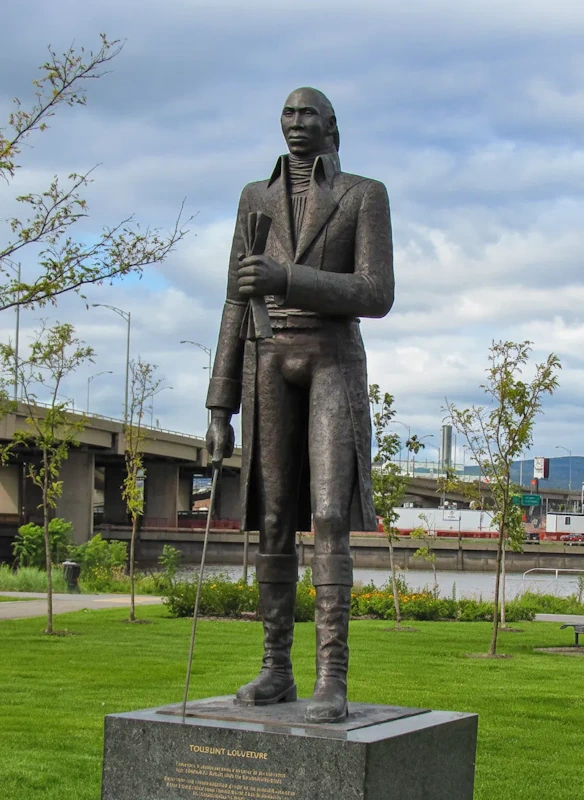
Haiti, known as one of the smallest and poorest countries in the Caribbean, is also the homeland of one of history's greatest and most inspiring revolutions. The statue of Toussaint Louverture, the architect of this revolution and Haiti's national hero, rises in the heart of the capital, Port-au-Prince, symbolizing both a people's longing for freedom and a unique page in human history. Leading the birth of the world's first successful slave revolt and the first Black republic, this monument of Louverture is one of the most powerful symbols of the values of freedom and equality, not just for Haiti, but for all of humanity.
The Toussaint Louverture statue is located in one of Port-au-Prince's most historically and politically significant areas. The statue depicts Louverture on horseback, in his military uniform and with a triumphant posture. This composition reflects both his military genius and the leadership qualities that carried his people to freedom simultaneously. The scale and stance of the statue leave a deep impact on visitors. This powerful figure on horseback is a visual expression of an uprising raised against colonialism and slavery, and its conclusion in victory.
Location and Historical Importance of the Statue
The Toussaint Louverture statue is located in the city center of Port-au-Prince, near the historic square complex known as Champs de Mars. This area is the very center of Haiti's political and cultural life; surrounded by the presidential palace, the national museum, and other state institutions, this square is one of the places where Haiti's national identity is felt most intensely. The positioning of the statue in this historical and political center is an acknowledgment of Louverture's decisive role in the founding of the Haitian state.
Although Port-au-Prince suffered great damage in the devastating earthquake of 2010, the Toussaint Louverture statue and its surrounding area continue to be a symbol of national pride and resilience for the Haitian people. Every year on January 1st, Haiti's Independence Day, ceremonies held in front of the statue reveal the vitality and depth of Louverture's legacy in Haitian society. For history and culture enthusiasts visiting the country, this statue constitutes one of the most important stops in Port-au-Prince.
Who is Toussaint Louverture?
The figure depicted by the statue is Francois-Dominique Toussaint Louverture, who was born as a slave around 1743 in Saint-Domingue, in what is today Haiti. Despite being born into slavery, Louverture stood out with his extraordinary intelligence and leadership skills and became the most decisive figure of the Haitian Revolution that broke out in 1791. Conducting a simultaneous struggle against French, Spanish, and British forces and taking control of Saint-Domingue, Louverture proclaimed a constitution in 1801, declaring himself governor-general for life and officially banning slavery.
Betrayed and captured by French forces sent by Napoleon Bonaparte in 1802 and taken to France, Louverture died in a French prison in 1803. However, the revolution he started was completed by the leaders who followed him, and on January 1, 1804, Haiti emerged on the stage of history as the world's first Black republic and the second independent state in the Americas. Louverture's legacy continues to be one of the fundamental reference points for struggles for freedom and human rights, not only in Haiti but across the entire world.
Cultural Heritage and Tourist Value
The Toussaint Louverture statue is one of Haiti's most recognized cultural and historical symbols in the international arena. Although the country continues to struggle with deep economic and political challenges, Louverture's legacy remains an indispensable source of national pride for the Haitian people. The area where the statue is located is a frequent destination for local and foreign visitors; it holds great importance especially for academics and journalists researching in the fields of history and human rights. Toussaint Louverture's name inevitably comes to the forefront in every discussion held worldwide on the history of the struggle against slavery and anti-colonialist movements. This statue in Port-au-Prince is a permanent expression, transformed into stone and metal, of the brightest light of freedom that sprouted from one of history's darkest pages.
Date Added: