Toshugu Statue - Japan - Nikko
Hidden on the steep, forest-covered mountain slopes of Nikko in Japan's Tochigi Prefecture, the Nikko Toshogu Shrine is far beyond a single statue or monument; it is a sacred architectural ensemble with UNESCO World Heritage status, symbolizing one of the most critical turning points in Japanese history. Built in 1617 and containing multiple statues and figurative carvings, this complex houses the spirit of Tokugawa Ieyasu—the man who unified Japan, brought over 250 years of peace to the country, and laid the foundations of modern Japan—honoring him as a divine being. The statues and carvings within the complex include dozens of different figures, mythological beings, and symbolic elements, each qualifying as a masterpiece in its own right.
Who is Tokugawa Ieyasu? Information About the Toshogu Statue
Tokugawa Ieyasu was born in 1543; following a century of civil war, he succeeded in unifying Japan under a single authority, establishing the Edo Shogunate in 1603. He was the architect of the 265-year Edo period, which formed the most fundamental structures of modern Japan. With his support for education, art, and trade, Japanese culture experienced a golden age during this era; the foundations of sushi, ukiyo-e, and many traditional cultural elements known today were laid at this time. Passing away in 1616, Ieyasu was laid to rest at Nikko Toshogu in accordance with his final wish and was deified with the title "Great Deity, the Orient's Light." The shrine's annual spring and autumn festivals recreate the processions of a thousand warriors, keeping this tradition alive.
Artistic Features of the Statues and the Sculptor
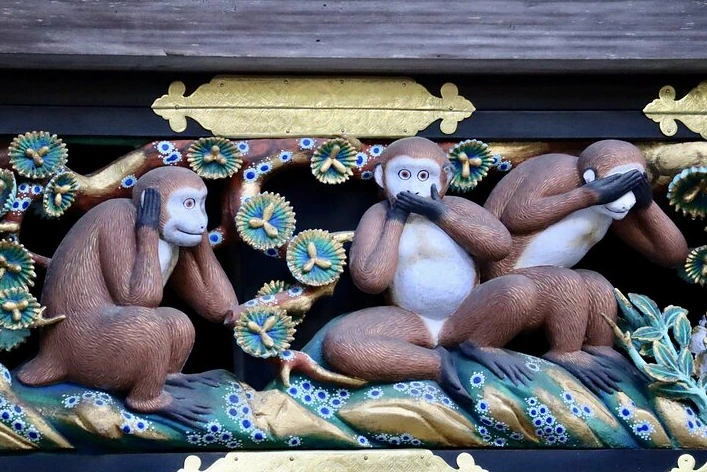
The chief architect who managed the construction of Nikko Toshogu was Nakai Masakiyo. The statues and carvings within the complex, created by the most distinguished masters of the period, present the finest examples of Japanese art, including the Yomeimon Gate featuring 508 figures crafted with colorful and deep relief techniques, the Nemuri-neko carving known as the "sleeping cat," and the three monkeys figure. The three monkeys—representing seeing no evil, speaking no evil, and hearing no evil—have become one of Japan's most recognized cultural symbols. An elephant statue carved from imagination by an artist who had never seen an elephant is also among the unique pieces of the complex. Added to the UNESCO World Heritage list in 1999, this complex is a unique site of art and faith, with five of its structures registered as National Treasures of Japan and numerous objects designated as important cultural heritage.
Date Added: