Tas yada Ahsap Heykel Sempozyumu
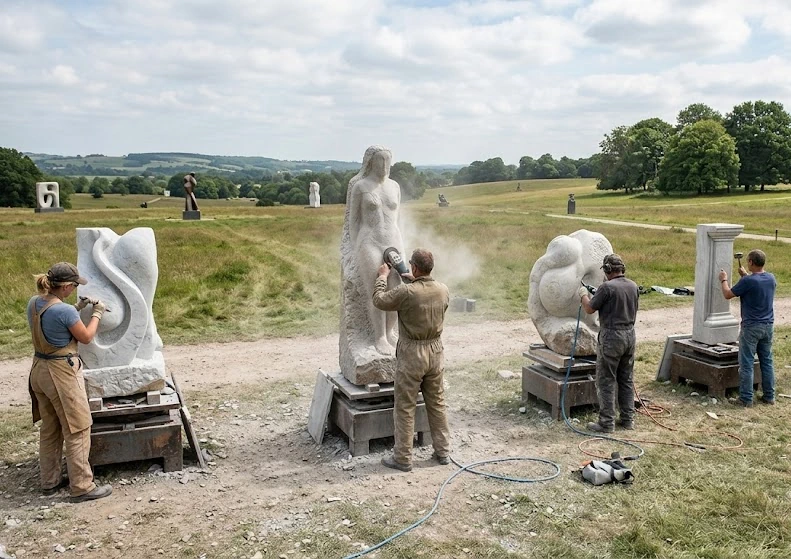
Sculpture symposia are special artistic gatherings where sculptors come together to produce works in a shared space, share their experiences, and where art lovers can watch the process live. Perhaps the most distinct point where the art of sculpture differs from other branches of art is that this production process is directly observable. Symposia bring this feature to the forefront, moving the art of sculpture from closed workshop walls into the public sphere.
Historical Origins of the Sculpture Symposium
In the modern sense, the tradition of the sculpture symposium was initiated by Karl Prantl in 1959 in the city of St. Margarethen, Austria. This first event, organized as a stone sculpture symposium, brought together international sculptors to produce in a shared location. This unique format quickly spread worldwide and laid the groundwork for the formation of regular symposium traditions in many countries. In Turkey, the sculpture symposium tradition began to strengthen in the 1980s, and stone symposia in particular have been held regularly in various cities across Anatolia.
Contribution of Symposia to the Art World
Sculpture symposia offer valuable contributions to the art world in many aspects. First of all, the coming together of sculptors from different countries and cultures enables the exchange of artistic experience and technical knowledge. The communication established between a Turkish sculptor and a Japanese or Italian colleague while working on the same stone block is a cross-border artistic dialogue. This interaction enriches the production understanding and technical repertoire of both artists. Symposia also create unique learning environments for young sculptors. Watching the production processes of master artists closely conveys practical information that cannot be obtained from books and academic education.
Important Sculpture Symposia in Turkey
Turkey, with its rich stone and marble reserves, is a highly favorable geography for sculpture symposia. Afyonkarahisar marble symposia, Mugla stone sculpture symposia, and international sculpture symposia organized by various universities are among the important events of our country in this field. Municipalities in major cities, especially Istanbul, Ankara, and Izmir, also host public space sculpture symposia. These events both enrich the cultural life of the city and contribute to urban memory by providing permanent works.
Symposium Works and Public Heritage
One of the most important outputs of sculpture symposia is that the works produced during the symposium continue to exist after the event. Works produced in many symposia are permanently placed in the parks, squares, and public areas of the city where the event is held. In this way, even if the symposium ends, the artistic heritage continues to live on. The symposium tradition, which is one of the most organic and participatory ways of creating public sculpture collections, is an important tool that shapes the cultural identity of cities.
How to Participate in a Sculpture Symposium?
Participation in sculpture symposia usually takes place through an application and selection process. The organizing institution receives portfolios and project proposals from sculptors in line with the determined theme and criteria. Selected artists are mostly provided with accommodation, materials, and transportation support. Interest in symposia in Turkey is also great in the international arena, and foreign sculptors can also apply. To follow the symposium calendar, the Artists Union of Turkey, fine arts faculties of universities, and cultural pages of municipalities regularly share up-to-date announcements.
Date Added: