Takashi Murakami - Japanese Sculptor
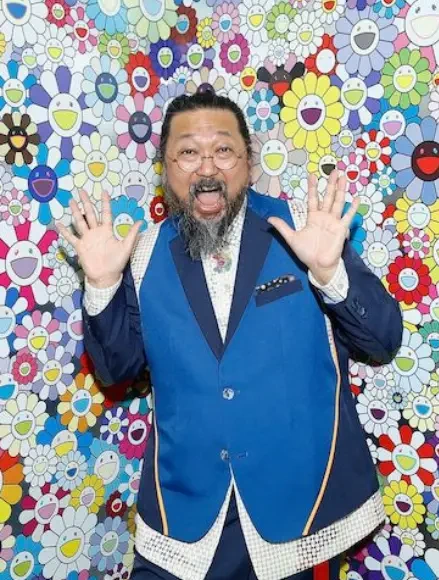
Takashi Murakami, one of the most globally recognized and influential representatives of Japanese contemporary art, was born in 1962 in Tokyo. Having earned a PhD in the traditional Japanese painting style known as Nihonga from the Tokyo University of the Arts, Murakami reconciled this traditional training with pop culture, animation, and a critique of consumer society to become the founder and most significant representative of the unique art movement known today as "Superflat." What brought Murakami to the forefront of the global art world is as much the scale of his production as its sharp conceptual foundation. Bright colors, cute faces, and repetitive motifs are the tools of a social and cultural analysis that is seemingly playful but fundamentally very serious.
Superflat and Artistic Philosophy
The Superflat movement, theorized by Murakami in 2000, is both an aesthetic preference and a framework for cultural analysis. Merging the flat, depthless imagery taken from the Japanese anime and manga tradition with Western pop art's critique of consumerism, Superflat also questions the trauma experienced by post-WWII Japanese society and how this trauma is re-produced in a bizarre and colorful way in popular culture. For Murakami, Japan's popular culture is the most visible expression of escaping the psychological depth created by the war defeat and the American cultural occupation. This interpretation gives his bright and cute-looking works a dark and thought-provoking subtext.
Murakami's most recognized characters, the smiling flowers and the Mr. DOB figure, offer the best examples of this double-layered structure. These figures, which appear innocent and attractive at first glance, transform into a critique of both Japanese pop culture and the global consumer system upon careful observation. This tension between surface and depth makes it impossible to define Murakami merely as an illustrator or a pop artist.
The Boundary Between Art and Commerce
The most controversial dimension of Murakami is his conscious blurring of the boundaries between art and commercial production. His collaboration with Louis Vuitton, projects with names like Kanye West and Pharrell Williams, and his large-scale commercial production while mentoring young artists under the umbrella of his Kaikai Kiki company have earned him both a massive fan base and serious criticism. Murakami seems indifferent to these criticisms; on the contrary, he positions questioning the artificial boundary between art and commerce as a part of his artistic practice. This attitude makes him the most striking example of Andy Warhol's successors.
Contribution to the Art of Sculpture
Murakami's work in the field of sculpture is not merely his two-dimensional production carried into three dimensions, but the product of an independent artistic discourse. His giant balloon sculptures, ceramic figures, and installations within the scope of installation art constitute the most original examples of his sculptural language. These works are exhibited in the world's leading museums and galleries, generating both great interest and lively debate with every exhibition. Murakami continues to be one of the voices that most uniquely blends East and West, tradition and technology, and art and commerce in the contemporary sculpture world.
Date Added: