Sultan Baybars Statue – Kazakhstan Taraz
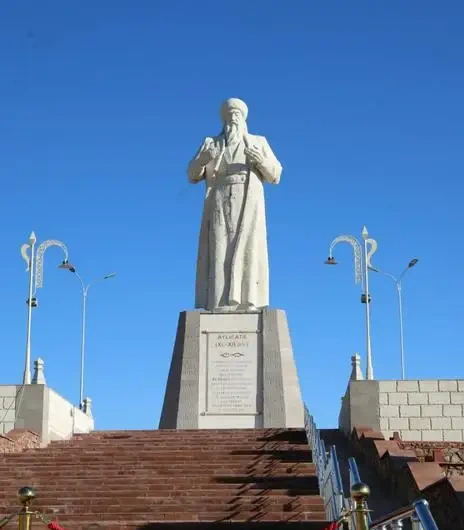
Located in the city of Taraz in Kazakhstan's Jambyl region, a place long established as a center of trade and culture in Central Asia, the legacy of one of history's most remarkable and powerful figures lives on. Sultan Baybars, the legendary commander and statesman who rose from being a Kipchak slave to sitting on the throne of the Egyptian Mamluk Sultanate, was born around 1223 on the territory of present-day Kazakhstan. He repelled both the Mongol invasion and the Crusaders, forever changing the course of Middle Eastern history. Kazakhstan today honors this legendary figure with several monument statues, the most significant of which is an monument statue located in the city of Atyrau. The site has become an unmissable stop for history enthusiasts and tourists visiting the region.
Construction and History of the Statue
The Sultan Baybars Monument was designed by sculptor K. Kakimov and architect K. Zhumabay, and was inaugurated on February 1, 2000, by order of the regional governor at the time, I. Tasmagambetov. Kazakhstan's President N. Nazarbayev attended the opening ceremony in person. On the same day, the central square of Atyrau was renamed after Sultan Baybars. The statue was crafted from granite specially sourced from the Kurtin district of the Almaty region. It stands 7.2 meters tall and 3.8 meters wide, reaching a total height of 11.8 meters including the pedestal. The monument holds the distinction of being the only personal monument erected for Sultan Baybars anywhere in the world.
Features and Artistic Details of the Statue
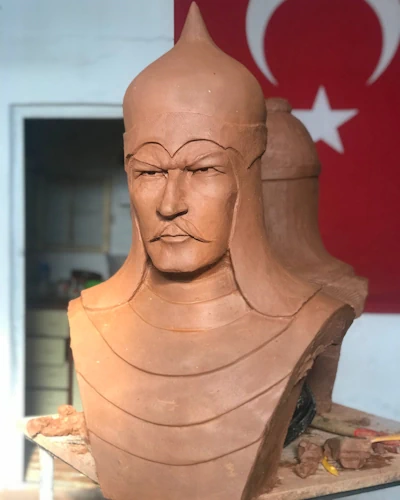
The statue depicts Baybars full length, standing upright, sword at his waist and a heavy cloak draped over his shoulders, gazing into the distance with a dignified bearing. The use of granite lends the statue both durability and a distinctly Central Asian aesthetic texture. Flanking the monument are stone sculptures in the form of a tower and a yurt, symbolizing Baybars' connection to both his Egyptian and Kazakh heritage. On the hemisphere behind the statue, runic inscriptions in Old Turkic are carved into the stone. This unified composition masterfully captures Baybars' dual identity: the child of the steppe and the ruler of a great Eastern empire.
Atyrau and Its Surroundings
The monument stands in Atyrau, Kazakhstan, on Aiteke bi Street, directly in front of the regional administrative building. Atyrau is a unique city on the shore of the Caspian Sea, spreading across both banks of the Ural River, and is known as a city that belongs to both Europe and Asia. In addition to the square and monument dedicated to Sultan Baybars, the city is home to numerous architectural landmarks reflecting the region's historical culture. The historic "Khan Ordaly Saraishyk" memorial site, located approximately 50 kilometers from Atyrau, is also a valuable destination for those who wish to explore Kazakh history more deeply.
The Legacy of Sultan Baybars
Sultan Baybars was captured during the Mongol invasion and sold into slavery in Egypt. Through his extraordinary military abilities, he rose to become one of the most distinguished commanders in the Mamluk army. At the Battle of Ain Jalut in 1260, he played a decisive role in the victory over the Mongols, a battle recorded in history as the Mongols' first major defeat. That same year, Baybars ascended to the Mamluk throne, repelled the Crusaders, drove the Christian kingdoms out of Syria and Palestine, and halted the Mongol advance at Egypt's borders. Known by the epithet "Abu al-Futuh" (Father of Victories), he spoke only Kipchak and brought Kipchak traditions into Egyptian governance. This extraordinary legacy, claimed by both Kazakhstan and Egypt, remains the most powerful symbol of the historical and cultural bond between the two countries.
Visitor Information
The Sultan Baybars Statue is located on Aiteke bi Street in Atyrau, Kazakhstan, and is easily accessible given its central position in the city. As the statue stands in a public space, it can be visited free of charge year round. Atyrau is approximately 2 hours by air from Kazakhstan's capital Astana, and around 3 hours from Almaty. The best time to visit the region is between April and October, when the weather is at its most pleasant.
Date Added: