Subhas Chandra Bose Statue - India - Kolkata
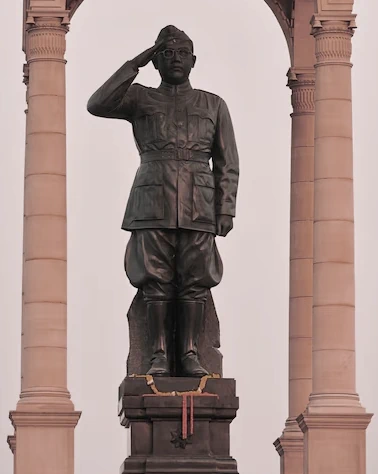
India's struggle for independence is the product of a broad movement that encompassed many different characters and modes of thought. Within this movement, the most charismatic, most controversial and perhaps most tragic name is Subhas Chandra Bose. Born on 23 January 1897 in Cuttack, in what is now the state of Odisha, Bose was the child of a wealthy and educated Bengali family. His father's success in the field of law had provided the family with both financial security and social standing. Yet the questions turning in young Subhas's mind extended far beyond this secure life.
Having grown up from childhood with a deep nationalist consciousness, Bose developed a pronounced anger against British colonialism throughout his years of education in Calcutta. While a student at Presidency College, he was expelled for having an English professor beaten a professor who had been discriminating against Indian students. This incident was the first clear sign that he would not bow to colonial authority. His family sent him to England, with the aim of both calming him down and steering him toward a prestigious career. Bose studied at Cambridge University and successfully passed the British Civil Service examination in 1920. Yet this success was for him not a destination, but a new point of departure.
A Mysterious Death and a Legend
The story of Subhas Chandra Bose comes to an end with a plane crash alleged to have occurred in Taiwan on 18 August 1945. However, this ending was never definitively accepted. The inadequacy of the documents relating to the crash, the cremation of Bose's body under disputed circumstances, and the claims that "Bose is alive" surfacing in different countries immediately after the event transformed his death into one of the greatest mysteries in Indian history. Multiple investigation commissions established by the Indian government over the years failed to reach a definitive conclusion.
This ambiguity, paradoxically, strengthened Bose's legend rather than weakening it. Many people believed he was still alive; in some regions, temple-like spaces were created in anticipation of his return. The mysterious nature of his death transformed him from a mortal politician into an almost mythological figure. Known by the epithet Netaji meaning "Respected Leader" Bose continues to this day to be one of India's most controversial and most beloved historical figures.
Where Is the Subhas Chandra Bose Statue?
Kolkata is for Subhas Chandra Bose not merely the spirit of the geography where he was born, but the city where his struggle took root, where his character was shaped and where his legacy is felt most deeply. It is possible to encounter statues and monuments of Bose at numerous points throughout the city. The best known and most impressive of these, however, are the large statues rising in public spaces that have become symbols of Kolkata. These statues typically depict Bose in military uniform, standing upright and resolute an appearance that reflects his warrior identity and unshakeable will.
In Kolkata where even the international airport bears his name as Netaji Subhas Chandra Bose International Airport the city keeps his spirit alive in every corner. The birthday celebrations held every year on 23 January are marked with great enthusiasm in Kolkata. The ceremonies held before the statue, the rituals of laying flowers and the speeches all demonstrate the vitality and continued relevance of his legacy. For those visiting Kolkata, Bose's statue is not merely a monument but a window into the city's collective memory and pride.
What Does His Legacy Mean Today?
The legacy of Subhas Chandra Bose is one of the rare examples claimed by nearly all segments of India's political spectrum. Groups ranging from left to right, from nationalists to liberals, have identified him with their own values a circumstance that has made his figure both universal and controversial. Particularly in recent years, interest in Bose has increased noticeably in India, with new documentaries, films and academic works being produced about him.
The placement of a large hologram statue of him near India Gate in New Delhi in 2021, followed by the construction of a permanent granite statue, symbolizes the importance the state attaches to this legacy. His statue in Kolkata, however, points beyond all this official recognition to the place he holds in the hearts of the people. That statue is the stone and metal embodiment of a page belonging to a leader who risked everything for freedom that has never been fully closed. Netaji's spirit lives on in the streets of Kolkata, in the air of Bengal and in the memory of every generation that has known him.
Date Added: