Robert Mugabe Statue - Zimbabwe Harare
Harare, the capital of Zimbabwe, located in the heart of Southern Africa, confronts a monument dedicated to the most controversial figure in the country's long and turbulent history of independence. Robert Gabriel Mugabe, born in 1924, played a leading role in the struggle for independence against British colonial rule and the white minority regime (Rhodesia), and served as Zimbabwe's first prime minister and president, governing his country for 37 years. Today, Harare hosts a monumental statue symbolizing his legacy and bringing with it controversy. The statue serves as an important stop for history enthusiasts visiting the region.
Construction and History of the Statue
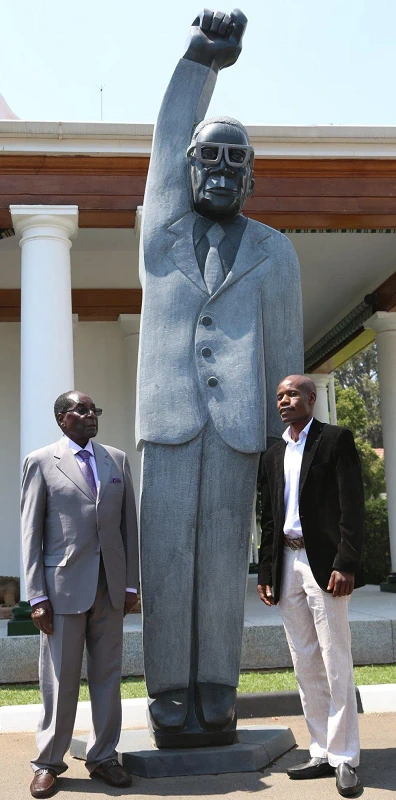
The first monumental statue dedicated to Robert Mugabe is a approximately 3.7-meter work created by Zimbabwean sculptor Dominic Benhura, shaped from springstone, a material unique to Zimbabwe. This statue was unveiled in 2016 but became a controversial subject after Mugabe's overthrow in a military coup in 2017. Benhura's work is artistically valuable for reflecting the natural texture of springstone and the Zimbabwean sculptural tradition. Following Mugabe's death, the Zimbabwean government decided in 2023 to erect a new statue at Robert Gabriel Mugabe International Airport; this statue is planned to be placed at the city's busiest entry point.
Features and Artistic Details of the Statue
The springstone statue created by Benhura depicts Mugabe with abstract yet powerful lines. Benhura, one of the most original representatives of Zimbabwean sculptural tradition, is known for his approach of utilizing the natural form of the stone to the advantage of his work. This statue reflects Zimbabwe's unique cultural identity through both its artistic value and the use of local materials. The National Heroes Acre in Harare is also an important memorial site established during Mugabe's era, housing prominent figures of the liberation war.
Harare and its Surroundings
The most important historical area associated with the Mugabe era in Harare is the National Heroes Acre. This memorial site houses graves dedicated to liberation fighters, a colossal Unknown Soldier Monument, and frescoes depicting Zimbabwe's history of independence. The international airport named after Mugabe, located in the center of Harare, is the city's most important entry point and a significant structure in terms of historical heritage. The city also welcomes visitors with cultural institutions such as the National Museum of Zimbabwe and the National Gallery.
Mugabe's Controversial Legacy
Robert Mugabe became Zimbabwe's first prime minister after the country gained independence in 1980, and president from 1987 onwards. Initially praised for his reforms in education and health, Mugabe laid the groundwork for the massacre of over 20,000 people in the Matabeleland region in the early 1980s, carried out by the North Korean-trained 5th Brigade, known as Gukurahundi. From the 2000s onwards, the Mugabe era was marked by land confiscations from white farmers, economic collapse, and severe repression against the opposition, all intertwined with international sanctions. Mugabe, who was removed from office by a military coup in November 2017, passed away in Singapore in September 2019. His legacy, which still leaves the question of whether he was a savior or a dictator open to debate, continues to be evaluated differently in Zimbabwe and around the world.
Visitor Information
Monuments dedicated to Robert Mugabe are located at various points in Harare. For the most comprehensive historical experience, the National Heroes Acre, located west of Harare, is open to visitors and offers a deep context about Zimbabwe's history of independence. Robert Gabriel Mugabe International Airport serves as the first historical trace visitors encounter upon arrival in the city. The most suitable period to visit Harare is between May and September, when the weather is mild.
Date Added: