Pedro I Statue - Brazil São Paulo
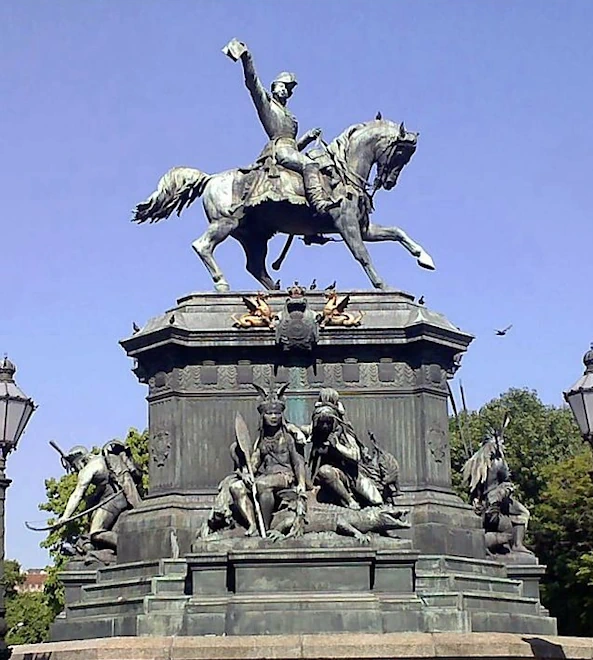
In São Paulo, Brazil’s largest city—set against the grand skyline of Latin America's economic capital—stands the statue of the founding father of the modern Brazilian state: Pedro I. A legendary leader known to history as the "Father of Independence," he was not merely the founder of a monarchy; he was a multidimensional figure who secured Brazil’s independence from Portugal through a peaceful transition, laid the institutional foundations of the modern state, and acted as the primary protagonist in one of Latin America's most unique independence processes. The Statue of Pedro I in São Paulo etches this vast legacy into one of the city's most prestigious areas, serving as a symbolic landmark of profound significance for both Brazilians and international visitors alike. Today, the legacy of Pedro I remains one of the fundamental pillars of Brazil’s national identity and sovereign consciousness.
Who is Pedro I: His Life and Brazil
Pedro I was born in 1798 in Portugal. As a member of the Portuguese Royal Family, he moved to Brazil at a young age and developed a deep connection to the land and its people. Amidst the chaos of the Napoleonic Wars, the Portuguese Royal Family had relocated to Rio de Janeiro, effectively making Brazil the center of the empire. During this period, Pedro closely observed the Brazilians' aspirations for independence and the growing pressures from Portugal. Against Portugal’s attempts to reduce Brazil back to colonial status in 1822, Pedro made his historic decision; standing by the banks of the Ipiranga Brook, he cried out "Independence or Death!" and declared Brazil's sovereignty.
This historic moment constitutes one of the most dramatic and unique chapters in Latin American independence history. While most Latin American nations gained independence through long and bloody wars, Brazil achieved its freedom through a relatively peaceful process, supported by its own royal heir. Pedro I began his reign as the first monarch of the independent Empire of Brazil. Attempting to establish a constitutional monarchy in domestic policy, Pedro abdicated the throne in 1831 in favor of his son, Pedro II, and returned to Europe. The institutional foundations laid during his reign played a decisive role in the construction of the modern Brazilian state.
The Statue's Location and São Paulo’s Urban Fabric
The Statue of Pedro I rises in one of the most central and symbolic areas of São Paulo. Together with the Praca da Sé and the surrounding historic architecture, the statue is located in the historical heart of Brazil’s largest city. Its proximity to the São Paulo Cathedral creates an organic dialogue between the city’s historical and religious identities. This area serves as both a part of daily life for locals and one of the most visited points for the millions of tourists who come to the city.
São Paulo holds the distinction of being the largest and most dynamic city in Latin America. In this sprawling metropolis where dozens of different cultures and ethnic communities coexist, the Statue of Pedro I stands out as a symbolic space representing the spirit of independence and national identity. The area surrounding the monument becomes one of the most important gathering points where thousands of Brazilians unite during national holidays and official commemorations.
Artistic and Symbolic Features of the Statue
The Statue of Pedro I stands out as one of the most powerful examples of Brazilian sculptural art. Depicted in imperial regalia and symbols of independence, Pedro I reflects both royal authority and a deep devotion to his people. The figure's posture conveys a strong expression of victory, honor, and the gravity of a historical moment. Inscriptions on the pedestal provide details regarding Brazil's declaration of independence and Pedro I’s decisive role in that process. While the overall design creates a monumental impact, it also brings Pedro I’s multifaceted historical personality to the forefront.
Importance for Tourism and Cultural Heritage
As one of Latin America's most vital tourism and business destinations, São Paulo welcomes millions of visitors every year. Alongside iconic landmarks like the São Paulo Cathedral, Pinacoteca, and Ibirapuera Park, the Statue of Pedro I forms a key stop on the city’s historical tourism circuit. For visitors specifically interested in Brazilian history and Latin American independence movements, the statue offers a deeply meaningful and moving experience. The ceremonies held here every year during the September 7th Independence Day celebrations transform the monument into a living venue for national events.
Date Added: